Best Tokyo Fish Market Tours Compared
An honest 2026 comparison of Tokyo fish market tours — Toyosu tuna auction, Tsukiji food walks, sushi-making combos and private tours. What each includes, who they suit, and when you don't need a tour at all.
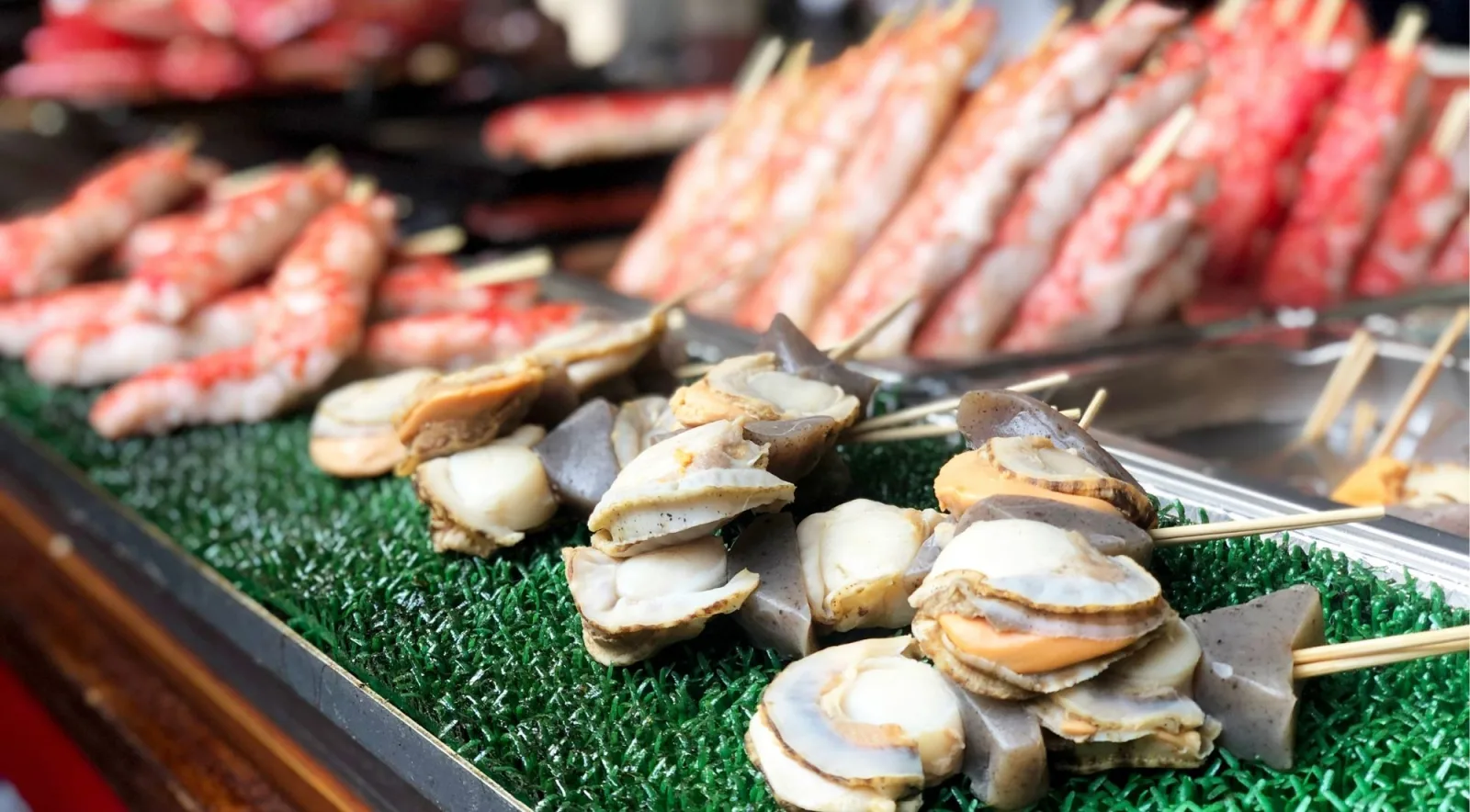
The single most important thing to know before you book: no tour operator can guarantee you a spot on the close-up tuna auction observation deck at Toyosu — those 100 places a day are allocated only by the official Tokyo Metropolitan Government public lottery. Every honest tour views the auction from the free upper public walkway, which you could reach yourself for nothing. A tour is worth paying for when you value pre-dawn logistics, real-time commentary and food navigation — not because it “gets you in.”
- The best tour depends entirely on your goal. For the tuna auction, book a combination Toyosu+Tsukiji morning tour for the logistics and commentary — but understand you’ll almost certainly watch from the free public walkway, not the lottery-only deck. For food, book a Tsukiji Outer Market walking tour later in the morning. For a hands-on souvenir, book a market-tour-plus-sushi-making class.
- A guide adds real value in specific situations — solving the pre-dawn transport problem, decoding the auction, navigating Toyosu’s confusing multi-building layout, and ordering food at Tsukiji — but is genuinely unnecessary for confident independent travellers who only want to eat at Tsukiji or who just want to see the auction from the free walkway.
- Book early and check the calendar. Free-cancellation tours matter because the market closes on Sundays, most Wednesdays, public holidays and New Year. If you want the operator to enter you in the auction lottery, you typically must book by the 5th of the preceding month.
The Tokyo Fish Market Tour Landscape in 2026
First, clear up the confusion that trips up almost every first-time visitor: there are now two markets. The old Tsukiji inner market closed on 6 October 2018 and the wholesale business — including the famous tuna auction — relocated about 2.4 km away to a purpose-built facility called Toyosu, which opened on 11 October 2018 on a man-made island in Tokyo Bay. Reportedly built at a cost of roughly US$5 billion and about 1.7 times the size of old Tsukiji, it is now among the largest fish markets in the world. But the Tsukiji Outer Market — the roughly 400+ food stalls, sushi counters and knife shops that most tourists actually came for — never closed. It is still there and still thriving.
This single fact drives the whole tour market: the auction is at Toyosu; the street food is at Tsukiji. Any tour claiming to show you a “Tsukiji tuna auction” is describing something that has not existed since 2018 — an immediate red flag.
Here are the categories that actually exist in 2026. Treat the named tours below as illustrative examples of each category, not permanent fixtures — operators frequently rename or discontinue listings, so always verify the current listing before booking.
(a) Toyosu tuna auction early-morning tours
Meet in the pre-dawn dark (commonly 4:20–5:15am), watch the bluefin auction from the public observation walkway, get real-time commentary on the hand signals and grading, and usually finish with a market sushi breakfast. Typically 3–4.5 hours. Small groups or private. Best for: first-timers who want the spectacle explained and don’t want to solve the transport problem alone.
(b) Tsukiji Outer Market food/tasting walking tours
The most popular category. Start civilised (commonly 7:00–10:00am), walk the stalls, sample a set number of tastings, learn the culture. Typically 2–3.5 hours, small group. Best for: food-focused travellers, families, anyone who doesn’t want a pre-dawn alarm.
(c) Combination tours covering both Toyosu and Tsukiji
The flagship product on GetYourGuide and Viator. Auction at Toyosu at dawn, then transfer (often by taxi/car, ~15 minutes) to Tsukiji for food and browsing. Roughly 3.5 hours. Best for: people who want the whole story in one morning and can wake at 4:00–4:30am.
(d) Market tour plus sushi-making class
A Tsukiji Outer Market walk followed by a hands-on class where a chef teaches you to make sushi, often with fish sourced at the market. Some are at the market, some a short walk away in Ginza. Best for: travellers who want a skill and a longer, weather-proof, indoor component.
(e) Market tour plus sushi breakfast at a reserved restaurant
Some tours include or arrange a seated sushi/seafood breakfast, sometimes at a reserved restaurant so you skip the notorious queues. Read the fine print: many “breakfast” tours make the meal an optional paid add-on. Best for: people who specifically want the market sushi-breakfast ritual without the multi-hour Sushi Dai queue.
(f) Private/customisable guided tours
Available across GetYourGuide, Viator, Klook, Airbnb Experiences, ToursByLocals and Context Travel. A private guide, flexible pace, hotel pickup on foot, itinerary tailored to your interests. Group-size caps (often up to five if the auction lottery is involved, since that’s the lottery limit). Best for: families, mixed-mobility groups, photographers, repeat visitors, or anyone wanting a bespoke pace.
(g) Self-guided audio/app options
There is no dedicated, high-quality standalone audio tour of the auction itself, though multi-attraction Tokyo audio-guide apps include Tsukiji as a stop. In practice the “self-guided” option is simply visiting independently — very achievable at both markets (see the DIY section below).
(h) Tours including Senkyaku Banrai or teamLab Planets
Senkyaku Banrai is the Edo-themed food-and-onsen complex that opened next to Toyosu Market on 1 February 2024, developed by hospitality company Manyo Club and featuring around 70 stores; it’s open year-round (even on market closed days) and many Toyosu tours end there for street food. teamLab Planets, the immersive digital-art museum, is a short walk from Toyosu, and a distinct category of tour pairs a Toyosu market visit with a teamLab Planets ticket (typically ~3 hours, admission included, but usually no early auction and no meal). Best for: travellers combining sightseeing efficiently in the Toyosu/Bay area.
Comparison Table: The Main Tour Categories
| Tour category | Typical duration | Typical start | What you see | Typically included | Best for | Key limitation |
|---|---|---|---|---|---|---|
| Toyosu tuna auction tour | 3–4.5 hrs | 4:20–5:15am | Auction from public walkway; wholesale halls | Guide, commentary; often breakfast (sometimes add-on) | First-timers wanting the auction explained | No guaranteed close-up deck access; very early start |
| Tsukiji Outer Market food walk | 2–3.5 hrs | 7:00–10:00am | Stalls, street food, sushi, knife shops | Guide + a set number of tastings | Foodies, families, late risers | No auction; can be crowded |
| Toyosu + Tsukiji combo | ~3.5 hrs | ~5:00am | Auction walkway + Tsukiji stalls | Guide, inter-market transport; breakfast often add-on | Seeing both in one morning | Long morning; pre-4:30am wake-up |
| Market + sushi-making class | 3–4 hrs | Morning | Outer market + hands-on class | Guide, class, ingredients, your meal | Hands-on, weather-proof experience | Less time in the market itself |
| Market + reserved sushi breakfast | 2.5–4 hrs | Early morning | Market + seated meal | Guide; reserved seating skips queues | Sushi-breakfast ritual without the queue | Premium price; verify meal is included |
| Private/customisable | Flexible | Flexible | Your choice | Private guide, tailored, often pickup | Families, mobility needs, photographers | Splurge tier |
| teamLab Planets + Toyosu | ~3 hrs | Daytime | Digital art + market walkway + Senkyaku Banrai | teamLab admission, guide | Efficient Bay-area sightseeing | Usually no auction, no meal |
Other Experiences You Might Enjoy
Once you’ve settled on a category, it’s worth seeing what’s actually running on your dates. Beyond the Toyosu tuna auction and Tsukiji Outer Market walks, this corner of Tokyo Bay also offers sushi-making classes, Toyosu Senkyaku Banrai street-food stops, teamLab Planets TOKYO art tickets, and wider Tokyo food tours through Ginza and Asakusa:
The Tuna Auction Access Question (Read This Before You Book Anything)
This is the most misunderstood — and most misrepresented — part of the entire Tokyo fish market experience.
There are two ways to watch the Toyosu tuna auction, and both are free:
- The upper public visitors’ walkway (second floor). Open from 5:00am, no reservation, no ticket, no lottery. You look down at the auction floor through sealed glass, with audio piped through speakers. Anyone can do this — including you, alone, for nothing.
- The close-up observation deck (lower floor). This is the good one — partly open to the air so you hear and smell the auction, and much closer. But access is allocated only by the official Tokyo Metropolitan Government public lottery, with a strict daily cap.
How the official lottery actually works
- 100 people per day are admitted to the close-up deck, chosen by lottery. The official Tokyo Metropolitan Government rules state verbatim: “One application may have up to five people on it. The people listed on one application are treated as one unit, and the total number of people chosen for each day is 100.”
- Applications are free and made through the official site, toyosu.jcdlotterysite.jp, which is now fully in English.
- You apply one month ahead: the application window opens for roughly seven days in the first week of the month before your visit (e.g., apply in early June to visit in July), with winners announced around the middle of that month — typically about 6:00pm on the announcement day, and only winners are notified.
- One application covers up to five people and lets you list several preferred dates.
- Winners meet at the Promotional (PR) Corner, Block 7, 3rd floor, by 5:30am, bring photo ID (passport), and are escorted down as a group; the auction itself begins at 5:45am and viewing runs to 6:25am (the auction can be over in as little as 20 minutes or last close to an hour).
The full application walkthrough — including the exact monthly windows and what to do if you don’t win — is in our Toyosu tuna auction viewing and lottery guide.
What operators actually claim — and the honest truth
Here’s the practice you need to understand. Reputable operators are upfront that all participants view from the free public walkway by default. Many then offer an optional service: they will enter you into the official lottery on your behalf if you book early enough — the widely-seen condition is “book by the 5th of the preceding month and supply the full names of all participants.” Klook and GetYourGuide listings for combination tours state this explicitly, and also state plainly that “100% selection cannot be guaranteed” because the lottery is random. Some note there is no lottery service in December.
So the honest framing is: a good operator can apply for you, saving you the admin — but they are entering the same free public lottery you could enter yourself, with the same odds. They cannot buy, reserve, or guarantee a deck spot. Anyone implying otherwise is misrepresenting the system.
How to spot a misleading listing
- Any wording implying “guaranteed” close-up or auction-floor access — impossible.
- Any tour promising you’ll be “on the auction floor” — the floor is buyers-only; the closest a visitor gets is the lottery deck behind a partial glass barrier.
- Any tour advertising a “Tsukiji tuna auction” — it moved to Toyosu in 2018.
What a Guide Actually Adds — An Honest Assessment
A guide is worth paying for when they solve real problems:
- Pre-dawn transport. The earliest any train reaches Shijō-mae is 05:17 — via a specific back-route, not the obvious Shimbashi service — and even that leaves no real margin for a 5:30am lottery meeting. Guides coordinate meeting points, and some private tours offer hotel pickup (on foot or by taxi at your expense). If you’re going independently, our guide to getting to Toyosu has the exact first-train times and taxi options.
- Decoding the auction in real time. Understanding the hand signals (yubi-zeri/teyari), the grading, why one tuna sells for a fortune and another doesn’t — this is the single biggest thing a guide adds, and the reason many say the auction is “underwhelming” without one.
- Navigating Toyosu’s confusing layout. The site sprawls across multiple buildings (the Fisheries Wholesale Building where the auction is held, the Fisheries Intermediate Wholesale Building, and the Fruit & Vegetables Building), connected by walkways and referred to by block numbers (5, 6, 7). It’s easy to get lost.
- Ordering food and reading menus at Tsukiji. Explaining unfamiliar items, translating, steering you to the good stalls and away from tourist traps.
- Securing sushi-breakfast seating / skipping queues. A tour with a reserved restaurant slot can spare you the multi-hour Sushi Dai queue.
- Cultural and historical context, and general language support.
When a tour is NOT worth it
- Confident independent travellers who research well.
- Repeat Japan visitors who’ve done a market before.
- People who only want to eat at Tsukiji — the Outer Market is easy to navigate solo.
- Budget travellers — the auction walkway and Tsukiji stalls are free to access.
- Anyone who can’t commit to a fixed pre-dawn meeting time — you’ll lose the money if you miss it (no refund for late arrival/no-shows on most auction tours).
And if you’re not yet sure the market itself justifies the alarm clock, read our honest assessment of whether Toyosu is worth visiting before you book anything.
- People who just want to see the auction and are happy with the free public walkway view — you don’t need a guide to stand there.
Typical Tour Structures and Timings
Auction tours (Toyosu-focused or combination): meet around 4:20–5:15am (a real GetYourGuide combination tour meets at 5:00am at the Lawson convenience store by Senkyaku Banrai, and requests you arrive by taxi/Uber since public transport isn’t running early enough). A typical flow: auction viewing from the walkway (~60–90 min with audio commentary via a personal receiver) → market sushi/seafood breakfast (often 45–105 min; frequently a paid add-on) → walk the wholesale/intermediate areas → transfer to Tsukiji (~15 min by car) → Tsukiji Outer Market stroll (~30 min). Total ~3.5 hours, ending around 8:30am at Tsukiji.
Tsukiji food walks: meet 7:00–10:00am, commonly at a fixed landmark — Tsukiji Hongan-ji Temple’s main gate, or a specified Lawson (e.g., the Tsukiji 4-Chome store) or Starbucks near Tsukiji Station. Duration 1.5–3.5 hours (most 2.5–3), ending in or near the Outer Market. Group sizes range from genuinely small (2–6, or accidentally private in low season) up to ~12–15 for larger operators.
What’s Typically Included vs Excluded
Usually included: professional/licensed guide and commentary; a defined number of food tastings on food walks (listings specify, e.g., 5 or 9 tastings); inter-market transport on combination tours; sometimes a personal audio-guide receiver so you hear the guide over market noise.
Commonly excluded — and these surprise people:
- The sushi breakfast itself on many auction tours (an optional paid add-on — one 2026 reviewer reported adding roughly £50 for two people; treat as indicative and verify).
- Transport to the first meeting point (your pre-dawn taxi is your own cost).
- teamLab Planets admission unless the tour is specifically the teamLab combo.
- Entrance/observation fees — though note auction viewing from the walkway is free anyway.
- Gratuities, personal travel insurance, and personal spending.
- Lottery application assistance may be framed as optional and conditional on booking by the 5th of the prior month.
Also note common dietary exclusions: several popular auction/combination tours state plainly they cannot accommodate vegetarian, halal or gluten-free diets, and some are not suitable for wheelchair users, people with food allergies, or people over 70 — always check the specific listing.
How to Choose — A Decision Framework
- Want to see the auction above all else: a Toyosu or combination auction tour for the commentary and logistics — but set expectations for the free walkway view. If the close-up deck matters that much, enter the official lottery yourself a month ahead (or via an operator’s optional service).
- Want the best food experience: a Tsukiji Outer Market food walk, mid-morning, with a set number of tastings.
- Want both markets in one morning: a combination tour.
- Travelling with kids: a later Tsukiji food walk; look for family-friendly listings (some accept ages 2+ with frequent breaks). Pre-dawn auction tours are hard on children.
- Limited mobility: book a private tour and disclose needs in advance; note some auction tours explicitly exclude wheelchair users, while some teamLab/Toyosu tours advertise as suitable for all fitness levels.
- Dietary restrictions: accommodation is inconsistent — food walks are generally more flexible (non-seafood options exist), while several auction/combo tours refuse vegetarian/halal/gluten-free. Ask before booking; consider a private tour for allergies.
- Solo travellers: small-group food walks are sociable and cost-efficient; solo bookings sometimes become de facto private tours in low season.
- Photographers: the free upper walkway shoots through sealed glare-prone glass; the lottery deck allows photos (no flash) and, being partly open, gives glare-free shots — worth entering the lottery. An anti-reflection lens hood helps at the glass.
- Very limited time in Tokyo: a combination or teamLab+Toyosu tour maximises one morning; or simply DIY Tsukiji.
- Budget-conscious: skip the tour. The auction walkway and Tsukiji stalls are free; pay only for food you eat.
- Non-English speakers / other languages: see the language section below.
Booking Practicalities
- Book well ahead, especially auction and combination tours, which sell out; combination tours are reportedly booked around a month in advance on average.
- The lottery deadline interaction is critical: if you want the operator’s optional lottery entry, you generally must book by the 5th of the preceding month and supply all participants’ names. Miss it and you’re on the free walkway.
- Free cancellation matters because of irregular closed days — most reputable listings offer free cancellation up to 24 hours before.
- If your date falls on a market closed day, the auction won’t run and many stalls shut. Good operators check the Tokyo Central Wholesale Market business-day calendar and either won’t offer bookings on closed dates or will contact you — but confirm this yourself. Our opening hours and closed-days guide explains the irregular Wednesday pattern.
- Group-size limits: if the lottery is involved, the per-application cap of five people applies.
- Confirm the exact meeting point given Toyosu’s multi-building layout — a precise pin (e.g., the Lawson by Senkyaku Banrai, or the PR Corner in Block 7) plus a WhatsApp contact is a good sign.
Red Flags and What to Scrutinise
- “Guaranteed” close-up/observation-deck access — impossible; it’s lottery-only.
- A “Tsukiji tuna auction” — doesn’t exist since 2018.
- Tours scheduled on market closed days (Sundays, most Wednesdays, holidays, New Year) — check the calendar against your date.
- Vague meeting points (“meet in Toyosu”) with no building/block or pin.
- Very large groups for a market environment — the Outer Market’s narrow lanes and the auction walkway don’t suit big groups; the official Tsukiji guidance itself asks visitors to move in small numbers.
- Unrealistic queue-skipping promises for Sushi Dai — only a genuinely reserved seat avoids the queue, and even then verify.
Reviews and Quality Signals
Good signs in recent reviews: named guides praised repeatedly (a consistent name signals a stable, well-run operation); explicit mention of clear pre-tour communication and meeting logistics; guides who explain the auction signals and history; small groups; personal audio receivers.
Common complaints in negative reviews: feeling rushed through some areas while waiting around in others; disappointing or “warm”/unfresh tastings that felt like free stall samples; guides who were disinterested or left non-buyers standing alone; crowding (often not the guide’s fault); and surprise costs when the breakfast turns out to be a pricey add-on. Weight recent reviews (past 6–12 months) most heavily, since tours change.
Doing It Without a Tour (The Honest DIY Alternative)
A competent independent traveller can do this well. Here’s a realistic self-guided morning:
For the auction: Stay near Toyosu the night before (or take a pre-booked taxi — the earliest possible train arrival is 05:17, too late for the walkway opening and with no margin for a lottery meeting). Arrive at the market via the Shijō-mae Station walkway by around 5:00am, follow the signs to the tuna auction, and watch from the free upper visitors’ walkway. Bring a lens/anti-reflection hood for the glass. Afterwards, eat sushi at one of the market restaurants (arrive early to beat the Sushi Dai / Daiwa Sushi queues, which can run from under an hour to several hours), then explore Senkyaku Banrai. Our complete Toyosu visitor guide covers the layout, restaurants and etiquette in detail.
For the food (most people’s better choice): Skip the alarm. Get to the Tsukiji Outer Market for 8:00–10:00am on a weekday (Tuesday, Thursday, Friday are the sweet spot — full selection, fewer crowds). Graze the stalls, buy knives, eat sashimi and tamagoyaki, and follow the official Tsukiji Outer Market etiquette (don’t touch produce, don’t bargain, eat near the stall, move in small numbers). See our Tsukiji Outer Market complete guide for the best stalls and shopping.
What you’ll get: the sights, the food, the atmosphere, and the auction spectacle — for the cost of your food and transport.
What you won’t get: real-time explanation of the auction and Japanese seafood culture, someone to translate menus and steer you to the best stalls, reserved sushi seating, and the pre-dawn hand-holding. If those matter to you, pay for the tour. If they don’t, keep your money.
Language Options
Most tours run in English and Japanese. Beyond that:
- Other languages do exist — listings and operators offer Tsukiji tours in Spanish, French, Chinese (Mandarin), Korean, Italian, Portuguese and Indonesian, though availability is thinner and dates fewer. Some teamLab+Toyosu tours advertise guides in English, Korean, Mandarin Chinese and Japanese.
- How to search: on GetYourGuide, Viator and Klook use the language filter; on Tripadvisor filter tours by language; for guaranteed native-language private guides, try ToursByLocals or Context Travel and message the operator directly to confirm before booking.
Still deciding between the two markets? Our Tsukiji vs Toyosu comparison breaks down which one suits your trip.
Frequently Asked Questions
Can a tour guarantee I’ll see the tuna auction up close? No. The close-up deck (100 people/day) is allocated only by the official free public lottery. Tours view from the free upper walkway by default; some will enter you in the lottery if you book by the 5th of the prior month, but selection is random and cannot be guaranteed.
Is the tuna auction still at Tsukiji? No — it moved to Toyosu in 2018. Tsukiji still has its excellent Outer Market of hundreds of food stalls and shops, but no auction.
Do I need a tour to see the auction? No. Anyone can watch free from the upper public walkway (open 5:00am, no booking). A guide adds commentary and solves transport, but isn’t required for access.
What time do these tours start? Auction/combination tours commonly meet 4:20–5:15am; Tsukiji food walks 7:00–10:00am.
How do I get there before dawn? Public transport doesn’t run early enough with any real margin for the auction. Stay nearby or take a taxi; some private tours arrange hotel pickup.
What’s included — is breakfast covered? Guide and commentary always; tastings on food walks. On many auction tours the sushi breakfast is an optional paid add-on — read the listing.
Can tours accommodate vegetarian, halal or allergy diets? Inconsistently. Food walks are usually more flexible; several auction/combo tours explicitly cannot accommodate vegetarian, halal or gluten-free. Ask first.
What if my date is a market closed day? The auction won’t run and many stalls close (Sundays, most Wednesdays, public holidays, New Year). Check the official calendar; good operators avoid these dates.
How far ahead should I book? As early as possible for auction/combo tours; and by the 5th of the preceding month if you want operator lottery entry. Choose free-cancellation options.
Is Toyosu or Tsukiji better for me? Toyosu for the auction and modern wholesale scale; Tsukiji for food, atmosphere and browsing. Many do both.
Book Your Toyosu Tuna Auction Tour
Join 415+ guests who rated this experience 4.9/5. Tuna auction viewing, Tsukiji outer market walk, and fresh sushi breakfast — all with a licensed local guide. Free cancellation.
Check Availability & Book