Japanese Fish & Seafood: What You'll See at Toyosu Market
A visitor's field guide to Japanese fish and seafood — the shiromi, hikarimono, shellfish, uni, roe and more you'll actually see at Tokyo's Toyosu Market, with kanji, English names, seasons and how each is eaten.
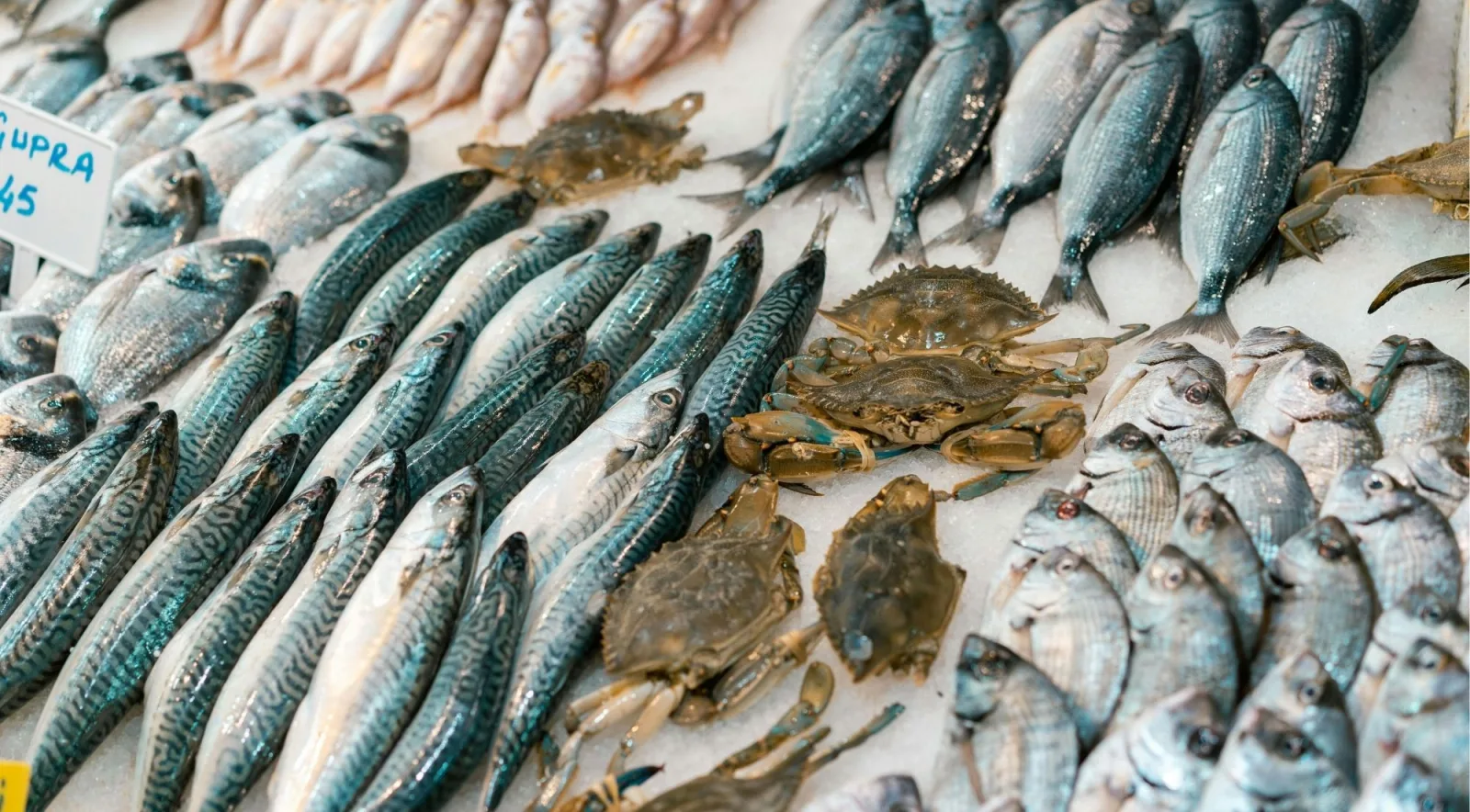
The short answer: If you learn to read seafood the way a Japanese chef does — by category, season and name — a bewildering market becomes legible. This guide is the identification reference to the non-tuna fish and seafood you will actually encounter at Tokyo’s Toyosu Market and on a sushi counter, with the Japanese name, kanji, accurate English name, scientific name where useful, season and how each is eaten.
- Japanese seafood is organised by culinary category, not just species — learn the big groupings (shiromi white fish, hikarimono silver fish, aomono blue fish, kai shellfish, ebi/kani, uni and roe) and the market instantly makes sense.
- The depth is in the non-tuna species — flounder and its prized engawa, gizzard shad (kohada), the shusse-uo naming ladder of yellowtail (buri), the contested modern arrival of raw salmon, sea urchin grading, squid, octopus and the shellfish that only top counters carry.
- Season (shun) is everything — the same fish is prized in one month and ignored in another, and Toyosu’s displays rotate accordingly. Use the seasonal calendar below to know what will be at its peak when you visit.
Tuna is so central, and so deep a subject, that we give it exhaustive treatment in dedicated companion guides to tuna cuts and grading and bluefin auction economics — here it gets a brief entry so the depth can go into everything else. What’s on the ice changes week by week, so check the current market-tour line-up before you fix a date:
How to Read a Japanese Fish Market
Japanese cuisine sorts seafood into working categories that tell a chef how to cut, cure and serve each item. Understanding them is the single most useful thing a visitor can do.
- Shiromi (白身) — white-fleshed fish. Low in fat, pale, delicate and subtly flavoured with a firm, sometimes crunchy texture. Rigor mortis sets in slowly, so the flesh keeps its bite for a long time. Includes sea bream, flounder and sea bass. Generally served early in a meal so the delicate flavours aren’t overwhelmed.
- Akami (赤身) — red-fleshed fish. Migratory fish whose muscle is red from myoglobin. Tuna and bonito are the classics; firm, meaty, with a strong (but not fishy) flavour, often served midway through a meal.
- Hikarimono (光り物) — “shiny things,” the silver-skinned fish. Kohada, aji, saba, iwashi, sanma, sayori and kisu. Not a biological group; these are oily, fast-spoiling fish traditionally cured with salt and vinegar. Chefs classify them by leaving the shining silver skin on.
- Aomono / aozakana (青物・青魚) — blue-backed oily fish. Overlaps with hikarimono; refers to the blue-backed pelagic fish. Confusingly, older chefs also used “iromono” (colored things) for fish like buri, kanpachi, hiramasa and shima-aji whose flesh isn’t fully white or red.
- Nimono (煮物) — simmered items. The epitome of Edomae craft: anago, tako, shako, hamaguri and abalone gently simmered in seasoned stock. Anago is the defining example.
- Kai (貝) — shellfish and molluscs. Clams, scallops, abalone, whelks. Prized for a texture and briny umami that sit between shiromi and akami; among the most expensive sushi items.
- Ebi / kani (海老・蟹) — prawns/shrimp and crabs.
- Roe and gunkan items. Uni (sea urchin) and soft roes like ikura are served as gunkan-maki (“battleship” rolls) — a nori band wrapped around rice to hold soft toppings. The gunkan-maki form was invented in 1941 by Hisaji Imada, founder of the Ginza restaurant Kyubey (established 1935), which was also the first to serve uni and ikura as sushi toppings.
A note on classification: there is no single official system. As Sushi University puts it, “since there is no clear definition, different sushi chefs have different classifications.” Treat these as a practical map, not a rulebook.
The White-Fleshed Fish (Shiromi)
Tai / Madai (真鯛) — Red Sea Bream
Pagrus major. The ceremonial “king of fish.” Its name puns on medetai (auspicious), so a whole madai appears at weddings, New Year and okuizome (a baby’s 100th-day celebration). The tai family is large — madai (true sea bream), chidai (crimson), kidai (yellowback) and kurodai (black porgy) — and only madai carries the “true” name. Firm, cleanly sweet, low-fat white flesh; superb as sashimi, nigiri, kobujime, or grilled whole (shioyaki). Wild fish peak in spring around cherry-blossom time, when they are called sakuradai. The link to luck stretches back over a millennium — sea bream was recorded as a shrine offering in the Engi-shiki some 1,300 years ago.
Hirame (平目 / 鮃) — Olive Flounder / Bastard Halibut, and Engawa
Paralichthys olivaceus (family Paralichthyidae). The king of cold-season white fish, best in winter when it is called kanbirame; summer hirame turns lean and less desirable. Mild, faintly sweet, firm and springy; sliced thin as usuzukuri or nigiri, often kelp-cured (kobujime). The prized cut is engawa (縁側) — the fin/frill muscle running along the fin edges, named after the wooden verandah of a traditional Japanese house. Because it is well-exercised, fat-rich muscle, it has a distinctive crunch and clean sweetness, and there are only about four small portions per fish, so it’s rare and pricey. Buyer beware: at conveyor-belt shops, “engawa” is almost always cheaper Greenland halibut (karasugarei, Reinhardtius hippoglossoides), not real hirame.
Karei (鰈) — Righteye Flounder
Family Pleuronectidae; the main sushi type is makogarei (真子鰈, marbled flounder, Pseudopleuronectes yokohamae), with premium types like hoshigarei (spotted flounder). The classic mnemonic is 左ヒラメに右カレイ — “left hirame, right karei”: laid white-side-down with the belly facing you, hirame’s eyes are on the left, karei’s on the right. A more reliable tell is the mouth — hirame has a big, toothy, fish-hunting mouth; karei has a small puckered mouth (ochoboguchi) for eating worms and invertebrates. Karei flesh is softer and often fattier. Crucially, makogarei peaks in summer — the opposite of winter hirame — so the two flatfish cover the calendar between them. (The mnemonic isn’t absolute: starry flounder is in the karei family but often left-eyed.)
Suzuki (鱸) — Japanese Sea Bass
Lateolabrax japonicus. A shusse-uo itself (seigo → fukko → suzuki). Very mild, clean shiromi; larger fish carry more fat and a softer texture. At its best in summer, when its clean flavour suits the heat; often served as arai (ice-water-tightened sashimi).
Kinmedai (金目鯛) — Splendid Alfonsino
Beryx splendens. Despite “dai” in its name, not a true sea bream. Bright red skin, big golden eyes; richer and fattier than madai, delicious as sashimi, seared (aburi) or simmered (nitsuke). Best in winter.
Nodoguro (のどぐろ / 赤鯥) — Blackthroat Seaperch
Doederleinia berycoides; also called akamutsu in the Kanto region. Nicknamed “the toro of white fish” for its exceptional fat content, it delivers otoro-like richness while keeping shiromi elegance. Named for the black lining of its throat. A deep-water fish especially associated with Ishikawa and the Sea of Japan; once a regional secret, now a national benchmark of luxury. Usually lightly seared or grilled; peak autumn to winter. One of the more expensive fish in the market.
Fugu (河豚) — Pufferfish
Japan’s famous licensed delicacy. Its liver and other organs contain deadly tetrodotoxin, so only chefs with a specialised licence may prepare it, and the liver is banned from sale. Shimonoseki is the capital of fugu — its Haedomari Market handles around 80% of the fugu caught or farmed in Japan. Firm, clean, subtly flavoured white flesh, sliced paper-thin as tessa (fugu sashimi) or served in hot pot; peak winter. Deaths still occur when unlicensed handlers mishandle it.
Kanpachi (間八) — Greater Amberjack
Seriola dumerili. One of the “three amberjacks” alongside buri and hiramasa. Firmer and leaner than buri, with a clean, mild flavour; best in summer, when buri is out of season. Frequently classified as aomono/iromono rather than pure shiromi.
Hiramasa (平政) — Yellowtail Amberjack
Seriola lalandi (also cited as S. aureovittata). The third amberjack; firm texture, clean and slightly sour, prized in summer. Easy to confuse with buri by the yellow lateral stripe, but leaner and a warm-season fish.
Other seasonal white fish
Isaki (伊佐木, chicken grunt) — early-summer fish, richer as the season warms. Ainame (鮎並, fat greenling) — a clean, firm early-summer shiromi. Kawahagi (皮剥, filefish) — autumn/winter, prized with its rich liver (kimo). Tachiuo (太刀魚, largehead hairtail) — silver, elegant, late summer to autumn. Sawara (鰆, Japanese Spanish mackerel) — technically a mackerel but treated as a white-ish fish and a relative newcomer to Edomae.
Other Experiences You Might Enjoy
A species list is a map; the market is the territory. The Toyosu tuna auction starts before dawn, the seventy-odd retail shops of Uogashi Yokocho on the fourth floor sell the katsuobushi, knives and dried seafood in this guide at professional grade, and the Tsukiji Outer Market puts grilled scallops, tamagoyaki and sea urchin in your hand at a far kinder hour. A guide who knows the stalls will name what’s in season on the day you happen to be standing there:
The Silver and Blue Fish (Hikarimono and Aomono)
Why the salt and vinegar? Hikarimono are oily and spoil fast. In the pre-refrigeration Edo era, chefs salted them to draw out moisture, then cured them in rice vinegar — a preservation technique that also tames fishiness and adds a clean tang. Handling hikarimono well is the classic test of a chef’s skill.
Aji (鯵) — Horse Mackerel
Not a true mackerel but a member of the jack family (so related to kanpachi and buri). Firm, rich in umami, only faintly fishy. Best in summer; served with grated ginger and scallion. Increasingly served raw rather than cured.
Saba (鯖) — Mackerel, and Shime-saba
A rich, strongly flavoured blue fish that spoils very fast, so it is classically cured as shime-saba — salted then marinated in vinegar. Peak in autumn/winter (aki-saba, kan-saba). Two main species: masaba (chub mackerel) and gomasaba (spotted mackerel).
Iwashi (鰯) — Sardine
Humble, oily and full-flavoured; the character 鰯 literally combines “fish” and “weak,” reflecting how fast it spoils. Best in early summer to autumn; served as nigiri with ginger and scallion, or grilled.
Kohada (小鰭) — Gizzard Shad
Konosirus punctatus. The quintessential Edomae fish and the classic gauge of a chef’s skill. A shusse-uo whose name changes with size: shinko (4–5 cm, the tiny, fleeting summer debut needing several fish per piece), kohada (7–10 cm, the ideal nigiri size), nakazumi (about 13 cm), and konoshiro (15 cm+, too bony and strong for top sushi). Unusually, its value falls as it grows. Always salt- and vinegar-cured; silver skin with black flecks. Peak roughly September–November.
Sanma (秋刀魚) — Pacific Saury
Cololabis saira. The literal “autumn knife fish” — a slender, silver icon of Japanese autumn, traditionally salt-grilled whole (shioyaki) with grated daikon. Historically a cheap “food for the masses,” but catches have fallen sharply in recent years as warming currents push the schools offshore, driving prices up and pushing sanma toward luxury status (early-season fish have fetched extraordinary sums at Toyosu). The 2024 season showed some recovery in catches. Increasingly available as sashimi when very fresh.
Sayori (細魚 / 針魚) — Halfbeak
A slender, elegant silver fish with a distinctive long lower jaw (black-tipped inside — a freshness tell). Delicate, clean, subtly sweet; a prized spring hikarimono for sashimi and nigiri.
Kisu (鱚) — Japanese Sillago / Whiting
A small, delicate early-summer fish; light and clean, popular in tempura and as a lightly-cured sushi item.
Yellowtail and the Shusse-uo Concept
Shusse-uo (出世魚) — “promotion fish” — are species that change name as they grow, a tradition said to echo samurai who took new names as they rose in rank. Buri is the most famous.
Buri (鰤) — Yellowtail / Japanese Amberjack
Seriola quinqueradiata. The name ladder differs by region:
- Kanto (east): wakashi → inada → warasa → buri
- Kansai (west): tsubasu → hamachi → mejiro → buri
Rough sizes: under about 30–40 cm, then 40–60 cm, 60–80 cm, and 80 cm+ for buri. The peak is kanburi (寒鰤) — wild winter yellowtail from November–February that has fattened for the cold, rich and buttery. Just as sanma signals autumn, buri signals winter. (The word buri is said to derive from abura, “oil.”)
Hamachi and the farmed/wild distinction
This trips up almost everyone. “Hamachi” was originally a Kansai word for medium-sized yellowtail, but in the modern trade it usually means farmed yellowtail of inada/warasa size, whereas “buri” refers to the large (usually wild) adult regardless of farming. In the US “yellowtail” is used loosely for several fish. Farmed hamachi is milder and consistently fatty; wild kanburi is the seasonal prize.
The three amberjacks
Buri (winter, richest), kanpachi (summer, leaner and cleaner) and hiramasa (summer, firm and clean) are the “three amberjacks” — the same jack family, different seasons and textures.
Salmon and Its Contested Place
This is the story most English content gets wrong. Sake / shake (鮭) and sāmon (サーモン) are, in practice, two different things in Japan — divided not by taxonomy but by how they’re eaten:
- Sake/shake = traditionally domestic/wild Pacific salmon, eaten cooked (grilled, salted, in rice balls). Wild Pacific salmon can carry parasites, so before modern freezing it was never eaten raw.
- Sāmon = farmed (typically Atlantic) salmon, managed for raw consumption as sushi and sashimi.
Raw salmon is not traditional Japanese food. It was introduced by Norway’s decade-long “Project Japan,” led by former fisheries minister Thor Listau; in 1985 a Norwegian delegation travelled to Tokyo to sell fish, and the effort became a mission to convince Japan that farmed Norwegian salmon — free of the Pacific parasites the Japanese feared — could be eaten raw. The Japanese were resistant at first, and it took roughly a decade of relationship-building before farmed salmon caught on, spreading through kaiten-zushi in the 1990s. The Norwegian Seafood Council marked the 40th anniversary of the project in 2025. The numbers tell the story: in 1980 Norway exported 2 tonnes of salmon to Japan; 20 years later it was exporting more than 45,000 tonnes annually. Today salmon is one of the most popular sushi toppings worldwide — an item traditional Edomae purists still serve reluctantly.
Roe: ikura (いくら) is separated salmon eggs cured in soy/brine (the word is borrowed from Russian ikra); sujiko (筋子) is the immature egg mass still in its membrane sac, darker red and saltier. Modern menus also feature toro-salmon (fatty belly) and seared sāmon aburi.
Shellfish and Molluscs (Kai)
Some of the most expensive sushi is shellfish — the flavour sits between the richness of akami and the subtlety of shiromi, cleansing the palate.
Hotate (帆立) — Scallop
Mizuhopecten yessoensis. Large, sweet, tender adductor muscle; superb raw, seared, or grilled. A Hokkaido mainstay, available much of the year.
Akagai (赤貝) — Ark Shell / Blood Clam
Anadara broughtonii. Vivid orange flesh, briny sea aroma and a springy, crunchy bite. Chefs slam it on the board to make the flesh contract (“live”) and score it. A classic Edomae item, once plentiful in Tokyo Bay, now scarce and pricey; best late winter to spring. Its mantle (himo) is prized too.
Torigai (鳥貝) — Cockle / Heart Clam
Fulvia mutica. Striking dark purplish-black surface, sweet and toothsome; must be very fresh. A top-restaurant item, best in spring.
Mirugai (海松貝) — Gaper / Horse Clam (often “geoduck”)
Tresus keenae. The crunchy siphon is the part eaten — firm, sweet, with a clean sea-breeze flavour. Once common in Tokyo Bay, now scarce and often substituted with geoduck (a cheaper relative sometimes sold as shiromiru).
Hokkigai (北寄貝) — Sakhalin Surf Clam
Pseudocardium sachalinense; the proper name is ubagai. A cold-water Hokkaido clam, thick and chewy with strong sweetness; the tip turns vivid red when blanched. Best autumn–winter.
Awabi (鮑) — Abalone
A gastropod, not a bivalve. Main types: kuro-awabi (Haliotis discus discus, firmest, best raw), ezo-awabi (northern cold-water subspecies), madaka-awabi (largest, rare, best steamed) and megai-awabi (softer, for cooking). Raw kuro-awabi peaks in summer — one of the few shellfish best in the warm months. Sweet, oceanic, crunchy when raw and meltingly tender when slow-cooked as mushi-awabi (steamed/sake-simmered). The liver (wata) adds a creamy bitterness.
Sazae (栄螺) — Horned Turban Shell
Turbo sazae (renamed in 2017; older texts say Turbo cornutus). Firm, crunchy (kori-kori), with a wild sea aroma and pleasantly bitter liver. The signature dish is sazae no tsuboyaki — the whole shell grilled over charcoal with sake and soy poured in. Best spring to summer.
Hamaguri (蛤) — Hard Clam
Meretrix lusoria. A celebratory clam (its perfectly matched shells symbolise a happy marriage, so it appears at weddings and Girls’ Day). Sweet and plump; classically simmered as an Edomae nimono nigiri. Best late winter to spring.
Asari (浅蜊) — Manila Clam
Ruditapes philippinarum. The everyday clam of miso soup and sakamushi (sake-steamed); briny and savoury. Best in spring.
Kaki (牡蠣) — Oyster
Two seasons cover the year: magaki (真牡蠣, Pacific oyster, Crassostrea gigas, now sometimes Magallana gigas) is the winter oyster — soft, plump, briny — grown mainly in Hiroshima, Miyagi (Matsushima) and Hokkaido (Akkeshi). Iwagaki (岩牡蠣, rock oyster, Crassostrea nippona) is the larger, richer, mostly wild-dived summer oyster from the Sea of Japan coast. Eaten raw, grilled (yakigaki) or panko-fried (kaki-furai).
Tsubugai (つぶ貝) — Whelk
Not one species but a collective term for edible whelks (family Buccinidae; often Neptunea spp.). Crunchy yet smooth, sweet with a savoury edge. Important safety note: the salivary gland contains the toxin tetramine and must be removed before eating — a detail English sources often omit.
Cephalopods and Other Creatures
Ika (烏賊) — Squid and Cuttlefish
A broad category. Key varieties: aori-ika (bigfin reef squid — often called the king of squid, thick, sweet, best spring–early summer); sumi-ika / kōika (cuttlefish, prized in winter, with the tiny young shinko-ika); yari-ika (spear squid, thin-bodied, tender, winter); surume-ika (Japanese flying squid, the everyday workhorse — reportedly around 70% of Japan’s total squid catch); and hotaru-ika (firefly squid, Watasenia scintillans). Firefly squid is a fleeting spring specialty of Toyama Bay, where millions glow bioluminescent blue as they spawn March–May; usually boiled and served with sumiso (vinegar-miso), guts and all.
Tako (蛸) — Octopus
Octopus sinensis — the East Asian common octopus, recognised as distinct from Octopus vulgaris only in 2017 (older sources still say O. vulgaris). Almost always boiled before serving — raw is too chewy, and boiling turns the skin red. Prized domestic octopus comes from the Akashi Strait (fast currents give thick, muscular legs) and Sanriku; much market supply is imported from West Africa. In season in summer (and again in late autumn). Also tako-yaki, tako-meshi and tako-wasa.
Uni (雲丹) — Sea Urchin
The edible part is the gonad (roe), yellow to orange, served as gunkan or over rice. Quality and price vary enormously by species, origin and freshness. At Toyosu, uni is commercially grouped as murasaki uni, bafun uni and aka uni:
- Murasaki uni (purple urchin; kita-murasaki uni, Mesocentrotus nudus, in Hokkaido) — larger, pale yellow, mild and cleanly sweet.
- Bafun uni (the “horse-dung” urchin; ezo-bafun uni, Strongylocentrotus intermedius, in Hokkaido) — smaller, dark orange, intense, rich and creamy, widely considered the finest grade.
Cold-water Ezo-bafun and Kita-murasaki from Hokkaido account for roughly three-quarters of Japan’s catch; the finest feed on kelp in cold northern waters (Rebun, Rausu, Shakotan), with Aomori and Tohoku also important. Confusingly, the trade sometimes calls murasaki “white” and bafun “red” after the roe colour. Staggered harvest seasons by region and species mean good uni is available across much of the year, peaking in summer.
Anago (穴子) vs Unagi (鰻) — Two Eels
Anago (Conger myriaster, the whitespotted conger) is a saltwater eel — leaner, fluffier, milder, and a defining Edomae nimono: simmered then served over rice as nigiri with a sweet tsume glaze (no soy needed). Best in summer. Unagi (Anguilla japonica, the Japanese freshwater eel) is fattier and richer, grilled kabayaki-style with a thick sweet-savoury sauce and eaten as unaju/unadon, famously on the midsummer Day of the Ox. Unagi is now endangered and largely farmed; anago stocks are more stable.
Namako (海鼠) — Sea Cucumber
A winter delicacy, eaten raw in thin slices with ponzu for its firm, crunchy texture; its salted, fermented guts (konowata) are one of Japan’s three great chinmi (rare delicacies).
Hoya (海鞘) — Sea Squirt
A summer specialty especially of the Tohoku coast; a striking pineapple-shaped invertebrate with a unique briny-sweet-bitter flavour that divides even Japanese diners. Very much an acquired taste.
Crustaceans
Ebi (海老) — Prawns and Shrimp
- Kuruma-ebi (車海老, kuruma prawn, Penaeus japonicus) — the canonical Edomae prawn, boiled and butterflied for nigiri; rich, sweet, chewy.
- Amaebi (甘海老, “sweet shrimp,” northern prawn, Pandalus eous) — served raw, soft and sweet; the fried head is often served alongside.
- Botan-ebi (牡丹海老, Pandalus nipponensis) — large, plump raw prawn, intensely sweet; note that “toyama-ebi” (Pandalus hypsinotus) is often sold under the botan-ebi name.
- Shiro-ebi (白海老, “glass shrimp,” Pasiphaea japonica) — a tiny, delicate translucent Toyama Bay specialty, prized raw.
- Ise-ebi (伊勢海老, Japanese spiny lobster, Panulirus japonicus) — glamorous and celebratory, but its high water content makes it bland for nigiri; a festive centrepiece and offering.
Kani (蟹) — Crab
- Zuwaigani (ズワイガニ, snow crab, Chionoecetes opilio) — long slender legs, sweet delicate meat; a winter luxury. Males are sold under prestige regional brands verified by coloured tags: the two best-known are Echizen-gani (Fukui) and Matsuba-gani (Tottori/Shimane/San’in), followed by Kasumi-gani and Taiza-gani; egg-bearing females are seko/koppe/kobako-gani.
- Tarabagani (タラバガニ, red king crab, Paralithodes camtschaticus) — huge, meaty legs; technically closer to hermit crabs than true crabs. Winter.
- Kegani (毛蟹, horsehair crab, Erimacrus isenbeckii) — smaller and round with a dense hairy shell, prized for its rich kani-miso (crab innards); a Hokkaido favourite, available much of the year.
Shako (蝦蛄) — Mantis Shrimp
Oratosquilla oratoria. Not a true shrimp but a stomatopod. Always boiled, never raw; soft, faintly sweet, briny. A classic Tokyo-Bay Edomae nigiri glazed with tsume; egg-bearing females are prized in late spring (peak May–June).
Roe and Preserved Items
- Ikura (いくら) — separated salmon eggs, soy/brine-cured; large, orange, bursting.
- Sujiko (筋子) — salmon roe still in the membrane sac; darker, saltier, richer.
- Tobiko (飛子) — flying-fish roe, tiny (0.5–0.8 mm), crunchy, red-orange, mildly smoky; sometimes coloured with squid ink, yuzu, etc.
- Masago (真砂子) — capelin roe, smaller and cheaper, often sold as (or mistaken for) tobiko.
- Kazunoko (数の子) — herring roe, yellow, firm and crunchy, marinated in dashi-soy; a New Year good-luck food symbolising fertility.
- Karasumi (唐墨) — salted, sun-dried mullet roe, a Nagasaki specialty and one of the three great chinmi; sliced thin, lightly toasted, served with drinks.
- Mentaiko (明太子) and Tarako (鱈子) — both Alaska pollock roe; tarako is plain salted, mentaiko is marinated in chilli. Mentaiko is the signature of Fukuoka/Hakata.
- Shirako (白子) — fish milt (usually cod), creamy and rich; a winter delicacy.
- Katsuobushi (鰹節) — dried, smoked, fermented skipjack (bonito), shaved into flakes. With kombu it forms dashi, the umami foundation of Japanese cooking: kombu supplies glutamate, katsuobushi supplies inosinate, and together they create umami synergy (ichiban dashi).
- Kombu (昆布), nori (海苔), wakame (若布) — the essential seaweeds: kombu for dashi, nori for wrapping sushi and rice balls, wakame for soups and salads.
- Himono (干物) — dried/cured fish (aji, saba, etc.), grilled for breakfast.
- Shiokara (塩辛) — salt-fermented seafood, most famously ika no shiokara (squid guts); intensely savoury, an acquired taste eaten with drinks or rice.
Master Species Table
| Japanese | Kanji/kana | English | Category | Season | Typical preparation |
|---|---|---|---|---|---|
| Madai | 真鯛 | Red sea bream | Shiromi | Spring | Sashimi, nigiri, grilled whole |
| Hirame | 平目/鮃 | Olive flounder | Shiromi | Winter | Usuzukuri, nigiri, kobujime; engawa |
| Karei | 鰈 | Righteye flounder | Shiromi | Summer (makogarei) | Sashimi, nigiri, simmered |
| Suzuki | 鱸 | Japanese sea bass | Shiromi | Summer | Arai, sashimi |
| Kinmedai | 金目鯛 | Splendid alfonsino | Shiromi | Winter | Nitsuke, aburi, sashimi |
| Nodoguro | のどぐろ/赤鯥 | Blackthroat seaperch | Shiromi | Autumn–winter | Seared, grilled, sashimi |
| Fugu | 河豚 | Pufferfish | Shiromi | Winter | Tessa, hot pot (licensed only) |
| Kanpachi | 間八 | Greater amberjack | Aomono/iromono | Summer | Sashimi, nigiri |
| Hiramasa | 平政 | Yellowtail amberjack | Aomono/iromono | Summer | Sashimi, nigiri |
| Aji | 鯵 | Horse mackerel | Hikarimono | Summer | Nigiri w/ ginger & scallion |
| Saba | 鯖 | Mackerel | Hikarimono | Autumn–winter | Shime-saba, grilled |
| Iwashi | 鰯 | Sardine | Hikarimono | Summer–autumn | Nigiri, grilled |
| Kohada | 小鰭 | Gizzard shad | Hikarimono | Sep–Nov | Salt/vinegar-cured nigiri |
| Sanma | 秋刀魚 | Pacific saury | Hikarimono | Autumn | Shioyaki, sashimi |
| Sayori | 細魚 | Halfbeak | Hikarimono | Spring | Sashimi, nigiri |
| Buri | 鰤 | Yellowtail | Aomono | Winter (kanburi) | Sashimi, nigiri, shabu, buri-daikon |
| Sāmon | サーモン | Salmon (farmed) | (modern) | Year-round | Nigiri, sashimi, aburi |
| Hotate | 帆立 | Scallop | Kai | Much of year | Raw, seared, grilled |
| Akagai | 赤貝 | Ark shell | Kai | Late winter–spring | Nigiri, sashimi |
| Torigai | 鳥貝 | Cockle | Kai | Spring | Nigiri (blanched or raw) |
| Mirugai | 海松貝 | Gaper/horse clam | Kai | Spring | Nigiri (siphon) |
| Hokkigai | 北寄貝 | Surf clam | Kai | Autumn–winter | Blanched nigiri |
| Awabi | 鮑 | Abalone | Kai | Summer (raw) | Raw or mushi-awabi |
| Sazae | 栄螺 | Turban shell | Kai | Spring–summer | Tsuboyaki, sashimi |
| Hamaguri | 蛤 | Hard clam | Kai/nimono | Late winter–spring | Simmered nigiri, soup |
| Kaki | 牡蠣 | Oyster | Kai | Winter (magaki)/summer (iwagaki) | Raw, grilled, fried |
| Ika (aori) | 烏賊 | Squid/cuttlefish | (other) | Varies | Sashimi, nigiri |
| Tako | 蛸 | Octopus | Nimono | Summer | Boiled sashimi, nigiri |
| Uni | 雲丹 | Sea urchin | Roe/gunkan | Summer peak | Gunkan, over rice |
| Anago | 穴子 | Conger eel | Nimono | Summer | Simmered nigiri w/ tsume |
| Unagi | 鰻 | Freshwater eel | (grilled) | Summer (custom) | Kabayaki, unaju |
| Amaebi | 甘海老 | Sweet shrimp | Ebi | Winter | Raw nigiri |
| Kuruma-ebi | 車海老 | Kuruma prawn | Ebi | Summer/winter | Boiled nigiri |
| Zuwaigani | ズワイガニ | Snow crab | Kani | Winter | Boiled, sashimi, nigiri |
| Tarabagani | タラバガニ | King crab | Kani | Winter | Boiled, grilled |
| Kegani | 毛蟹 | Horsehair crab | Kani | Much of year | Boiled; kani-miso |
| Shako | 蝦蛄 | Mantis shrimp | Nimono | Late spring | Boiled nigiri w/ tsume |
Seasonality — Shun (旬)
Shun (旬) is the peak moment when an ingredient is at its finest — fattest, most flavourful, most abundant. The Japanese calendar of the table turns on it, and a single species can be prized in one season and ignored in another. Bonito even has two shun: hatsu-gatsuo (lean, bright, spring) and modori-gatsuo (fatty, autumn). At Toyosu, the displays and the seasonal panels along the visitor corridor rotate to match. A useful phrase at any counter: ima no shun wa nan desu ka? (“What’s at its peak right now?”).
Seasonal calendar
| Season | At its peak (shun) | What you’ll see at Toyosu |
|---|---|---|
| Spring (Mar–May) | Madai (sakuradai), sayori, torigai, hotaru-ika, aori-ika, hatsu-gatsuo, sazae, asari, hamaguri, shinko (late spring) | Cherry-blossom sea bream, glowing firefly squid, spring clams; the first bonito of the year |
| Summer (Jun–Aug) | Aji, iwashi, kisu, isaki, ainame, suzuki, kanpachi, hiramasa, anago, uni (Hokkaido), awabi (raw), iwagaki, makogarei, hamo (pike conger) | Peak season for silver fish, sea urchin, raw abalone and summer oysters; light, clean flavours |
| Autumn (Sep–Nov) | Sanma, saba (aki-saba), kohada, modori-gatsuo, sake (salmon)/ikura, kegani, tachiuo, kawahagi | The great autumn saury (supply permitting), fattening mackerel, salmon and roe, filefish with liver |
| Winter (Dec–Feb) | Kanburi (winter yellowtail), hirame (kanbirame), fugu, nodoguro, kinmedai, zuwaigani, tarabagani, buri, magaki oysters, akagai, shirako, namako | The luxury season: fatty winter yellowtail, flounder, pufferfish, snow crab and king crab, oysters, milt |
What You Will Actually See at Toyosu
Toyosu opened on 11 October 2018 as the largest wholesale fish market in the world, replacing the old Tsukiji inner market (which closed on 6 October 2018 after 83 years). As a visitor you move through dedicated raised walkways and glass-windowed observation decks — you observe the business rather than walk the trading floor. Key things to understand:
- The tuna auction happens very early in the Fisheries Wholesale Building; whole frozen and fresh bluefin are laid out and sold by rapid-fire bidding. General visitors watch from the free upper walkway (opens 5:00am, no booking); the close-up lower deck requires advance lottery registration (free, 100 people a day). See our dedicated auction-timing guide.
- The intermediate wholesale floor is where the real action for restaurants happens: intermediate wholesalers (nakaoroshi) break down and prepare fish bought at auction for sushi shops and restaurants. You glimpse it from small corridor windows in the Fisheries Intermediate Wholesale Building.
- Uogashi Yokocho (魚がし横丁) on the 4th floor of the Intermediate Wholesale Building is the retail zone open to everyone — around 70 shops selling knives, tableware, dried seafood, katsuobushi, pickles, tamagoyaki, tea and seasonings in retail sizes. This is where you can actually buy and handle “professional-grade” goods. There’s also a fun display where you can stand next to the outline of a giant bluefin tuna.
- Restaurants (many relocated from Tsukiji) are spread across the buildings and open early — this is where a market sushi or kaisen-don breakfast happens. Eating while walking in the corridors is prohibited; watch for the small motorised carts (turret trucks). See our picks for the best market sushi.
- What’s auctioned vs sold retail: the high-value auction items (bluefin, premium uni, branded crab) are business-to-business; what you can browse and buy is in Uogashi Yokocho and, more freely, at the Tsukiji Outer Market, which remains a lively street-food and retail district on the old site — see our Tsukiji Outer Market guide and its street food companion.
- Tuna carving is one of the market’s signature sights — a whole tuna broken down with the long maguro-bōchō blade; you’ll see this at demonstrations and in shops.
For the full logistics — how to get there, opening days and the best time to arrive — see our complete visitor guide, the Tsukiji-vs-Toyosu comparison, and the opening hours and closed days rundown.
Ordering and Eating
Ordering vocabulary
| English | Japanese | Reading | Notes |
|---|---|---|---|
| Sea bream | 真鯛 | madai | Clean, mild; approachable |
| Flounder | 平目 | hirame | Delicate white fish; engawa is the frill cut |
| Yellowtail | 鰤 | buri | Rich in winter; hamachi = younger/farmed |
| Horse mackerel | 鯵 | aji | With ginger & scallion |
| Mackerel | 鯖 | saba | Often vinegar-cured (shime-saba) |
| Gizzard shad | 小鰭 | kohada | The Edomae classic |
| Salmon | サーモン | sāmon | Raw, mild; very approachable |
| Scallop | 帆立 | hotate | Sweet, tender; approachable |
| Squid | 烏賊 | ika | Mild, slightly chewy |
| Octopus | 蛸 | tako | Boiled; firm |
| Sweet shrimp | 甘海老 | amaebi | Raw, sweet, soft |
| Prawn (cooked) | 海老 | ebi | Boiled; very approachable |
| Sea urchin | 雲丹 | uni | Creamy; a “challenging” favourite |
| Salmon roe | いくら | ikura | Bursting, briny |
| Conger eel | 穴子 | anago | Simmered, sweet glaze; approachable |
| Freshwater eel | 鰻 | unagi | Grilled, rich, sweet sauce |
| Sea bream (grilled) | 鯛の塩焼き | tai no shioyaki | Celebration dish |
| What’s in season? | 旬は何ですか | shun wa nan desu ka | Ask the chef |
| Chef’s choice | お任せ | omakase | Let the chef decide |
Approachable vs challenging
- Most approachable for cautious eaters: cooked ebi, hotate (scallop), sāmon (salmon), tai (sea bream), anago (sweet, cooked), tamago, and roll-style sushi.
- A step further: maguro akami (lean tuna), buri/hamachi, ika, aji.
- More challenging: uni (sea urchin), ikura and other roe (texture), akagai and other raw shellfish, shirako (milt), hoya (sea squirt), namako (sea cucumber), ika no shiokara. Start small and build up.
Frequently Asked Questions
What’s the difference between Toyosu and Tsukiji now? Toyosu is the modern wholesale market (opened 2018) where the auctions and professional trade happen, viewed from walkways. Tsukiji’s outer market remains on the old site as a public street-food and retail district. See our Tsukiji-vs-Toyosu guide.
Why does the same fish have different names? Many species are shusse-uo — they’re renamed as they grow (buri, kohada, suzuki) — and names also vary by region (Kanto vs Kansai) and by whether the fish is wild or farmed. This is why identification by category and season is so useful.
Is salmon traditional Japanese sushi? No. Raw salmon was introduced from Norway via “Project Japan” from the mid-1980s and spread through conveyor-belt sushi in the 1990s. Traditional sake was always cooked because of parasite risk in wild Pacific salmon.
Why is some uni so much more expensive than others? Species (bafun/ezo-bafun command more than murasaki), origin (Hokkaido cold-water kelp-fed urchin is prized), freshness and grade all drive price, and top uni is highly perishable.
What is engawa? The chewy, fat-rich fin-muscle of flounder (hirame) — prized and rare. At cheap conveyor-belt shops it’s usually cheaper Greenland halibut instead.
What’s the best season to visit Toyosu for seafood? Winter for luxury (kanburi, snow crab, fugu, nodoguro, hirame); summer for uni, abalone and silver fish. There’s excellent seafood year-round — just different items.
Can I eat at Toyosu without seeing the auction? Yes. The restaurants and Uogashi Yokocho are open to all during market hours; the auction viewing is a separate (and early) draw.
Is fugu safe to eat? Yes, when prepared by a licensed chef — preparation is strictly regulated and the toxic organs removed. Never eat fugu prepared by an unlicensed handler.
Plan Your Toyosu Food Experience
The easiest way to make sense of all this in person is with a guided market walk or food tour — a local guide points out the seasonal species, explains what’s being auctioned, and takes you to the best counters. The broadest match for this guide is Toyosu Tuna Auction & Tsukiji Market Gourmet Adventure (4.90 stars, 415 reviews, from $115), which pairs the auction with a tasting walk through the outer market; if you’d rather have the guide to yourselves and set the pace, Private Toyosu & Tsukiji Market Adventure with Tuna Auction (4.83 stars, 273 reviews, from $150) covers the same ground privately. Early-morning slots go fast, especially in the winter luxury season. Compare every option in our guide to the best Tokyo fish market tours.
Book Your Toyosu Tuna Auction Tour
Join 415+ guests who rated this experience 4.9/5. Tuna auction viewing, Tsukiji outer market walk, and fresh sushi breakfast — all with a licensed local guide. Free cancellation.
Check Availability & Book