Otoro, Chutoro & Akami: The Complete Guide to Tuna Cuts & Grading
A chef-informed guide to how bluefin tuna is butchered, cut, graded, named and eaten in Japan — otoro, chutoro and akami, the rare cuts, species, seasonality, and how to order tuna well in Tokyo.
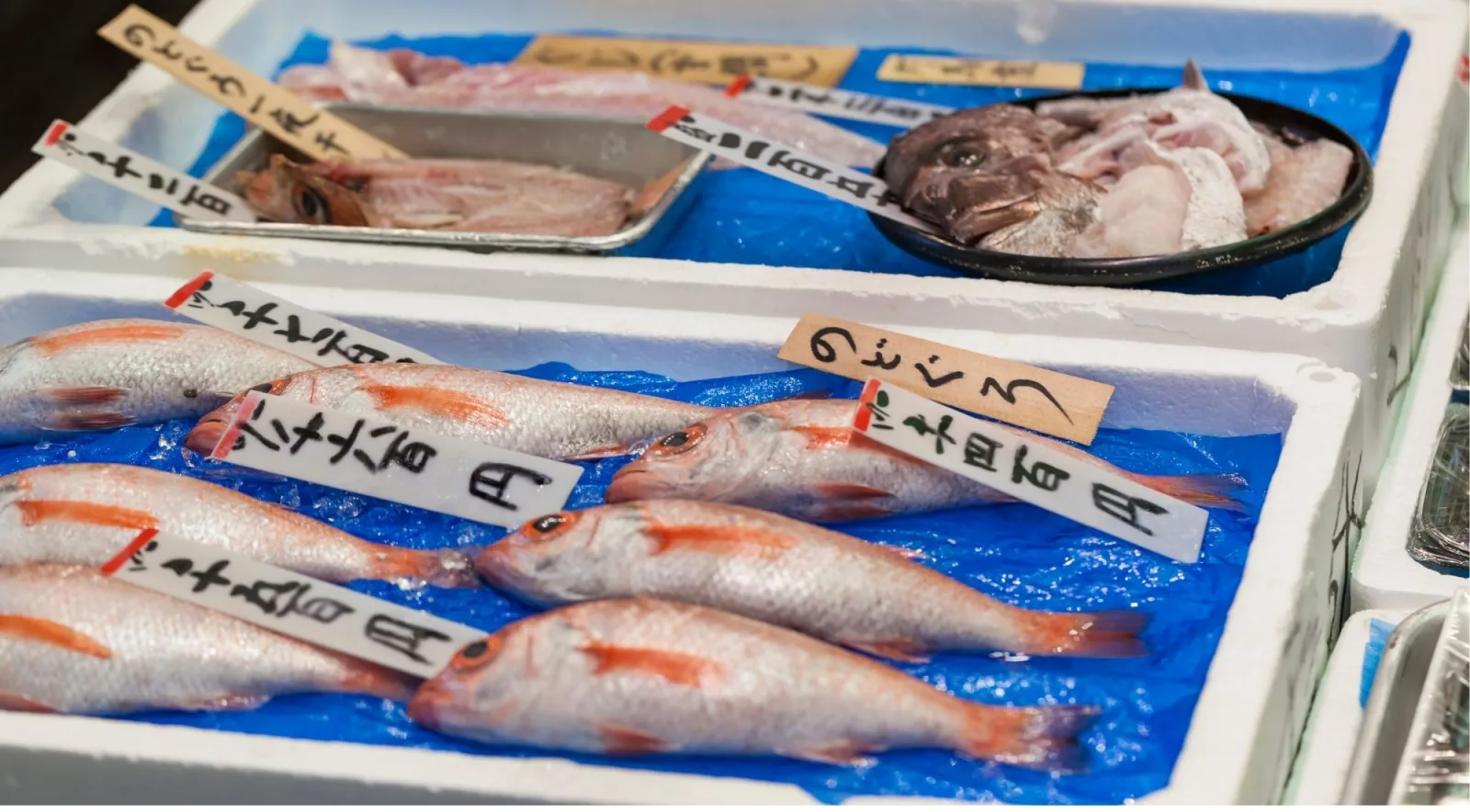
The short answer: Otoro, chutoro and akami are not grades of quality — they are positions on the fish, and the most expensive of them (otoro) is not automatically the best. A whole bluefin leaves the cutting board as three foods with almost nothing in common: lean, iron-rich akami from along the spine; balanced, marbled chutoro; and rich, melting otoro from the front of the belly. Understanding where each sits, how the fish is broken down, how buyers judge it, and how to order it is the difference between eating tuna and understanding it.
- They are locations, not quality grades. Fat rises as you move from the spine (akami, lean) into the belly (otoro, fattiest, near the head). Otoro is the rarest and most expensive, but many chefs and Edomae purists judge a fish by its lean akami — “where there is no fat to hide behind.”
- Japan has no official numeric grade for tuna. The “#1 / #2+ / #2 / #3” scale is a US/export-importer convention; at Toyosu, quality is judged by expert eye at auction — the famous tail-cut inspection reading colour, fat, sheen, grain and firmness. Much top sushi tuna is also super-frozen at sea to around −60°C, and properly super-frozen tuna can beat poorly handled “fresh.”
- Order light to rich, start with akami, and don’t mix wasabi into your soy sauce. Learn a handful of terms (omakase, osusume, zuke, kama), try a rare cut if offered, and remember that “maguro” alone usually means lean tuna, not all “toro” is bluefin, and negitoro is usually a budget scrap cut, not premium belly.
This guide is the eating-and-identifying companion to our market pieces. For auction record prices, the New Year hatsu-uri ritual, quotas and conservation, see our dedicated article on bluefin tuna auction record prices. Market counters and guided auction mornings both sell out early and reprice constantly, so check the current line-up before you commit to a pre-dawn start:
The Key Facts, Verified
- The fat gradient is the master key. Fat concentrates in the belly (hara) and toward the head (kami), and thins toward the back (se) and tail (shimo). This single gradient explains every cut name and price on the menu.
- Bluefin (hon-maguro) is the only tuna that reliably yields all three classic cuts. Bigeye is leaner, yellowfin has effectively no true toro, and albacore only recently became a sashimi fish.
- The lesser-known cuts are where a counter shows off — kamatoro, hoho-niku (cheek), noten (crown of the head), nakaochi (bone scrapings), chiai (bloodline, usually removed). Most require buying a whole fish, so you’ll mostly meet them at specialist tuna restaurants or kaiten (conveyor-belt) shops, not high-end counters.
- “Fresh” is a slippery word. Bluefin is deliberately aged for days, and super-freezing at sea is standard and often superior. Redder is not fresher — in export markets bright red can mean carbon-monoxide treatment.
- Winter is peak bluefin season. Fat content in the belly can climb toward its yearly high in the cold months before spawning.
Tuna Anatomy: How a Whole Tuna Is Broken Down
The primary breakdown (kaitai)
Breaking down a whole tuna is called kaitai (解体) — literally “dismantling.” A large Pacific bluefin (hon-maguro) can exceed 3 metres and 400 kg, so the job is physical and often needs several people. The head is removed first (frequently with a saw for the largest fish), then the fish is filleted along the spine.
A whole tuna typically yields four loins — the body is split into back (se, 背) and belly (hara, 腹) sides, and each side gives an upper and lower loin, so two belly loins and two back loins. On the market floor there is even a convention for orientation: tuna are laid back-up, head to the left, and because the fish’s own weight presses on the underside, the lower half (shimomi, 下身) and upper half (uwami, 上身) are distinguished.
Back vs belly, and head vs tail
Two axes define every cut:
- Back (se, 背) vs belly (hara, 腹): The belly carries far more fat. All true toro comes from the belly (with the fattiest exception, kamatoro, from the collar near the head).
- Head (kami, 上) vs tail (shimo, 下): Each loin is divided head-to-tail into three sections — kami (upper, head-side), naka (middle), shimo (lower, tail-side). Fat is richest at the kami end and thins toward shimo. Price follows fat: kami commands more, shimo less.
So each loin subdivides into named blocks:
- Back loin: sekami (背上, back-upper), senaka (背中, back-middle), seshimo (背下, back-lower).
- Belly loin: harakami (腹上, belly-upper — the otoro zone), haranaka (腹中, belly-middle), harashimo (腹下, belly-lower).
Within any block, the meat nearest the spine and centre is lean akami; moving out toward the skin side, fat increases, giving chutoro and (in the belly-upper) otoro. The tenmi / tenpa (天身・天端), the meat surrounding the spine, is deeply coloured, tender and strongly flavoured — prized lean akami.
Yield: how much becomes sushi topping
Tuna yields are modest. Professional fishmongers commonly cite roughly 35–50% usable meat from a whole tuna depending on skill and whether the fatty belly is fully recovered; higher yields require taking the bellies and scraping the frame. Of the edible portion, the split between cuts varies with the fish, but one farmed-bluefin example bred for eating quality broke down to roughly 20% otoro, 40% chutoro and 40% akami. Otoro in particular is a small fraction of the fish — a genuinely limited part of an already limited resource.
The tools: the tuna knife
The signature tool is the maguro-bōchō (鮪包丁), also called maguro kiri-bōchō — an extraordinarily long, sword-like single-bevel knife used to fillet whole tuna. Blades commonly run from about 40 cm to well over 1 metre (some far longer), and the largest require two people, one drawing the handle and one guiding the tip. Because they are mostly seen at wholesale markets, they are also called oroshi-bōchō (卸包丁, “wholesale knife”). A clean pull of a razor-sharp maguro-bōchō leaves a pristine, light-reflecting surface with no ragged fibres — a mark of top cutting technique that also protects texture and appearance. Shorter, sturdier knives handle the head and portioning; the great sword is for the dramatic filleting cuts you’ll see at a maguro kaitai show.
The Three Primary Cuts
The whole logic here is the fat gradient. As a rough guide to fat content: akami around 1–2%, chutoro about 15–20%, and otoro about 25–30%, rising close to 40% at the winter peak. There is no measured boundary between chutoro and otoro — as chefs say, if the chef calls it otoro, it’s otoro.
Akami (赤身) — the lean red meat
Akami is the lean loin along the spine and the interior of the fish, and it is by far the largest part. It is dense and deep red — the colour comes from myoglobin, the iron-binding protein loaded into the muscle of a fish that never stops swimming. The flavour is clean and meaty with a mineral, iron edge and deep umami, often with a faint sour finish.
Traditionalists and Edomae purists frequently prize akami above toro, and the reason is revealing: fat coats the tongue and hides small faults, but lean meat covers nothing. Akami is therefore the cut that shows the true condition of the fish and the hand of the chef. As one omakase source puts it, “the most expensive cut on the counter is the richest one, which is a different thing from the best one.”
Akami is also the natural home of zuke (漬け) — see the preparations section. Its lean, open texture drinks in a soy-based marinade in a way fatty toro will not, which is exactly why the technique arose.
Chutoro (中トロ) — medium-fatty
Chutoro (chū = “medium”) sits between akami and otoro, taken from both the belly and the back, mostly nearer the skin. In the belly it is the haranaka and the lower part of harakami; in the back it’s the skin-side of the loins. The colour lightens to a pink-red laced with fine marbling, and the flavour turns semi-sweet and umami-rich while staying balanced — never oily. For many regular diners this is the ideal cut: the meatiness of akami and much of the richness of toro at once. It is genuinely scarce; sources note it can take a whole fish to produce a modest amount of true chutoro.
Otoro (大トロ) — the fattiest belly
Otoro (ō = “big/great”) is the fattiest section of the belly, concentrated at the front end nearest the head (harakami) and running into the kama, the collar behind the pectoral fins. It is pale pink, almost white, heavily marbled — the marbling even shares a name with marbled wagyu, shimofuri (霜降り, “frost fall”). High fat gives it a soft, melting, buttery texture that needs almost no chewing, with a sweetness that lingers but is short on the palate. The word toro itself comes from torotto, describing a melting, sticky consistency.
Is otoro really the best, or just the priciest? This is a genuine debate, and honesty demands presenting both sides. For most of the Edo period the ranking ran the other way: without refrigeration, fat spoiled fast and would not take soy marinade, so the belly was stewed, discarded, or nicknamed neko-matagi (“the cut even a cat steps over”). Toro became a luxury only after the war, once refrigeration caught up. Today otoro is the rarest and most fashionable cut — but “richest” is not the same as “best,” and a good counter shows its skill not by putting otoro in front of you but by making you slow down over the akami.
Other Experiences You Might Enjoy
Reading a fat gradient off a page is one thing; watching a maguro-bōchō open a 200 kg bluefin at five in the morning is another. The Toyosu tuna auction is where these cuts are priced before anyone eats them, the counters upstairs at Uogashi Yokocho and Sushi Dai serve the same fish an hour later, and the Tsukiji Outer Market runs tuna-cutting displays at a far more civilised hour. Guided market mornings handle the pre-dawn logistics and translate the grading vocabulary as it happens:
The Lesser-Known and Speciality Cuts
This is where a counter earns its authority — and where a curious traveller can signal real interest. Most of these require buying a whole tuna, so you’re most likely to meet them at specialist tuna restaurants, izakaya, or conveyor-belt shops rather than high-end omakase counters.
| Cut | Kanji / kana | Location | Character | Where you’ll meet it |
|---|---|---|---|---|
| Kama / kamatoro | カマ / カマトロ | Collar behind the gills/jaw | Kama is the collar; kamatoro is the extremely fatty, vein-free marbled meat behind the jaw — sweetness and fat said to rival or beat otoro. Kama itself is usually grilled. | Kamatoro (raw) at tuna specialists; grilled kama at izakaya |
| Nakaochi | 中落ち | Meat scraped from along the backbone/ribs | Bold, ruby-red, soft and spreadable; the classic base for negitoro | Tuna specialists, kaiten sushi, donburi |
| Negitoro | ねぎとろ | Minced tuna (usually nakaochi/scrap + fat), often with negi | See misconceptions — usually a budget scrap product, not premium belly | Everywhere: rolls, hand rolls, gunkan, don |
| Harakami | 腹上 | Belly, head-side | The otoro zone — fattiest of all | High-end counters (as otoro) |
| Haranaka / harashimo | 腹中 / 腹下 | Belly, middle / tail-side | Chutoro grading down to leaner; harashimo the leanest belly | Common |
| Sekami / senaka / seshimo | 背上 / 背中 / 背下 | Back, head / middle / tail | Akami with skin-side chutoro; senaka is the biggest block; seshimo the leanest, most sinewy | Common |
| Tenmi / tenpa | 天身 / 天端 | Meat surrounding the spine | Deep-coloured, tender, strong pure-tuna flavour; high-grade akami | Good counters |
| Hoho-niku | 頬肉 / ホホ肉 | Cheek | Only ~80–100 g (two medallions) per fish; fibrous, collagen-rich, meaty like beef tenderloin; usually seared or grilled | Specialists, izakaya |
| Noten / atama-no-mi | 脳天 / 頭肉 | Crown/top of the head (also tsunotoro, hachi-no-mi) | Fatty and rich, “head toro”; only about 1 kg, or 0.1–0.5% of a fish; shared with regulars | Rare; specialists |
| Me-no-mi / medama | 目の身 / 目玉 | Around the eye / eyeball | Gelatinous, rich, often simmered with soy | Izakaya, specialists |
| Chiai | 血合い | Bloodline along the spine | Dark, iron-heavy, strong blood odour, high acidity; usually removed, not used raw | Cooked (simmered, fried) at home/izakaya |
| Sunazuri | すなずり | Lowest belly (belly-edge near skin) | Among the fattiest belly meat | Specialists |
| Tossaki | 突先 | Base of the head, very muscular | High tuna flavour, needs careful prep; some chefs open a meal with a tossaki hand roll | Rare; specialist chefs |
| Shinzō / shirako | 心臓 / 白子 | Heart / milt | Rare offal delicacies | Izakaya, specialists |
A few notes worth spelling out. Chiai (血合い) is the dark bloodline running along the spine; it is rich in iron and protein but has a strong blood smell and several times the acidity of akami, so it is removed from sushi neta and instead simmered sweet-and-salty, made into tatsuta-age (fried), or grilled. Kamatoro and noten were historically discarded and are now sought-after — a recurring theme in tuna, where yesterday’s scrap becomes today’s delicacy.
Grading and Quality Assessment
Is there a formal grade? Not in Japan.
Here is a point English-language content routinely gets wrong. The tidy numeric scale — #1 (sashimi grade), #2+, #2, #3 (grill/canning grade), judged on appearance, size/shape, colour, texture and fat — is a US/export-importer convention, used by American wholesalers and Asian processing plants. Even its users admit it is inconsistent and unstandardised: one distributor’s “#1” is another’s “#2+,” and because “#2+” sounds second-rate, restaurant menus never print it.
In the Japanese domestic trade at Toyosu, there is no official numeric grade. Quality is set by expert appraisal at auction and then by price. The skill of appraisal is called mekiki (目利き) — “the discerning eye.” As the third-generation head of a top Toyosu tuna wholesaler put it, “From the appearance, the exterior firmness, and the fattiness of the belly I can recognize the quality instinctively. It’s hard for me to explain the standards I use — really, it’s intuition.”
The tail-cut inspection
The core method is the tail cut (尾切り). Tails are sliced off and set on top of each fish so buyers can read the cross-section — often with a flashlight/torch, arriving well before the bell. In the cut face they read:
- Colour (色, iro): deep, vibrant, translucent red is best; graying or browning signals degradation.
- Fat / marbling (脂; shimofuri 霜降り): white marbling threading the flesh; more is generally prized, though Toyosu experts penalise fat with no flavour.
- Sheen / gloss (艶, tsuya): how the fat and flesh reflect light.
- Grain / texture (きめ): fine, tight muscle fibre beats coarse or grainy.
- Firmness: buyers lift and handle the tail, and open the belly, to feel fattiness and springiness.
Some export processors also take a core sample with a long metal probe (刺し棒, sashibo) pushed in above the pectoral fin; at Toyosu the emphasis is the tail cross-section, the opened belly and tactile handling with a hook (tekagi, 手鉤).
Yake — the flaw that ruins a fish
The great enemy is yake (焼け, “burnt”), also yake-niku — sometimes called “burnt tuna syndrome” in English. A tuna that struggles hard during capture overheats its own muscle; body temperature spikes, lactic acid builds, pH drops, and proteins denature. The result is flesh that turns whitish and flaky, as if lightly cooked, losing its red colour and clean texture and tasting poor. Critically, it is irreversible — icing the fish afterward will not bring the colour back — and it can render even a premium bluefin commercially worthless. It is also treacherous: because the thin tail chills fastest, the tail cut may look fine while yake lurks in the thick, slow-cooling core, so it “can’t be known until you cut the fish open.” Instantly recognising the risk is exactly what separates a top trader. (A related colloquial term, mure (蒸れ, “steamed”), describes heat/humidity spoilage from the same mechanism, but it is far less standardised than yake — treat it as informal.)
The specialists
Toyosu is home to more than 500 licensed seafood intermediate wholesalers (nakaoroshi, 仲卸) — the professionals from whom sushi chefs and buyers source their fish — and the tuna trade alone involves on the order of 600 intermediate buyers working the morning auctions (an average of roughly 1,000 frozen and 200 fresh tuna change hands daily). An individual buyer is a nakabainin (仲買人), and only a small elite who specialise in raw Japanese hon-maguro are known respectfully as jōmonoshi — roughly “top-shelf traders.” Bluefin’s trade nickname is “black diamonds” (黒いダイヤ). Buyers bid with hand signals (teyari, 手やり) and cart their fish off on a neko (wagon).
Fresh vs Frozen: The Honest Reality
This topic is badly misunderstood. Three truths:
“Freshest” is not the goal for bluefin. Tuna is deliberately aged (熟成, jukusei). After ikejime (spiking and bleeding at capture) and an unbroken cold chain, wholesalers commonly hold a tuna for days, and the counter longer still — enzymes convert proteins to free amino acids and ATP to inosinic acid, so umami climbs and the flesh softens. As Sushipedia reports, “A study by the University of Tokyo’s graduate school in cooperation with the restaurant chain Kura Sushi found that glutamic acid and inosinic acid reach their optimal ratio after 48 hours of aging” — though high-end counters age far longer, tuning to each fish. A tuna served the day it landed is firmer and flatter than the same fish a week on.
Super-freezing at sea is standard, and can be superior. Distant-water tuna boats freeze fish to around −60°C (and lower) — so fast that ice crystals form inside cells rather than between them, leaving membranes intact and minimising drip loss on thawing. Peak-quality super-frozen tuna, correctly thawed, is nearly indistinguishable from fresh. This is not a compromise; a large share of tuna handled in Japan is super-frozen, precisely because it preserves quality without manipulation. Correct thawing (typically a controlled warm-saltwater thaw, then drying and chilling) is itself a craft.
Freezing also serves safety. Tuna carries a relatively low parasite risk compared with, say, mackerel or wild salmon, but freezing reliably kills parasites such as Anisakis, and much sushi tuna is frozen at some point for exactly this reason. “Fresh” in a sushi context means well-handled and correctly aged — not “never chilled hard.”
Species and What They Mean on a Menu
“Maguro (鮪)” is the collective term for the genus Thunnus. On a good counter, maguro alone usually denotes lean bluefin akami; toro is specified separately. Hon-maguro (本鮪, “true tuna”) means bluefin — in Japanese usage almost always Pacific bluefin.
| Japanese name | Kanji | English | Notes for the diner | True otoro? |
|---|---|---|---|---|
| Hon-maguro / kuro-maguro | 本鮪 / 黒鮪 | Pacific bluefin | The benchmark; the only tuna reliably giving akami, chutoro and otoro. Deep flavour, high fat. Winter peak. | Yes — the standard |
| Minami-maguro / indo-maguro | 南鮪 / インド鮪 | Southern bluefin | Prized, fine marbling, rich lingering flavour; premium alongside bluefin | Yes |
| Mebachi | 目鉢 | Bigeye | The everyday sushi tuna; deeper-coloured, more fat than yellowfin, milder than bluefin; mostly lean, some winter toro | Limited |
| Kihada | 黄肌 | Yellowfin | Pale pink, lean, mild; popular in western Japan/Kansai; a major canning fish | Effectively no |
| Binnaga / bincho | 鬢長 | Albacore | Pale, soft; belly served as bintoro, mostly in budget/kaiten shops; only recently a sashimi fish | No (belly = bintoro) |
| Koshinaga | 腰長 | Longtail | Minor; regional | No |
Note that katsuo (鰹, skipjack/bonito) is a relative within the wider tuna tribe but is treated as its own thing in Japanese cuisine — famous as katsuo tataki (seared) and as the backbone of dashi stock — not as “maguro.” And beware: “toro” on a menu is not proof of bluefin — bintoro is albacore belly, and “salmon toro” is fatty salmon belly. The wider cast of species sharing that same counter is covered in our Japanese fish and seafood field guide.
Seasonality
Tuna fat is highest as the fish stores reserves before spawning, so season matters enormously for bluefin. In Japanese waters, kuro-maguro peaks in autumn and winter. The famed Ōma (Aomori) fish are a good illustration: per the official Amazing AOMORI travel guide, “The tuna taste light until September, but from October to December, they are at their fattiest,” with the season running on into January when, as Nippon.com notes, “the Pacific bluefin tuna is at its peak of flavor”; Katsuura peaks in January–February. This is why “winter toro is not summer toro”: the belly can climb toward its yearly fat high in the cold months. Summer-caught bluefin (e.g. Fukaura, June–July) is leaner and enjoyed as a distinct, lighter seasonal specialty.
Other species run on their own clocks: bigeye peaks in Japanese autumn–winter; yellowfin is best in western Japan in summer; southern bluefin, being caught in the southern hemisphere, peaks around the northern spring–summer (its austral winter), which conveniently fills the gap when local bluefin is out of season. Farmed bluefin is available in consistent quality year-round. Practically: visit in winter and you’ll see bluefin toro at its glorious best; visit in summer and a smart counter will lean on southern bluefin, bigeye, or leaner “seasonal” bluefin — often excellent value.
Preparations: How Tuna Is Served
| Preparation | What it is | Best cuts | Why |
|---|---|---|---|
| Nigiri (握り) | Slice over hand-pressed rice | All three; toro often just 1–2 pieces | The purest test — especially raw akami with no shigoto (prep) |
| Sashimi (刺身) | Sliced fish, no rice | All | Cut and thickness reveal the fish |
| Zuke (漬け) | Marinated in soy/nikiri (often with mirin) | Akami above all | Lean texture drinks in umami; an Edomae preservation trick turned flavour |
| Aburi (炙り) | Lightly flame-seared | Chutoro, otoro, hoho-niku | Melts surface fat, adds aroma, tames sinew |
| Tekkamaki (鉄火巻き) | Thin tuna roll (tekka = the red lean meat) | Akami | Named for the tekkaba gambling dens; “tekka” strictly means akami |
| Tekkadon (鉄火丼) | Akami sashimi over rice | Akami (often zuke) | The original “tekka” donburi |
| Negitoro-don (ねぎとろ丼) | Minced tuna + negi over rice | Nakaochi/scrap, sometimes toro | Zero-waste dish; quality varies wildly |
| Yamakake (山かけ) | Tuna with grated mountain yam (tororo) | Akami | Silky yam plays off lean tuna |
| Carpaccio-style | Thin tuna, oil, citrus, salt | Akami, lean | Modern fusion; light |
| Grilled kama (カマ焼き) | Collar, salt-grilled | Kama | Fatty, tender, smoky; izakaya staple |
| Simmered (煮) | Chiai, cheek, eye, offcuts | Chiai, me-no-mi | Cooks out strong flavours; home/izakaya |
How to Order and Eat Tuna Well
Omakase vs à la carte. Omakase (お任せ, “I leave it to you”) entrusts the whole selection to the chef; it’s a relatively modern (1990s-popularised) sushi convention and the best way to eat a fish counter’s tuna in its intended order. If you’d rather choose, ask for the chef’s recommendation with osusume.
The eating order: light to rich — and start with akami. The conventional progression runs from lean white fish, through akami → chutoro → otoro, so nothing flattens what follows. Fat coats the tongue; otoro taken first will dull the akami behind it. There’s a real argument, favoured by purists, that akami first is not just order but respect — you meet the true taste of the fish before the richness arrives.
How to eat nigiri properly. Lift the piece (fingers or chopsticks), turn it fish-side down, and dip only the fish — never the rice, which soaks up soy and falls apart — then eat it in one bite, promptly, while the rice is still loosely warm.
Soy, wasabi, gari. At a good counter the chef has already seasoned each piece (often with wasabi tucked between fish and rice), so taste before adding anything. If you add wasabi, place a small dab directly on the fish — do not stir wasabi into your soy sauce (it flattens the wasabi’s aroma and overrides the chef’s calibration). Gari (pickled ginger) is a palate cleanser eaten between pieces, not on top. For gunkan (battleship) rolls, dip a piece of gari in soy and brush it over the topping rather than dunking.
Practical vocabulary for ordering
| Japanese | Romaji | Meaning |
|---|---|---|
| お任せ | omakase | “Chef’s choice” — entrust selection to the chef |
| お勧め / 今日のお勧めは? | osusume / kyō no osusume wa? | “Recommendation / what’s good today?” |
| 鮪 / 赤身 | maguro / akami | Tuna / lean red tuna |
| 中トロ / 大トロ | chūtoro / ōtoro | Medium-fatty / fattiest belly |
| 漬け | zuke | Soy-marinated (usually akami) |
| 炙り | aburi | Lightly seared |
| カマ | kama | Collar (usually grilled) |
| ネギトロ | negitoro | Minced tuna with negi |
| わさび抜きで | wasabi-nuki de | “Without wasabi, please” |
| シャリ少なめで | shari sukuname de | “Less rice, please” |
| 一貫 / 一人前 | ikkan / ichininmae | One piece / one portion |
| お会計 / ごちそうさま | o-kaikei / gochisōsama | “The bill” / “thank you for the meal” |
Common Misconceptions
- “Otoro is objectively the best.” No — it’s the fattiest and priciest. Many chefs rate akami highest because lean meat hides nothing. Best is a matter of what you value.
- “Redder tuna is fresher.” No. Natural bluefin akami is a deep, dark red — almost maroon. Unnaturally bright, uniform cherry-red often signals carbon-monoxide (CO) treatment, which fixes colour with carboxymyoglobin and can mask spoilage. CO treatment is banned in Japan, the EU, Canada and Singapore, but remains legal in the US — one reason super-freezing (which keeps colour honestly) is favoured in Japan.
- “Fresh always beats frozen.” No. Properly super-frozen tuna can beat poorly handled “fresh,” and bluefin is deliberately aged anyway.
- “All ’toro’ is bluefin.” No — bintoro is albacore belly; “salmon toro” is salmon.
- “Negitoro is always premium.” No — it’s usually scrap/nakaochi minced with fat (sometimes cheap yellowfin/albacore with added oil in budget versions). Its name most likely comes from negi + toro, but a well-known alternative theory traces it to negitoru, “to scrape off” — the etymology is genuinely contested.
- “Mix wasabi into your soy sauce.” Common, but poor form at a serious counter and worse for flavour.
Where to Eat and See Tuna in Tokyo
Tokyo is the best place in the world to turn this knowledge into a meal. The wholesale action moved from Tsukiji to Toyosu Market in October 2018; the famous tuna auction is viewable from a dedicated observation deck (early start; the close-up lower deck by lottery), and the market’s sushi counters — including big names that relocated from Tsukiji — serve the very fish being traded downstairs. See our Toyosu Market complete visitor guide, the tuna auction viewing lottery and timings, and best sushi at Toyosu Market.
The Tsukiji Outer Market remains open with daytime hours and a street-food atmosphere, and is home to tuna specialists and tuna-cutting displays — a gentler, later-morning alternative for tasting cuts side by side — our Tsukiji street food guide maps the tuna stalls. See our Tsukiji Outer Market complete guide and our Tsukiji vs Toyosu comparison. For the wider picture, see our Japanese fish and seafood guide.
Plan it as a guided morning. The easiest way to combine the auction, the wholesale halls and a proper tuna breakfast — with someone to explain what you’re seeing — is a small-group market tour. The tightest match for this article is Toyosu Tuna Auction + Breakfast at Sushi Dai or Bentomi (4.63 stars, 153 reviews, from $114), which pairs the auction with a seat at one of the market’s landmark counters; if you’d rather graze more widely, Toyosu Tuna Auction & Tsukiji Market Gourmet Adventure (4.90 stars, 415 reviews, from $115) adds a tasting walk through the outer market. Compare every format in our guide to the best Tokyo fish market tours.
Frequently Asked Questions
What is the difference between otoro, chutoro and akami? They are positions on the fish defined by fat. Akami is the lean red loin along the spine (about 1–2% fat); chutoro is medium-fatty from the belly and back near the skin (about 15–20%); otoro is the fattiest belly meat near the head (about 25–30%, up toward 40% in winter).
Which cut is best? There’s no single answer. Otoro is richest and rarest; chutoro is where many diners happily settle; many chefs and purists rate akami highest because lean meat reveals the fish’s true quality.
Is negitoro made from otoro? Usually not. It’s typically minced nakaochi (meat scraped from the bones) plus offcuts, sometimes with added fat; budget versions use cheaper species and oil. High-end negitoro can include real toro, but it’s the exception.
Does “maguro” mean bluefin? “Maguro” is tuna in general and, on a menu, usually the lean akami. “Hon-maguro” means bluefin specifically.
Is frozen tuna worse than fresh? Not necessarily. Super-freezing at around −60°C at sea preserves quality extremely well and can beat poorly handled fresh tuna; it also kills parasites. Bluefin is aged deliberately, so “freshest” isn’t the aim.
Why is some tuna so bright red? Natural bluefin akami is dark, deep red. Unnaturally bright, unchanging cherry-red can indicate carbon-monoxide treatment (banned in Japan but legal in the US), which fixes colour and can hide spoilage.
When is bluefin at its best? Winter. Japanese Pacific bluefin peaks in autumn–winter as it stores belly fat before spawning; southern bluefin fills the summer gap.
Should I add wasabi to my soy sauce? No. Put a little wasabi directly on the fish if you want more, and keep it out of the soy. At a good counter the chef has already seasoned each piece.
Will I get to try rare cuts like kamatoro or hoho-niku? Possibly at tuna specialists, izakaya or conveyor-belt shops that break down whole fish — less likely at a high-end omakase counter, which buys blocks rather than whole tuna. It never hurts to ask what’s available today.
Book Your Toyosu Tuna Auction Tour
Join 415+ guests who rated this experience 4.9/5. Tuna auction viewing, Tsukiji outer market walk, and fresh sushi breakfast — all with a licensed local guide. Free cancellation.
Check Availability & Book