Toyosu Fish Market: The Complete Visitor Guide
Everything international travellers need to know to visit Tokyo's Toyosu Market in 2026 — tuna auction lottery, opening hours, closed days, sushi restaurants, how to get there, Senkyaku Banrai, and insider tips.
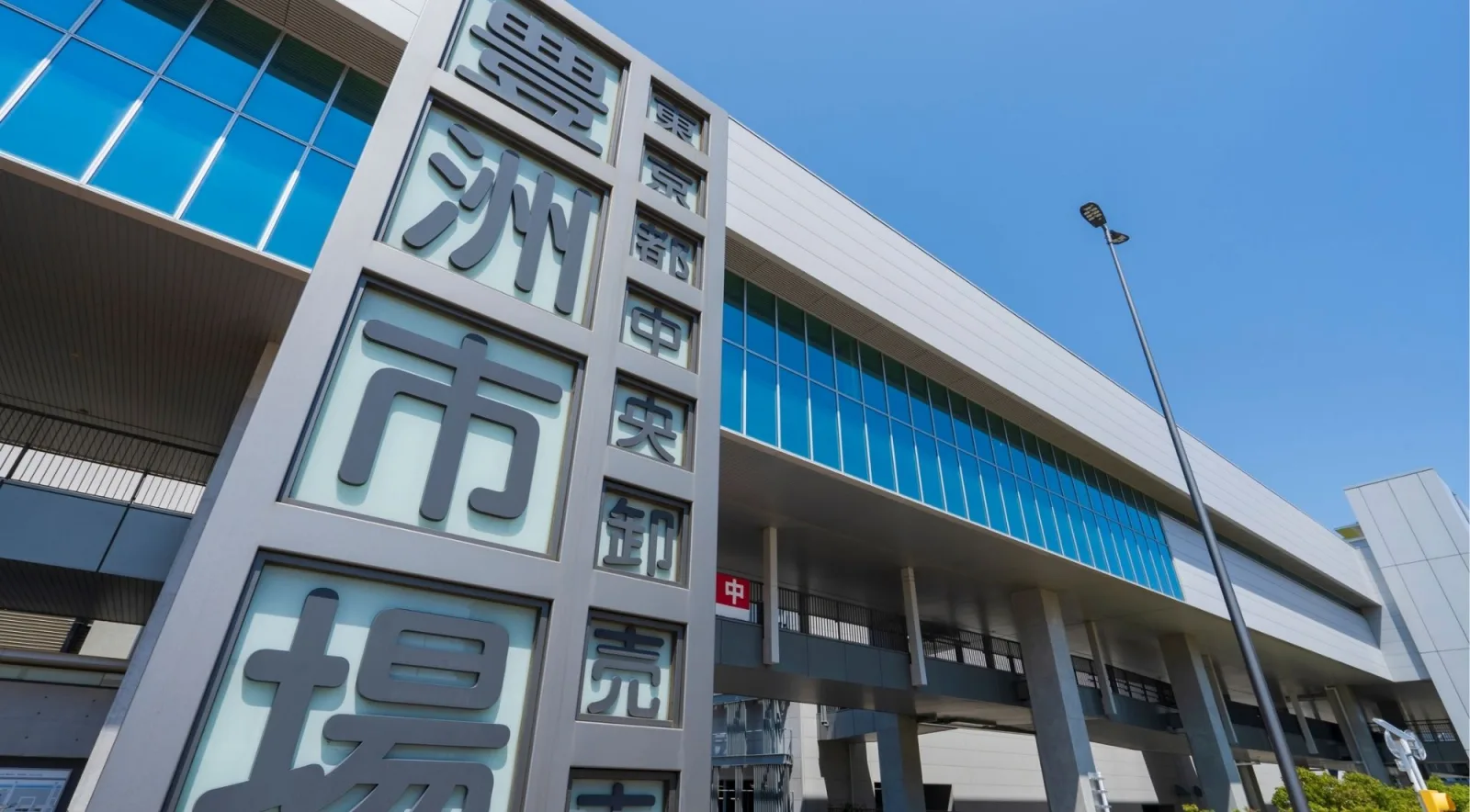
Toyosu Market (豊洲市場) is the world’s largest wholesale seafood market and the modern successor to Tokyo’s legendary Tsukiji Market, which relocated here in October 2018. This guide covers everything you need to plan a smooth 2026 visit: how the market is laid out, how to watch the famous tuna auction, opening hours and closed days, the best sushi and where to queue, how to get to Shijō-mae Station before dawn, the new Senkyaku Banrai food-and-onsen complex, and the mistakes first-time visitors make.
Booking tip: Guided early-morning market and tuna-auction tours consistently sell out. If you want a guide to handle logistics, translation and restaurant access, compare Toyosu & Tsukiji tours → well ahead of your trip. (Verify inclusions, meeting point and start time before booking.)
What Is Toyosu Market?
Toyosu Market is the Tokyo Metropolitan Central Wholesale Market’s flagship facility, operated by the Tokyo Metropolitan Government on a man-made island in Tokyo Bay in Koto ward. It opened on 11 October 2018, taking over the wholesale trade from the aging Tsukiji Market. It is widely described as the largest wholesale fish and seafood market in the world, sitting on a 407,000 m² site — described by the Japan National Tourism Organization as almost twice the size of old Tsukiji (Nippon.com puts it at 1.7 times; CNN at 1.8 times).
The scale is staggering. Toyosu handles roughly 1,400 to 1,700 tons of marine products daily, and at the time of the move CNN reported it inherited “one of the most lucrative fish trading operations in the world, worth an estimated $3.8 billion a year.” Its most famous ritual is the pre-dawn tuna auction, where buyers bid on bluefin tuna — the 2026 New Year champion weighed 243 kg — using rapid calls and hand signals. The ceremonial first auction of the year regularly makes global headlines: at the first 2026 auction, a 243 kg (535 lb) bluefin caught off Oma sold for a record ¥510 million (about $3.2 million) to Kiyomura Corp., whose owner Kiyoshi Kimura runs the Sushi Zanmai chain — breaking his own previous record of ¥334 million ($2.1 million) set in 2019.
Read next: Tsukiji vs Toyosu — which should you visit? →
Why the Market Moved From Tsukiji
Tsukiji Market opened in 1935 and, after more than 80 years, its infrastructure was outdated. The buildings were open-air, cramped, difficult to keep cool and hygienic, and had aging earthquake- and fire-safety standards. Space had also run out for a market handling ever-growing volumes, and narrow lanes struggled to cope with both turret-truck traffic and swelling crowds of tourists.
The relocation had been discussed for decades — the Toyosu site, a former Tokyo Gas plant, was identified around 2001 — but the move was repeatedly delayed by a soil-contamination controversy. Surveys found benzene, arsenic and cyanogen in the soil and groundwater at levels far above safety standards. The Tokyo Metropolitan Government carried out an extensive remediation programme (removing and replacing contaminated soil and adding a thick clean-soil layer) as part of a relocation project that cost around $5 billion overall. Then-Governor Yuriko Koike postponed the planned late-2016 move to complete additional groundwater testing. After experts ultimately declared the site safe and countermeasures were put in place, the move went ahead in October 2018.
How Toyosu Feels Different From Old Tsukiji
This is the single most important thing for visitors to understand. Old Tsukiji was an open-air, walk-through market where — in its final years — tourists could get close to the action. Toyosu is fundamentally different: it is an indoor, climate-controlled, purpose-built facility where general visitors are kept separate from the working floor. You watch the market through glass from dedicated viewing corridors and observation decks, walk along designated raised walkways, and cannot wander onto the trading floor. The environment is modern, clean and sterile compared with Tsukiji’s weathered, sensory chaos. Many visitors who expect “old Tsukiji” are surprised — manage your expectations accordingly.
The Buildings: How Toyosu Is Laid Out
Toyosu is not a single hall but a campus of separate buildings connected by covered pedestrian walkways/bridges at the level of Shijō-mae Station’s ticket gates. You can move between all of them without going outside — helpful in rain or heat. The market is segmented by roads into blocks:
Fisheries Wholesale Market Building (Block 7)
This is where the tuna auctions take place, plus auctions of other seafood. For visitors it houses:
- Tuna Auction Observation Windows — a 2nd-floor corridor with double-glazed windows looking down onto the tuna auction. Free, no reservation. The glazing keeps the corridor mild year-round but blocks sound and can cause reflections in photos.
- Tuna Auction Observation Deck (the close-up “lower” deck) — on the auction-hall floor, separated from the action by a single glass panel that does not reach the ceiling, so you can hear the bidding. Requires an advance lottery (see below).
- Seafood Auction Observation Windows — a few windows onto the hall where non-tuna seafood is auctioned. (The tuna hall floor is green to contrast with the red tuna flesh; the general seafood hall floor is grey.)
- The Management Facilities Building is part of Block 7 and contains the 3rd-floor PR Corner / Promotional Corner (market-history exhibits and a photo spot; also the meeting point for the auction-deck lottery tour) and a cluster of restaurants.
Fisheries Intermediate Wholesale Market Building (Block 6)
This is where intermediate wholesalers sell seafood on to licensed buyers (restaurants, retailers). The trading floor is off-limits, but Block 6 has the most for visitors:
- The largest restaurant zone (3rd floor) — home to many restaurants that moved from Tsukiji, including several famous sushi shops.
- Wholesale Market Observation Windows — limited views down onto the intermediate wholesale floor.
- Uogashi Yokocho (魚がし横丁) — a shopping arcade of around 70 shops on the 4th floor, open to the general public, selling knives, dried goods, pickles, tea, tamagoyaki, seasonings, rubber boots and souvenirs in retail portions.
- Rooftop Green Space / lawn — a spacious rooftop garden with lawn and panoramic views of Tokyo Bay, Rainbow Bridge and Tokyo Tower (and Mt. Fuji on clear days). Accessible by elevator and stairs. Note: eating and drinking are not permitted on the rooftop.
Fruit and Vegetable Building (Block 5)
Combines the auction hall and wholesale market for produce. Visitors can watch from observation windows (a long corridor of windows over the wholesale shops, plus an observation deck over the produce auction hall — produce auctions begin around 6:30 am). A small cluster of restaurants sits near the entrance on the 1st floor, including Daiwa Sushi.
Practical note: the three blocks are separated by roads and the walking distances are significant — allow time to move between them.
Tuna Auction Viewing: 2026 Rules & Access
There are two ways to watch the tuna auction, both free:
1. Upper Observation Deck / Visitor’s Walkway (no reservation)
The 2nd-floor glass-walled corridor in Block 7 opens to visitors from 5:00 am. No ticket or reservation needed — just arrive early (around 5:00 am) to get a spot by the window. You view through fully sealed glass with the auction typically running roughly 5:30–6:30 am. This is the easy, reliable option and is fine for most visitors. Anyone not selected in the lottery can use this walkway.
2. Close-Up Observation Deck (free, advance lottery)
For a closer, on-the-floor view where you can actually hear the bidding, you must win a spot in the official advance lottery. Verified 2026 details from the Tokyo Metropolitan Government and the official lottery site (toyosu.jcdlotterysite.jp):
- Capacity: 100 people are selected per day.
- Group size: up to 5 people per application; the group is treated as a single unit. The representative must be junior-high-school age or older; accompanying members can be any age.
- How to apply: online only, via the official lottery site, available in English. One application per group per month; you may list up to three preferred dates.
- Application window: applications open the month before your intended visit month, typically for about a week in the first half of the month; winners are notified by email (only winners are notified). For example, for a March 2026 visit the entry window ran 4–10 March 2026 with winners announced around 19 March. Always check the site for the current month’s exact dates.
- On the day: meet at the Promotional Corner, Block 7, 3rd floor (Management Facilities Building) by 5:30 am; the group is escorted to the deck. Viewing runs 5:45–6:25 am. Bring photo ID (e.g. passport) matching your application.
- Status: The lottery is currently operating in 2026 (not suspended). It runs on market business days — so not on Sundays, national holidays, or the frequent Wednesday closures.
Because the deck is exposed to the refrigerated auction hall, dress warmly — it is close to freezing.
Deep dive: Toyosu tuna auction — full booking walkthrough →
Other Experiences You Might Enjoy
The auction is only the opening act of a Tokyo food morning. Most visitors pair it with a guided walk through the Tsukiji Outer Market, a sushi breakfast at Sushi Dai or Daiwa Sushi, the Edo-themed food street at Toyosu Senkyaku Banrai, or the immersive digital-art rooms of teamLab Planets TOKYO a short walk away. Small-group tuna auction tours, Tsukiji food-tasting walks and sushi-making classes all run from this corner of Tokyo Bay:
Opening Hours & Closed Days
General visitor hours: the market is open to visitors 5:00 am to 5:00 pm (17:00) on operating days. Admission is free. Each shop and restaurant keeps its own hours — most restaurants open between 5:00 and 6:00 am and close by early-to-mid afternoon (many by 2:00–3:00 pm, some earlier if they sell out). Uogashi Yokocho shops generally run into the early afternoon.
Closed days: Toyosu closes on Sundays, Japanese national holidays, and many (but not all) Wednesdays, plus an extended New Year closure at the year-end/early January.
How the Irregular Wednesday Closures Work
Wednesday is the market’s standard mid-week closure, used to balance the trading calendar — but not every Wednesday is closed, and occasionally other days shift. The pattern is irregular month to month, so you must check the official monthly business-day calendar before you go. The Tokyo Metropolitan Government publishes an annual “Toyosu Market business day calendar” (in English) that marks every closed day. For 2026, the New Year closure means the market is shut the first several days of January and reopens in early January (the first auction of 2026 was held on 5 January).
Never plan your visit without checking the calendar — arriving on a closed Wednesday is one of the most common visitor mistakes.
See: Toyosu opening hours & closed-day calendar →
Getting There
Toyosu Market wraps around Shijō-mae Station (市場前駅) on the Yurikamome Line — the station name literally means “in front of the market,” and covered walkways connect the platform directly to all the market buildings. There is no public parking for cars or bicycles; use public transport.
By Train
- Yurikamome Line (direct): the Yurikamome is an automated elevated line running between Shimbashi (on the JR Yamanote Line) via Odaiba to Toyosu. Shijō-mae is the market’s own station.
- Tokyo Metro Yūrakuchō Line + Yurikamome: take the Yūrakuchō Line to Toyosu Station, then transfer to the Yurikamome for two stops back toward Shimbashi to Shijō-mae. (Despite the name, Toyosu Station is not the closest — it’s about a 20-minute walk; Shijō-mae is the station you want.)
- Rinkai Line: connects the Tokyo waterfront/Odaiba area; transfer to the Yurikamome to reach Shijō-mae.
Note: the Yurikamome is not covered by the Japan Rail Pass — you’ll buy a separate ticket or use an IC card. Our guide to getting to Toyosu Market has the full first-train table, taxi times from every central district, and the back-route that beats the obvious one.
Approximate Journey Times & Routes
- From Tokyo Station: JR Yamanote to Yūrakuchō, Yūrakuchō Line to Toyosu, then Yurikamome to Shijō-mae — roughly 45 minutes total. Alternatively, JR to Shimbashi then Yurikamome straight through (about 28 minutes on the Yurikamome leg).
- From Ginza: short hop to Shimbashi or Yūrakuchō, then as above.
- From Shinjuku / Shibuya: take the JR Yamanote Line to Shimbashi (or a subway toward Toyosu), then transfer — allow roughly an hour door to door.
- From Haneda Airport: via Shimbashi or the monorail/JR connections — under an hour depending on route.
- From Narita Airport: significantly longer — allow around two hours via central Tokyo.
The First-Train Problem (Critical for the Tuna Auction)
The earliest any train reaches Shijō-mae is 05:17, via the first northbound Yurikamome from Toyosu (05:15), reached by transferring from an early Yurakuchō Line train — this applies on both weekdays and weekends. That misses the 5:00am walkway opening entirely, and leaves no real margin for the 5:30am lottery meeting: you’d arrive at the Block 7 PR Corner around 5:22–5:25am with zero buffer. The obvious route — the first train from Shimbashi, departing 05:45 — doesn’t arrive until 06:12, roughly an hour later still. For any certainty, take a taxi or stay within walking distance the night before. Taxis in the pre-dawn hours are the common fallback; fares in Tokyo at that hour run higher, so budget accordingly (verify current fares before you travel). A popular hack is to spend the night at the adjacent 24-hour Manyo Club onsen (see Senkyaku Banrai below) and walk over.
Senkyaku Banrai: The New Food & Onsen Complex
The biggest change to the visitor experience since the market opened is Toyosu Senkyaku Banrai (豊洲 千客万来), which opened 1 February 2024 right next to the market and is a 5–10 minute walk from Shijō-mae Station via the pedestrian deck. Developed by hot-spring operator Manyo Club, it finally gives Toyosu the kind of tourist-facing food-and-retail street that old Tsukiji had but the sterile inner market lacked. It has two parts — and our dedicated Senkyaku Banrai guide covers the onsen, the two footbaths and the overnight auction trick in full:
Toyosu Edomae Market (Toyosu Jogai Edomae Ichiba)
A multi-storey open mall designed to recreate an Edo-period townscape, with around 70 shops and restaurants across several floors (areas include “Mekiki Yokocho / Connoisseur Alley” and “Toyosu Menuki Odori / main street”). You can eat and walk: Edomae-style sushi, grilled eel, tempura, robatayaki skewers, seafood bowls, and local specialities such as Fukagawa croquettes. Entry is free. Most shops and restaurants run roughly 10:00 am to around 8:00–10:00 pm (hours vary by floor and shop; some second-floor shops open at 9:00).
Tokyo Toyosu Manyo Club (Onsen)
A large hot-spring/spa building (nine floors plus basement) open 24 hours, using real hot-spring water trucked in daily from Hakone and Yugawara. It has indoor and open-air baths, private “family” baths, bedrock baths and saunas, massage and relaxation rooms, a manga lounge, restaurants, and even a few overnight guest rooms. There’s an entry fee for the onsen (verify current pricing before booking). A standout free feature: the 8th-floor Senkyaku Banrai footbath garden, open to the public at no charge, with panoramic Tokyo Bay and skyline views (officially listed 9:00 am–10:00 pm; note some local sources report 10:00 am–8:00 pm — verify same-day). The Manyo Club’s own rooftop scenic footbath is customers-only, open roughly 6:00am–3:00am.
Note on hours: because Toyosu Edomae Market opens at 10:00 am but the fish market restaurants open at dawn, Senkyaku Banrai is best paired as a mid-morning/afternoon stop after the market, or as an overnight base before an early auction.
Food & Sushi at Toyosu
The market’s restaurants are clustered in three zones: the large 3rd-floor restaurant street in Block 6 (the biggest, 22 restaurants), the 3rd-floor restaurants in the Management Facilities Building (Block 7) (13 restaurants), and a small cluster on the 1st floor of Block 5 (the Fruit & Vegetable Building, 3–4 restaurants) — 39 restaurants in total. Most open between 5:00 and 6:00 am and close in the early afternoon.
Sushi Dai (寿司大) — the famous queue
Sushi Dai, which moved from Tsukiji, is on the 3rd floor of Block 6 (Fisheries Intermediate Wholesale Market Building). It is renowned for its omakase (chef’s-choice) set — a sequence of seasonal nigiri, a roll, tamago and miso soup — and for its extreme queues. No reservations. Waits of 3–4 hours (and even longer on weekends) are common; the restaurant opens around 5:30 am. To have a realistic shot at the first seating, arrive very early — many people line up before dawn. There are a few stools outside for waiting. English menu and English-speaking staff available.
Daiwa Sushi (大和寿司) — the faster alternative
Daiwa Sushi is on the 1st floor of Block 5 (near the Fruit & Vegetable Building entrance). It also relocated from Tsukiji and serves a similar omakase-style set. It’s larger and turns tables faster than Sushi Dai, so waits are typically shorter (often 1–2 hours). Opens around 5:30 am, closed Sundays.
Other Notable Restaurants
- Yachiyo (八千代) — beloved for tonkatsu and fried dishes (famous horse-mackerel fry and deep-fried oysters), now on the 3rd floor of the Management Facilities Building.
- Tenfusa (天房) — long-running tempura specialist, on the 1st floor of the Fruit & Vegetable Building; tendon (tempura bowl) is the signature; English menu available; go early to avoid the 11 am+ line.
- Odayasu (小田保) — a venerable spot (founded around 1935) known for tonkatsu and seasonal deep-fried oysters.
- Iwasa Sushi (岩佐寿し) — affordable, varied sushi in Block 6; cash only; at least one set per person.
- Ryu Sushi (龍寿司 / Ryuzushi) — one of the Management Building sushi options.
- Plus ramen (Yajima), soba (Fujimiya), curry, oyakodon (Toritoh), kaisendon (Oedo) and Japanese sweets (Mosuke).
Payment & Language
Bring cash. Many market restaurants are cash-only or cash-preferred, though some now take cards. Our best sushi at Toyosu guide has the full counter-by-counter breakdown and queue strategy. English menus and some English-speaking staff exist at the more tourist-oriented spots (Sushi Dai, Tenfusa, Oedo), but a translation app helps. Sets often require one order minimum per person.
Practical Visitor Rules & Etiquette
Toyosu is a working wholesale market, not a theme park. The rules are enforced:
- Stay on designated visitor routes. The wholesale/intermediate trading floors are off-limits to the general public; you view from corridors and decks.
- Don’t touch the goods. General consumers cannot buy on the intermediate wholesale floor.
- Watch for turret trucks (ターレ) and forklifts — these electric carts move fast and have right of way. Stay clear.
- Footwear: wear closed-toe, comfortable, flat walking shoes. Avoid high heels and open-toe shoes — floors can be wet and you’ll walk a lot.
- No large luggage or big backpacks. Use the coin lockers at Shijō-mae Station or leave bags at your hotel.
- Photography: allowed in general/visitor areas, but no flash (especially at the auction), and not on the trading floor. Be considerate of workers.
- No smoking except in designated areas (including e-cigarettes).
- No eating or drinking on the visitor walkways/benches or on the rooftop garden.
- Children are welcome but must be supervised closely around vehicle traffic; the auction’s very early hours make it tough for small kids.
- General courtesy: don’t obstruct working professionals; keep noise down; follow staff and guard instructions.
Accessibility
Toyosu was built to be barrier-free: the buildings, walkways, observation decks and rooftop garden are connected by elevators and are wheelchair accessible. However, walking distances between blocks are long, which can tire those with limited mobility. Multifunctional/accessible restrooms are available (and at Senkyaku Banrai). The buildings are kept cool to protect seafood — bring a layer even in summer.
Best Time to Visit: Hour-by-Hour
Toyosu is a morning destination. Here’s the rhythm of a market day:
- 5:00 am — Market opens to visitors. Upper tuna-auction walkway opens. Earliest restaurants (and the auction-deck lottery meeting at 5:30) begin.
- 5:30–6:30 am — Tuna auction (close-up deck viewing 5:45–6:25). Peak spectacle. Buyers inspect fish with flashlights, then rapid bidding.
- ~6:30 am — Produce auctions begin in Block 5. Just-sold tuna is moved around the market until about 7 am.
- 6:00–9:00 am — Prime time for a fresh-sushi breakfast; queues at Sushi Dai and Daiwa build quickly. Uogashi Yokocho shops and the rooftop garden are pleasant now.
- 9:00–11:00 am — Still lively, but wholesalers begin winding down; some stalls close. Good window for less crowded dining if you skip the famous queues.
- 11:00 am–2:00/3:00 pm — Many restaurants hit their lunch peak then close; the market steadily quiets. Senkyaku Banrai (from 10 am) is the natural mid-day continuation.
- After ~3:00 pm — Most of the market is effectively done; visitor hours officially end at 5:00 pm.
How long to allow: 2–3 hours for the market core; a full morning (plus Senkyaku Banrai and/or teamLab Planets) makes a great half-to-full day.
Best days: any open weekday morning. Avoid Sundays, holidays and Wednesdays (check the calendar). Seasonal notes: buildings are cold year-round (dress warmly for the auction deck especially); January brings the dramatic record-setting first auction (hatsuuri) but also the New Year closure and, on reopening, big crowds and media.
Guided Tours: Are They Worth It?
Because the auction is early, in Japanese, and logistically tricky, a guided tour is a popular option — especially for the tuna auction and for a combined Toyosu + Tsukiji Outer Market morning. What a good guide adds:
- Logistics: solves the pre-dawn transport problem (some include hotel pickup on foot or coordinated meeting times around 4:00–5:00 am).
- Language & context: narration on the auction, the seafood trade and market history; help reading menus and ordering.
- Navigation: the site is large and confusing; a guide gets you to the right viewing spots and restaurants efficiently.
- Restaurant access: some private tours secure sushi-breakfast seating (e.g., at Daiwa Sushi or Ichiba Sushi) so you skip the worst of the queue.
Typical structures include half-day (roughly 3–4.5 hour) morning market-and-auction tours, food/tasting walks focused on the Tsukiji Outer Market, and combination tours covering both markets. Note that most tours view the auction from the public walkway — the close-up deck still depends on the official lottery, which a tour cannot guarantee.
Ready to book? Compare Toyosu & Tsukiji market and tuna-auction tours →. Look for small-group or private options with strong recent reviews, English-speaking licensed guides, and clear inclusions. (Prices and availability change — verify details and cancellation terms before booking.)
Nearby: What Else to Do
- teamLab Planets TOKYO — the wildly popular immersive digital-art museum is extremely close (about a 10-minute walk, or one Yurikamome stop to Shin-Toyosu), making it the most natural pairing with a Toyosu morning. Official hours are 8:00 am–10:00 pm, last entry one hour before close (hours vary by date and season — check the official calendar). Its run is currently stated through the end of 2027 — pre-book timed tickets and verify current status.
- Toyosu Gururi Park — a waterfront park ringing the market with Rainbow Bridge and bay views; good for a post-market stroll.
- Ariake — the adjacent bay-front district (convention/shopping/arena developments).
- Odaiba — the entertainment and shopping island a few Yurikamome stops away.
- LaLaport Toyosu — a large waterfront shopping mall near Toyosu Station.
- Tsukiji Outer Market — see below.
Tsukiji Outer Market: Still Open and Thriving
A crucial clarification: only the wholesale inner market and the tuna auction moved to Toyosu. The Tsukiji Outer Market (Tsukiji Jogai Shijo) never closed and remains one of Tokyo’s best food destinations — a dense grid of roughly 400+ retail shops, food stalls and restaurants selling sushi, grilled seafood skewers, tamagoyaki, knives and dried goods. It’s about 2–2.5 km from Toyosu (a short Yurikamome + Metro hop). If you want to eat and browse in a lively street atmosphere, go to Tsukiji; if you want to see the auction and the wholesale operation, go to Toyosu. Many visitors do both — Toyosu at dawn, Tsukiji later in the morning. Tsukiji Outer Market shops mostly run early morning to around 2 pm and are quietest on weekday mornings (many close Sundays and some Wednesdays).
See: Tsukiji Outer Market guide →
Common Misconceptions & Mistakes
- Going to Tsukiji expecting the tuna auction. The auction is at Toyosu now. Tsukiji has the outer retail market only.
- Expecting an open-air walk-through market like old Tsukiji. Toyosu is indoor, glassed-off and viewed from corridors — a very different, more sterile experience.
- Arriving too late. The auction is over by ~6:30 am and restaurants/wholesalers wind down by early afternoon. This is a dawn destination.
- Arriving on a closed Wednesday (or Sunday/holiday). Check the official business-day calendar first — the Wednesday closures are irregular.
- Relying on the first train for the auction. The earliest arrival is 05:17, which misses the walkway opening and leaves no margin for the lottery meeting; plan a taxi or a nearby overnight stay.
- Underestimating scale and walking distances. The blocks are far apart; wear proper shoes and allow time.
- Assuming you can get the close-up deck without the lottery. The on-floor deck requires winning the advance lottery; otherwise use the free upper walkway.
- Not bringing cash. Many restaurants and shops are cash-first.
Frequently Asked Questions
Do I need a reservation to visit Toyosu Market? No — general entry is free and needs no reservation (5:00 am–5:00 pm on open days). Only the close-up tuna-auction observation deck requires winning the advance lottery. The free upper walkway needs no booking.
Can I still watch the tuna auction in 2026? Yes. Watch free from the 2nd-floor walkway (no booking, arrive ~5:00 am), or apply for the close-up deck lottery (100 people/day, meet 5:30 am, viewing 5:45–6:25 am). The lottery is operating normally in 2026.
What days is Toyosu closed? Sundays, national holidays, many Wednesdays, and the New Year period. Always check the official monthly calendar — Wednesday closures are irregular.
What time should I arrive? For the auction, be in position by ~5:00 am (or 5:30 am if you won the deck lottery). For a sushi breakfast without the market crowds, 6:00–7:00 am. For a relaxed look plus Senkyaku Banrai, mid-morning.
How do I get there for the early auction if trains don’t run yet? The earliest train arrives at 5:17am, which is too late for the walkway and leaves no margin for the lottery. Take a taxi, or stay overnight within walking distance (including the 24-hour Manyo Club onsen at Senkyaku Banrai) and walk over.
Is Toyosu worth visiting, or should I just go to Tsukiji? Both, ideally. Toyosu = the auction and the wholesale spectacle (plus top sushi); Tsukiji Outer Market = lively street food and shopping. They complement each other.
Can children and wheelchair users visit? Yes. The market is barrier-free with elevators and accessible restrooms, though walking distances are long. Children are welcome but must be supervised around turret-truck traffic; the pre-dawn hours are hard for small kids.
Is there anywhere to store luggage? Yes — coin lockers at Shijō-mae Station. Don’t bring large bags onto the visitor routes.
Do the restaurants take credit cards? Some do, many don’t. Bring cash to be safe. English menus exist at the more tourist-friendly spots.
How long should I spend at Toyosu? 2–3 hours for the market itself; a half or full day if you add Senkyaku Banrai, the rooftop garden, Tsukiji Outer Market and/or teamLab Planets.
Book Your Toyosu Tuna Auction Tour
Join 415+ guests who rated this experience 4.9/5. Tuna auction viewing, Tsukiji outer market walk, and fresh sushi breakfast — all with a licensed local guide. Free cancellation.
Check Availability & Book