Toyosu Market in Winter: December, January & February Visitor Guide
Winter is the best season at Toyosu Market for tuna, but the calendar has traps: closed 31 December to 4 January and no lottery seats 25 December to 5 January. Closed days, sunrise times, what to wear for a 5 a.m. auction, food and a dawn-to-onsen timetable.
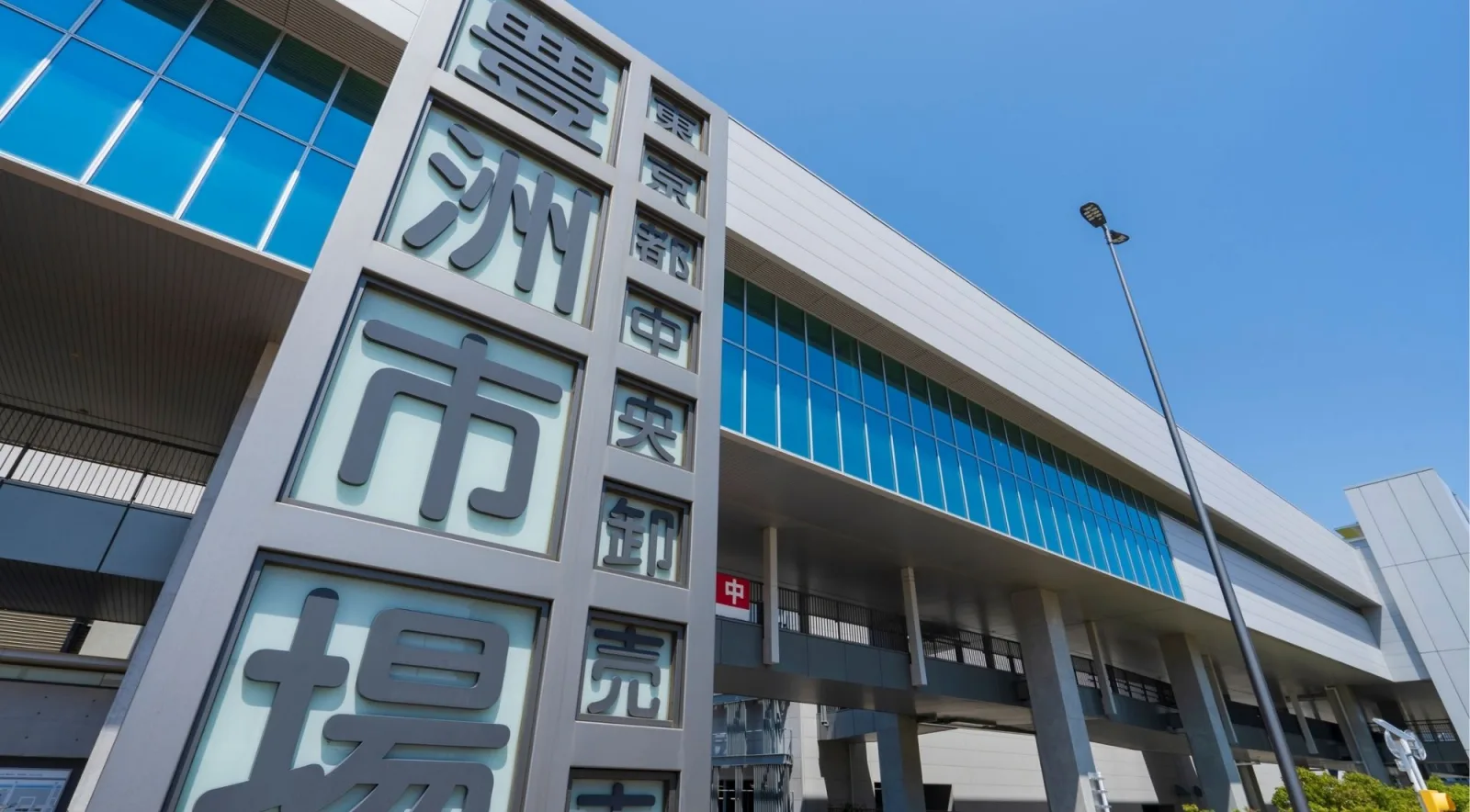
Go to Toyosu between mid-January and late February, on a Tuesday, Thursday or Friday trading day, and walk up to the free second-floor visitor corridor at 5:00 a.m. Winter bluefin is at its fattest, the crowds are thinner than in December, and the Senkyaku Banrai onsen next door is the best way to thaw out afterwards. The calendar is the only real risk: the whole market is closed from 31 December to 4 January, and the close-up lottery deck takes no applications for 25 December to 5 January.
Winter is also when Toyosu makes its biggest news. On 5 January 2026 a single Oma bluefin sold at the first auction of the year for a record ¥510.3 million, about $3.2 million. You will not be bidding, but the same cold, dark auction floor is open to you on almost any winter morning, for free.
The short answer:
- Best dates: Tuesday, Thursday or Friday trading days from about 14 January to the end of February. Avoid Saturdays, 28 to 30 December, 5 January (unless the first auction is the point of your trip) and the week of Chinese New Year.
- Year-end dates: the last trading days of 2026 are Sunday 27 December (a special trading day; the visitor walkway is expected to open, but confirm in late December) and Monday 28 to Wednesday 30 December. The market is closed 31 December to 4 January, and the first auction of 2027 falls on Tuesday 5 January, the first trading day on the official calendar.
- A winter morning that works: watch the auction from 5:00 to 6:30, take the Manyo Club morning bath (reception 5:00 to 9:00, ¥2,200 plus ¥150 bathing tax), then have a sushi brunch.
If you would rather have someone else handle the 5:00 a.m. start, a small-group tuna auction and Tsukiji tour includes the auction, a guide and a seafood breakfast. Check the dates you want below, because tours do not run on closed days.
Toyosu in winter at a glance
| Fact | Detail |
|---|---|
| Visitor hours | 5:00 to 17:00 on trading days; individual shops and restaurants keep their own hours |
| Admission | Free, including the lottery deck |
| Tuna auction | Roughly 5:30 to 6:30 a.m. on trading days |
| Walk-up viewing | Second-floor visitor corridor, Block 7, from 5:00 a.m., no reservation and no headcount cap (official FAQ). Some tour listings call it the “3rd floor public space”; it is the same corridor |
| Sunrise | 6:32 on 1 December, 6:51 at its latest (2 to 13 January), 6:41 on 1 February, so the auction happens in the dark |
| Lottery deck | 100 people a day, up to 5 per group, assembly at 5:30 a.m. at the PR Corner (Block 7, 3F), photo ID for every member |
| Lottery blackout | No applications accepted for 25 December to 5 January, according to the official FAQ |
| Closed days | Sundays, national holidays, most (not all) Wednesdays, and 31 December to 4 January |
| Seafood calendar | 2026: 251 open days and 114 closed days. 2027: 250 open and 115 closed (published September 2026) |
| Nearest station | Shijo-mae (U-14), Yurikamome line |
| Parking | None for visitors |
Winter mornings in Toyosu fit well with the rest of the bay area: Senkyaku Banrai food street and its Manyo Club onsen, the indoor teamLab Planets, the Tsukiji Outer Market, Odaiba and the Rainbow Bridge. Guided Tokyo food tours and other experiences are below:
The winter market calendar
How closures work. Toyosu closes on Sundays and public holidays. In weeks with no public holiday it also closes on Wednesday; in holiday weeks the holiday replaces the Wednesday closure. There are exceptions every year, so “closed every Wednesday” is a myth: in 2026, seven Wednesdays were open, including 30 December.
On closed days you cannot enter the building at all, restaurants and shops included. Only the rooftop green space stays open, from 5:00 to 23:00.
Winter 2025 to 2026 (past season)
| Month | Closed days | Notes |
|---|---|---|
| December 2025 | Sundays except 28 December (special opening); 30 December seafood open, produce closed; 31 December closed | Last trading day of 2025: Tuesday 30 December |
| January 2026 | 1, 2, 3, 4, 7, 11, 12 (Coming of Age Day), 14, 18, 21, 25, 28 | First trading day and first auction: Monday 5 January |
| February 2026 | 1, 4, 8, 11 (National Foundation Day), 15, 18, 22, 23 (Emperor’s Birthday), 25 |
Winter 2026 to 2027 (the season this guide covers)
| Month | Closed days (seafood) | Notes |
|---|---|---|
| November 2026 | 1, 3 (Culture Day), 8, 11, 15, 18, 22, 23 (Labor Thanksgiving Day), 29 | Wednesday 4 and 25 November are open for seafood. Sunrise is already 6:28 by 27 November, so late-November auctions are dark too |
| December 2026 | 2, 6, 9, 13, 16, 20, 23, 31 | Sunday 27 December is a special trading day (visitor walkway expected open; confirm in late December), and Wednesday 30 December is open for seafood with only the produce division closed |
| January 2027 | 1, 2, 3, 4, 10, 11 (Coming of Age Day), 13, 17, 20, 24, 27, 31 | Tuesday 5 January is the first trading day. Wednesday 6 January is a produce-only closure, so seafood is open that day |
| February 2027 | 3, 7, 10, 11 (National Foundation Day), 14, 17, 21, 23 (Emperor’s Birthday), 24, 28 | Wednesday 10 and 24 February are closed even though they fall in holiday weeks |
| March 2027 | 3, 7, 10, 14, 17, 21, 22 (substitute holiday for Vernal Equinox Day), 24, 28 | Wednesday 31 March is open for seafood |
November and December 2026 come from the official 2026 calendar, and January to March 2027 from the official 2027 seafood calendar file (checked October 2026). Across 2027 the seafood side has 250 trading days and 115 closed days.
A caution about Sunday 27 December. The market trades, and the visitor walkway is expected to open, because the official visitor page bars entry on “Sundays, holidays and other closed days” and 27 December is a trading day, not a closed day. No official page confirms visitor access in writing, though, and WaTabi warns that visitor rules may still treat the Sunday as closed, so confirm in late December before you plan an auction visit around it.
How to check the official calendar:
- Open the Tokyo Metropolitan Central Wholesale Market site, choose the annual calendar (市場開場日・休業日年間カレンダー), pick the year, then pick 水産物 (seafood). The seafood calendar is the one that matters for the tuna auction.
- Days marked 休市 are closed. “青果物のみ休市” means only the fruit and vegetable division is closed, so the fish side and the auction run.
- The market also offers a Google Calendar CSV that you can import.
- The next year’s calendar usually appears in early September: 2026’s went up on 5 September 2025, and 2027’s by 11 September 2026.
Our guide to opening hours, closed days and the best time to visit has a date checker, and the December 2026 guide lists every trading day before the break.
The New Year first tuna auction (hatsuseri)
The hatsuseri is the first auction of the year, held on the market’s first trading day in January, usually 5 January. The top bid is ceremonial: buyers pay for luck and publicity, not market value, and the news coverage peaks within hours as the winning restaurant displays the fish. In 2026 the bell rang at about 5:10 a.m., after a ceremonial hand-clap around 5:00.
Recent winning bids
| Year | Top price | Weight and origin | Buyer |
|---|---|---|---|
| 2019 | ¥333.6 million | 278 kg, Oma | Kiyomura (Sushi Zanmai), Kiyoshi Kimura |
| 2020 | ¥193.2 million | 276 kg, Oma | Kiyomura |
| 2021 | ¥20.84 million | 208 kg, Oma | Yamayuki / Onodera Group |
| 2022 | ¥16.88 million | 211 kg, Oma | Onodera Group / Yamayuki |
| 2023 | ¥36.04 million (¥170,000 a kilo) | 212 kg, Oma | Yamayuki / Onodera Group |
| 2024 | ¥114.24 million | Oma | Onodera Group / Yamayuki |
| 2025 | ¥207 million | 276 kg, Oma | Onodera Group / Yamayuki |
| 2026 | ¥510.3 million (about $3.2 million), ¥2.1 million a kilo | 243 kg, Oma | Kiyomura (Sushi Zanmai) |
The 2026 result was an all-time record. It broke Kimura’s own 2019 mark and ended Onodera’s run of five consecutive wins. The second-priciest fish that day, also from Oma, sold for just ¥7.83 million, which shows how far the top bid sits from normal prices. Kimura said he had hoped to pay less, but “the price shot up before you knew it.” Sushi Zanmai served the fish at its usual prices, reported at ¥398 for akami, ¥498 for chutoro and ¥598 for otoro before tax. Hokkaido sea urchin also set a record at that auction: 400 g for ¥35 million.
You cannot buy the ¥510 million fish, but on 5 January you can eat a piece of it at normal chain prices at Sushi Zanmai’s Tsukiji main branch, where the tuna is cut up for the public. That has happened in 2019 and 2026, so treat it as a pattern, not a promise. The full price history is in our record prices explained guide, and our guide to the first tuna auction covers how to watch it.
Can visitors watch it?
- Lottery deck: no. The official FAQ says applications for early-morning tuna auction viewing are not accepted for 25 December to 5 January, and 5 January falls inside that window.
- Second-floor corridor: yes, but expect crowds. The corridor opens from 5:00 a.m. on trading days, and 5 January is a trading day. Expect heavy media presence and a crowd. With the bell at about 5:10, the top fish sells before the first train can reach Shijo-mae (5:17), so stay nearby or take a taxi. Toyosu usually posts a first-market notice (初市) in late December, so check it before you go.
- If you are in Tokyo on 5 January: go for the atmosphere and the news-story novelty, not the view. For a better look at the auction, come on any ordinary weekday from mid-January.
Watching the auction in winter: corridor or lottery deck
| Second-floor corridor (walk-up) | Observation deck (lottery) | |
|---|---|---|
| Cost | Free | Free |
| Booking | None | Online lottery the month before, one application per group, up to 3 preferred dates |
| Capacity | No limit | 100 people a day, up to 5 per group (infants count as one) |
| Time | From 5:00 a.m., stay as long as you like | Assemble 5:30 at the PR Corner (Block 7, 3F); viewing roughly 5:45 to 6:25 |
| View | Through glass from above, a wide overview | Lower level and much closer: hand signals, frosted tails, the smell |
| Winter comfort | Indoor corridor, cool | Partly open to the auction floor, described by visitors as “almost like a freezer” |
| Requirements | None | Photo ID for every member (health insurance card for young children); late arrivals are sent to the corridor; no flash; intoxicated visitors are refused |
| Holiday period | Open on trading days | No applications for 25 December to 5 January |
How the lottery works. Applications open in the first third of the month before your visit; the October 2026 round ran 2 to 8 September, and results came out around the 17th. There is no second round, no waitlist, no same-day entry and no date changes. Travel agencies cannot apply on your behalf, and resale or transfer is prohibited. The odds are unpublished, so ignore any blog that quotes a win rate.
The cycle usually runs like this: applications open on a Wednesday at 15:00 early in the month before your visit, close the following Tuesday at 23:59, and results come out about nine days later, around 18:00. You apply at toyosu.jcdlotterysite.jp, which the market says is updated early every month. The lead applicant must be of junior-high-school age or older, each email address can be used once, and you can list up to three preferred dates. Arrive late for the 5:30 assembly and you are sent up to the second-floor corridor instead.
Several tour operators say there is “no lottery in December” or “no lottery at the end of December”. That is their own service policy. The official rule excludes only 25 December to 5 January, and the January 2026 round took applications in December 2025, so treat the rest of December as normal.
For winter visitors:
- December trip: apply in early November. WaTabi reports the December 2026 round running from 4 November (15:00) to 10 November (23:59), with results around 19 November at 18:00.
- January trip (6 January onward): apply in early December.
- February trip: apply in early January; on the 2025–26 pattern, the February 2027 round should run around 6 to 12 January. The blackout covers viewing dates, so the January round should open as normal, but check the lottery site, because these later dates are inferred from past rounds.
Our pick: for most winter visitors, skip the lottery and walk up to the corridor at 5:00. The deck suits you if you are staying in Toyosu, Ariake or Odaiba, you have ID for everyone and proximity is the point of your trip. Our lottery and viewing guide walks through the application.
What you see. Rows of frozen and fresh tuna with the tails cut open, buyers inspecting the flesh with torches and hooks, then a bell and fast bidding by hand signals. The auction can be over in 20 minutes or last close to an hour, depending on volume.
The year-end shopping rush
- What is happening: from about 25 to 30 December Tokyo stocks up for osechi, the New Year food: tuna, crab, salmon roe (ikura), kamaboko, datemaki and kombu. This is the market’s commercial peak.
- Can you buy fish at Toyosu? Not on the intermediate wholesale floor, which serves supermarkets, retailers and restaurants. General consumers cannot purchase there.
- What you can buy: Uogashi Yokocho, about 70 specialist shops centred on the 4F of the Intermediate Wholesale Building (Block 6). It sells no fresh fish, but it carries osechi staples such as kamaboko, datemaki, kombu, beans and chestnuts, plus New Year chopsticks, table decorations and dried soba for New Year’s Eve.
- Most shops open early and close around midday. Official guidance is to come after 8:00 a.m., because early morning is when professional buyers shop, and to leave before lunch.
- No eating in the aisles, fixed prices with no haggling, no pets, no stroller parking, no coin lockers, and watch for turret trucks.
- Senkyaku Banrai, the visitor complex next door, is where you can buy seafood souvenirs and eat. It has no closing days and stays open through the year-end and New Year period.
- Tsukiji Outer Market is the real food frenzy. From 1 December 2025 the Tsukiji Food Town Development Council posted a notice asking visitors to refrain from guided tours and eating strolls, citing past injuries from crowding. Most Tsukiji shops close until around 4 January, and the council’s advice for year-end shoppers is to arrive between 7:00 and 8:00 a.m., before the midday crush.
For late December, plan a watch-don’t-shop visit at Toyosu. Buy osechi-style souvenirs at Uogashi Yokocho after 8:00 a.m., and avoid Tsukiji on 28 to 30 December unless you like crowds. Our Tsukiji Outer Market guide has the other months.
Winter seafood: what is in season and what to order
| Seafood | Japanese | Peak | Why winter | Order it as |
|---|---|---|---|---|
| Wild Pacific bluefin (especially Oma, Aomori) | 本マグロ / 大間まぐろ | Oma peak about September to December; winter is prime for fatty cuts | Cold water means maximum fat, which is why the first-auction fish come from Oma | Otoro and chutoro nigiri, maguro-don |
| Winter yellowtail | 寒ブリ (kan-buri) | December to February | Fattest of the year as the fish migrate south | Sashimi, buri-shabu, teriyaki |
| Snow crab | ズワイガニ | November to March | The season opens in November and volume peaks around December | Boiled crab, kani-don |
| Hairy crab and king crab | 毛ガニ / タラバガニ | Winter | Classic year-end gift crab | Kani-don, crab miso |
| Pufferfish | ふぐ (fugu) | November to February | The flesh firms up in winter | Tessa (thin sashimi), tecchiri hotpot (licensed chefs only) |
| Monkfish and monkfish liver | あんこう / あん肝 | December to February | The liver is richest, the “foie gras of the sea” | Ankimo, anko-nabe |
| Oysters | 真牡蠣 | December to February (season October to March) | Plumpest in winter | Kaki-fry, raw, nabe |
| Cod and cod milt | マダラ / 白子 | December to February | Shirako is a winter delicacy | Shirako ponzu, tara-chiri |
| Olive flounder | ヒラメ | December to February (kan-birame) | Firm, sweet white flesh | Usuzukuri, kombu-jime |
| Golden-eye snapper | 金目鯛 | December to February, fattest | Winter fat | Nitsuke (simmered) |
| Scallops | ホタテ | Winter to early spring | Sweet adductor | Nigiri, grilled |
| Sea urchin | ウニ | Available; Hokkaido supply varies | A record ¥35 million for 400 g at the 2026 first auction | Uni-don |
Why the tuna is fattest now. Shungate, a government-backed Japanese food portal that profiles the Oma pole-and-line fishermen, says bluefin enter the Tsugaru Strait from autumn to winter and “usually have their highest fat content from the end of November to around December”. Trade sources put peak Pacific bluefin fat at December to February, and one sushi guide says otoro rises to “close to 40 percent” fat at the winter peak, up from about 25 to 30%; that is a trade claim, not a lab figure. On an ordinary morning, Tokyo Cheapo, citing the market association, counts “typically around 200 fresh and 1,000 frozen fish” at the auction. Other winter picks from the same counters: seiko-gani (female snow crab) until 31 December, akagai (ark shell) from December to March, best in January and February, and shirako at its peak in February.
If you order one thing: a chutoro and otoro set plus a kan-buri nigiri. Winter is the only season when both are at their peak at the same time. Our guide to otoro, chutoro and akami explains the cuts.
Where to eat at Toyosu in winter
The market has 39 restaurants, entered from the 3F pedestrian deck of each block. Restaurants follow the market calendar: closed on Sundays, holidays, closed Wednesdays and 31 December to 4 January. Hours change, so verify before you go.
| Restaurant | Location | Typical hours (verify) | What it is like | Winter queue |
|---|---|---|---|---|
| Sushi Dai (寿司大) | Block 6, 3F | About 5:30 or 6:00 to 14:00, closes when sold out | The legend: omakase (about ¥5,500, cash only) with chatty chefs, about 12 seats | Many days use a check-in and return-time system; waits of 1 to 3 hours or more are commonly reported, and one reviewer complained of four hours outside in the cold |
| Daiwa Sushi (大和寿司) | Block 5, 1F | About 6:00 to 13:00 | Faster-turnover classic, about 10 seats; omakase about ¥6,600 (7 nigiri, a roll, tamago and miso soup) | Shorter; reviews report 15 to 40 minutes, especially before 6:00 |
| Tomi Sushi / Bentomi, Sushi Bun | Blocks 6 and 7 | Early morning to early afternoon | Solid market sushi, often shorter lines | Usually shorter than Dai |
| Nakaya (仲家) | Block 6, 3F | About 5:00 to 14:00 | Kaisen-don seafood bowls, good for ikura, uni and tuna | Lines build after about 10:00 |
| Senri-ken (センリ軒) | Block 6, 3F | About 4:00 to 13:00 | Old-school market cafe, a warm drink and toast after the auction | Rarely long |
| Sushi Bun (鮨文) | Block 6, 3F | About 6:30 to 14:00 | An Edomae counter of about 150 years, known for anago | Often walk-in before 9:00 |
| Yamahara | Block 6, 3F | About 7:00 to 16:00 | Showy kaisen-don bowls | Varies |
| Yachiyo (八千代) | Block 7, 3F | From about 5:00 | Aji fry, tonkatsu and winter fried oysters; cash | The chashu-egg dish sells out early |
| Tenfusa (天房) | Block 5, 1F | About 7:00 to 14:00 | Tempura and tendon | Usually no queue before about 9:00 |
| Senkyaku Banrai food hall | Next door | 10:00 to 22:00 (some to 18:00 or 20:00; a few 2F places from 9:00) | Edo-style street food, sushi and don | Open on closed days and over New Year |
Winter queue tactics:
- Check in at Sushi Dai first, at around 5:00, take your return time, then watch the auction.
- Wear thermal layers. The corridors are indoors but feel unheated, and the building is kept cold for food safety.
- Bring cash as a backup. Payment varies by shop, and many small market counters have historically preferred cash.
- Avoid Saturdays (the busiest), the first trading days after New Year and the Chinese New Year week.
If a two-hour queue breaks your plan, Daiwa or a kaisen-don at Nakaya gets you most of the joy in a third of the time. Our Sushi Dai and Daiwa guide compares the queues.
Senkyaku Banrai and the Manyo Club onsen
Toyosu Senkyaku Banrai opened on 1 February 2024 next to the market, about 4 minutes on foot from Shijo-mae. It is a separate facility with no closing days, and it trades on market closed days and through the New Year period.
| Area | Hours (verify) | Cost |
|---|---|---|
| Shops (Toyosu Outer Market, renamed from 1 September 2025 and unrelated to Tsukiji Outer Market) | 10:00 to 18:00 | Free entry |
| Restaurants | 10:00 to 22:00 (some close earlier; a few 2F places open from 9:00) | Varies |
| 8F foot bath garden | 9:00 to 22:00 (10:00 to 20:00 was the 2024 schedule) | Free |
| Rooftop observation foot bath | Manyo Club guests only | Included with the day set |
| Tokyo Toyosu Manyo Club (onsen) | 24 hours, baths cleaned about 3:00 to 5:00 | Day ¥3,850 adults and ¥2,000 children; morning bath (reception 5:00 to 9:00) ¥2,200 adults and ¥1,100 elementary school; plus ¥150 bathing tax for adults; overnight surcharge applies |
The baths use hot-spring water trucked in from Hakone Yumoto and Yugawara. Rules to know:
- Tattoos, including stickers and body paint, are in principle not allowed, unless up to two of the venue’s 11 × 20 cm cover seals (¥110 each at the desk) hide them; you wear the seals throughout the building.
- Under-18s must be accompanied.
- Children aged 7 or older, or taller than 120 cm, must use the bath for their gender.
- The morning bath cannot be extended past 9:00; leaving late means paying for the day set or a surcharge.
- Coin lockers are on 2F of the complex, and there is a prayer room.
Where to spend your yen. Senkyaku Banrai’s sit-down seafood bowls drew the “inbound-don” label: Al Jazeera reported in July 2024 that a sashimi bowl there could cost almost ¥7,000, about five times what locals expect to pay, and TripAdvisor reviewers report kaisen-don at ¥5,000 to ¥8,000. Graze instead: Marutake tamagoyaki (expect a queue), Soma Suisan tuna skewers, Echigoya Sukegoro’s charcoal-grilled fish skewers and onigiri, Fukagawa clam croquettes and taiyaki. The Iroha seafood buffet on 3F runs from 10:00 to 16:00.
Why the morning bath suits winter. The auction ends around 6:25 and almost nothing at Senkyaku Banrai opens before 9:00 or 10:00. The morning bath fills that gap: you go from a 1 to 3°C dawn into an open-air bath with a Tokyo Bay view and come out as the food hall opens. Manyo Club’s official price page puts morning-bath reception at 5:00 to 9:00 for ¥2,200 (¥1,100 for elementary-school children, ¥800 for ages 3 to preschool), with towels but no yukata. If you want to stay on past 9:00, the day set costs ¥3,850 for adults from 10:00, and arriving earlier on the day set adds ¥400 an hour. The Senkyaku Banrai guide has the full layout.
Weather: how cold is auction time?
| Month | Average high | Average low | What dawn feels like | Notes |
|---|---|---|---|---|
| December | About 11 to 12°C | About 3 to 5°C | Cold, usually dry and clear | Shortest days; sunrise 6:32 to 6:50 |
| January | About 9 to 10°C | About 1 to 3°C | Coldest month; occasional sub-zero mornings | Clear, dry, windy |
| February | About 10 to 11°C | About 2 to 4°C | Still cold; a rare Tokyo snow day is most likely in January or February |
Climate aggregators disagree by 1 to 2°C on the lows, so treat these as ranges. The Japan Meteorological Agency’s 1991–2020 normals for Tokyo, as quoted by The Tokyo Tourist, give a January mean of 5.4°C with an average daily minimum of about 1.2°C, a February mean of 6.1°C (minimum about 2.1°C) and a December mean of 7.7°C. Cold snaps go lower: Climatestotravel records −4°C in January 2018 and −1.3°C in December 2014. November is much milder, with average lows around 10 to 11°C.
At 5:00 a.m. you are near the daily minimum, so expect about 0 to 5°C from December to February, and the Toyosu waterfront and elevated pedestrian decks are exposed to wind off Tokyo Bay. Japan Highlights notes that strong winds can make 5°C feel much colder.
Sunrise in Tokyo (National Astronomical Observatory of Japan)
| Date | Sunrise |
|---|---|
| 7 November 2026 | 6:08 |
| 27 November 2026 | 6:28 |
| 7 December 2026 | 6:37 |
| 17 December 2026 | 6:44 |
| 1 January 2027 | 6:50 |
| 2 to 13 January 2027 | 6:51, the latest of the year |
| 1 February 2027 | 6:41 |
| 20 February 2027 | 6:23 |
From December to January the whole auction, about 5:30 to 6:30, takes place in darkness, and you come out of breakfast into first light. Most of November’s auction is dark too.
How cold it is inside. The second-floor corridor is enclosed and feels cool rather than cold, so you can open your coat. The lottery deck is a different matter: it is open to the chilled auction hall, which Lonely Planet puts at “a precise and chilly 10.5°C”. GoWithGuide claims the deck “may reach zero degrees Celsius”, and Going Awesome Places calls it cold “because of the direct air access to the auction floor”. Plan for around 10°C that feels colder, because you stand still for 40 minutes.
What to wear:
- A thermal base layer, a warm mid-layer and a windproof outer. If you have a deck slot, the thermal layer matters most.
- A hat and thin gloves, thin enough to use your phone, because you will be holding it against the glass.
- Closed, warm, non-slip shoes: the floors near the wholesale areas can be wet, and turret trucks run through the market.
- Layers you can take off for the warm restaurants and the corridor.
- On a rainy morning, leave the umbrella in the taxi: the route from the station into the market is covered.
- Pack light. There are no lockers at Uogashi Yokocho, but there are coin lockers on Senkyaku Banrai 2F.
Warming up before and after the auction.
- The Lawson convenience store at Senkyaku Banrai is open by 5:00 a.m. (one tour uses it as its 5:00 meeting point), so you can get a hot drink there. Finish it before you go in: eating and drinking are banned on the walkways and benches.
- Senri-ken in Block 6 serves coffee and toast from about 4:00, and Yachiyo in Block 7 opens from about 5:00. Most market restaurants open between 5:30 and 6:00.
- Senkyaku Banrai’s BAR GINZA Kou runs until 5:00 a.m. (last orders 4:00, per WaTabi), so it is a late-night bar, not a breakfast stop.
- After the auction, the Manyo Club morning bath and the free 8F foot bath from 9:00 are the warmest places nearby; details are below.
Getting there before dawn
| Option | First arrival at Shijo-mae | Works for the 5:30 lottery assembly? |
|---|---|---|
| Yurikamome from Toyosu station | 5:15 departure, 5:17 arrival | Yes, if you are on the Toyosu platform by about 5:10 |
| Yurikamome from Ariake (toward Toyosu) | 5:20 departure, about 5:23 arrival | Yes (Odaiba and Ariake hotels) |
| Yurikamome from Shimbashi | 5:45 departure, about 6:13 arrival, the same every day | No; fine for the tail of the auction from the corridor |
| Walk from Toyosu station (Yurakucho line) | About 20 minutes | Depends on the first Yurakucho train (Toyosu 5:09 on weekdays) |
| Toei bus 市01 from Shimbashi | First weekday bus at the 市場前駅前 stop at 5:14 | Yes on weekdays; check the Shimbashi departure |
| Taxi | Door to door | Yes; the most reliable. We estimate about ¥2,500 to ¥3,000 from Ginza before 5:00, including the 20% late-night surcharge on the April 2026 tariff |
Arriving between 5:17 and 5:24 is fine for the corridor: you will see the main auction, but miss the 5:00 inspection of the tails and, on 5 January, the top-fish sale. Ask the taxi driver for Shijo-mae Station (市場前駅) at Toyosu Market, Block 7 (6-6-1 Toyosu); drivers cannot drop you at the market gates.
Holiday timetable changes. Yurikamome typically runs a weekend and holiday timetable on 1 to 3 January. In some past years (2019 and 2021) it ran a special 30 to 31 December timetable with the first Shimbashi train moved earlier to 5:20 and extra Toyosu departures. This changes every year, so check yurikamome.co.jp in mid-December. A Yurikamome one-day pass is ¥820 for adults, and the 24-hour ticket is ¥900; the Tokyo Subway Ticket does not cover the Yurikamome. Our guide to getting to Toyosu before dawn covers every route, with taxi fares by area and a plan for windy mornings.
The first Shimbashi train arrives at about 6:13. From central Tokyo, take the Tokyo Metro Yurakucho line to Toyosu (a 4:49 departure from Tokyo Station reaches Toyosu at 5:09), then the 5:15 Yurikamome. The free Senkyaku Banrai shuttle from Shimbashi ended on 31 May 2026, and the one from Monzen-nakacho runs only in the daytime, so neither helps before dawn.
A winter half-day timetable
The best winter half-day at Toyosu runs from 5:00 to 11:00. You watch the auction free from the second-floor corridor, eat breakfast inside the market, warm up in the Manyo Club morning bath, then reach Senkyaku Banrai as its free 8F footbath opens at 9:00 and the food street at 10:00. You do not need the lottery, but you do need a trading day and a way to reach Shijo-mae before the first Shimbashi train.
The plan suits the season. Tokyo’s sunrise is about 6:30 on 1 December and about 6:50 from late December to mid-January, so the whole auction happens in the dark and you come out of breakfast into first light. January is also Tokyo’s sunniest month (192.6 hours of sunshine on average in the Japan Meteorological Agency’s 1991–2020 normals), which gives you the clearest chance of Mount Fuji from the rooftop garden.
Plan A: auction, breakfast and a hot soak
| Time | What |
|---|---|
| 4:50 | Leave a Toyosu, Ariake or Odaiba hotel, or take the Yurakucho line to Toyosu (Tokyo Station 4:49, Toyosu 5:09) |
| 5:15 to 5:17 | Yurikamome from Toyosu to Shijo-mae |
| 5:20 to 6:30 | Tuna auction from the Block 7 second-floor corridor |
| 6:30 to 7:30 | Breakfast: Sushi Bun or Daiwa Sushi for sushi, Yachiyo for fried oysters |
| 7:30 to 8:00 | Uogashi Yokocho and the rooftop garden, for sunrise and a look for Fuji |
| 8:00 to 9:00 | Manyo Club morning bath; reception closes at 9:00 and the bath ends at 9:00 sharp. To save ¥2,350, skip it and go straight to the free footbath |
| 9:00 to 10:00 | Free 8F footbath with bay views |
| 10:00 to 11:00 | Senkyaku Banrai snack crawl (tamagoyaki, tuna skewers) and souvenirs |
| Afterwards | teamLab Planets with a pre-booked ticket, or Tsukiji Outer Market (best between 9:00 and 14:00) |
The teamLab page above has four full-day versions of this morning if you want to carry on. teamLab Planets is about a minute’s walk from Shin-Toyosu; its opening time is quoted between 8:00 and 9:00 depending on the day, and it lists closures on 5 November and 3 December 2026, so check its calendar.
Plan B: a late start without the auction
- Arrive at Shijo-mae around 8:30 and walk the market and Uogashi Yokocho.
- Have a late breakfast at Tenfusa or Sushi Bun, which usually have no queue before about 9:00.
- Visit the rooftop garden, then the Senkyaku Banrai footbath and snacks from 10:00.
- Or start at Tsukiji from 9:00 to 11:00 and come to Toyosu for an afternoon onsen; most market restaurants close by about 14:00.
Plan C: a closed day, or a freezing or rainy one
- On a market closed day the building is shut. Go to Senkyaku Banrai from 9:00 for the footbath or 10:00 for the shops, and take a long Manyo Club soak on the ¥3,850 day set.
- Add teamLab Planets, which is indoors, or switch to Tsukiji, where about a third of shops trade on Sundays and holidays.
Doing Tsukiji in the same morning
You can. Do the Toyosu auction and breakfast first, from 5:00 to 8:00, then take the Yurikamome to Shimbashi or a taxi to Tsukiji for 9:00. The cost is the onsen, which you have to skip. Our Toyosu vs Tsukiji comparison sets the two markets side by side.
| On a winter day | Toyosu | Tsukiji Outer Market |
|---|---|---|
| Tuna auction | Yes, about 5:30 to 6:30 | No; the wholesale market moved to Toyosu on 11 October 2018 |
| How it feels in the cold | Indoor, enclosed corridors; clean and clinical | Outdoor street stalls, cold but atmospheric, with steaming food |
| Best time | 5:00 to 9:00 | 9:00 to 14:00 (official advice; before 9:00 is for professional buyers) |
| Sundays and holidays | Closed | About a third of shops open |
| Year-end | Last trading day 30 December | Big year-end crowds; official advice is to arrive 7:00 to 8:00 |
On a cold or rainy day, the indoor Toyosu-plus-onsen combination is the warmer choice; use Tsukiji for grazing on a dry one.
Inside the market: the three visitor blocks
Visitors cannot walk the trading floors. You follow a glassed-in corridor through three buildings, each entered from the pedestrian deck:
- Block 7, the Fish Wholesale Market and Administration Building: the tuna auction floor (seen from the second-floor corridor and the lottery deck), the PR Corner on 3F where lottery winners assemble, and restaurants on 3F including Yachiyo.
- Block 6, the Fish Intermediate Wholesale Market Building: restaurants on 3F (Sushi Dai, Sushi Bun, Yamahara and others), the Uogashi Yokocho shopping street and the rooftop greenery plaza.
- Block 5, the Fruit and Vegetable Building: Daiwa Sushi and Tenfusa on 1F, and a corridor over the produce auction.
You cannot buy fish on the wholesale floors, eat or drink in the corridors, park, or use flash. The rooftop greenery plaza is open from 5:00 to 23:00, even on closed days. It looks over the Rainbow Bridge and Tokyo Tower, and the Japan National Tourism Organization notes that on clear days you can spot Mount Fuji, to the right of the Rainbow Bridge and clearest at twilight.
What the half-day costs per adult
| Budget | Mid | Splurge | |
|---|---|---|---|
| Transport | About ¥500 | ¥820 Yurikamome one-day pass | Taxi |
| Breakfast | Tenfusa or Yachiyo set, about ¥1,500 to ¥2,000 | Sushi omakase, about ¥4,500 to ¥6,000 | Omakase plus extras |
| Warming up | Free 8F footbath | Morning bath, ¥2,350 with tax | Day set ¥4,000 with tax, plus the buffet |
| Snacks | About ¥1,000 | About ¥2,000 | Sit-down kaisendon, ¥5,000 or more |
| Add-on | Rooftop garden (free) | teamLab Planets (timed tickets, dynamic pricing) | A guided auction tour, $113 to $165 |
Our own pick is the corridor at 5:15, breakfast at Sushi Bun, the morning bath and the free footbath, for roughly ¥7,000 to ¥8,500 a person.
Outdated advice to ignore
- “The close-up deck is paid.” Both the deck and the corridor are free, and the corridor needs no registration.
- “Closed every Wednesday.” Closures are set day by day, and some Wednesdays trade, including 6 January 2027 for seafood.
- “The restaurants open on closed days.” They don’t; the whole market building is shut.
- “Take the free shuttle from Shimbashi.” It ended on 31 May 2026.
- “The footbath runs 10:00 to 20:00.” That was the 2024 schedule; it now runs 9:00 to 22:00.
- “Senkyaku Banrai follows the market closures.” It doesn’t; it opens every day.
- “No tattoos at Manyo Club.” Small tattoos covered with up to two of the venue’s 11 × 20 cm seals (¥110 each) are allowed.
- “The morning bath starts at 6:00.” Bath cleaning has ended at 5:00 since 1 July 2025, and morning reception opens at 5:00.
Crowds by month and the best days to go
| December | January | February | |
|---|---|---|---|
| Seafood quality | Excellent (Oma tuna, crab opening) | Peak (kan-buri, fugu, ankimo) | Peak, the last month of prime winter fish |
| Tourist crowds | Busy, peaking 25 to 30 December | Low after the New Year week; a spike on 5 January | Moderate; spikes around Chinese New Year |
| Special events | Year-end rush | First auction (about 5 January) | None |
| Lottery deck | Normal until 24 December | From 6 January | Normal |
| Biggest risk | Arriving 31 December to 4 January (closed) | Coming of Age Day closure (second Monday) | Closures on 10, 11, 23 and 24 February |
| Verdict | Good, early in the month | Best, from about 14 January | Very good; avoid the Chinese New Year week |
Chinese New Year fell on 17 February in 2026. In 2027 it is Saturday 6 February, and the mainland China holiday runs about 5 to 12 February. Expect longer queues at Sushi Dai and Senkyaku Banrai that week.
Best: Tuesday, Thursday or Friday trading days in mid to late January. Worst: Saturdays, 28 to 30 December, 5 January (unless the first auction is your goal), the Chinese New Year week and any closed day.
Combine it with nearby winter attractions
- teamLab Planets: a short walk or one stop away. It is indoor and barefoot, a good fit for a cold or rainy afternoon, so book timed tickets. See our half-day itinerary with teamLab Planets.
- Senkyaku Banrai foot bath (free, 8F): bay views, especially at sunset.
- Tsukiji Outer Market: best from 9:00 to 14:00 on normal days. Avoid 28 to 30 December, and note that most shops are closed until around 4 January.
- Odaiba: along the same Yurikamome line, with winter illuminations around the waterfront malls (check each year’s programme).
- Hatsumode, the first shrine visit of the year (1 to 3 January, when the market is closed): Tomioka Hachimangu in Koto ward or Namiyoke Inari Shrine at Tsukiji, which is dedicated to market workers.
- Rooftop green space at Toyosu: open even on closed days, from 5:00 to 23:00, with a bay view. Toyosu Gururi Park’s waterfront walk starts from here.
- Christmas market: a Tokyo Christmas Market at Shin-Toyosu has been reported from 20 November; check this year’s dates before you plan around it.
Guided tours in winter
Tours run year-round on market trading days. None run on closed days (31 December to 4 January), and no tour can secure lottery-deck access for 25 December to 5 January.
| Tour | Length | From | Notes |
|---|---|---|---|
| Toyosu Tuna Auction & Tsukiji Market Gourmet Adventure | 3.5 hours, about 5:00 to 8:30 | $114 | 4.9/5 from 486 reviews; second-floor corridor with a personal audio guide that decodes the hand signals; optional hotel pickup 4:20 to 5:00; seafood breakfast and Tsukiji |
| Toyosu Tuna Auction + Breakfast at Sushi Dai or Bentomi | 2 hours plus the meal | $113 | 4.6/5 from 164 reviews; meets at 5:25; pick your viewing level; includes a short hand-signal lesson |
| Private Toyosu & Tsukiji Market Adventure with Tuna Auction | 3 hours | $165 | 4.8/5 from 292 reviews; private, up to 10; taxi not included; for the lottery deck you must book by the 5th of the previous month, and the operator sends you the registration link; no lottery help at the end of December |
| Toyosu & Tsukiji Market Food Tour with Tuna Auction | 3.5 hours | $120 | 4.96/5, but only 30 reviews so far; second-floor corridor with an audio guide; no lottery help in December |
The official FAQ says travel agencies cannot enter the lottery for you. Any tour that includes the lower deck either has you apply yourself or uses the second-floor corridor, so do not book one expecting guaranteed deck access.
Why a tour helps in winter: a guide decodes the hand signals, hotel pickup solves the no-train-before-5:15 problem, and you skip the planning. Book one if it is your first time in Japan, you are staying far from the bay, or you would value someone explaining tail cuts and hand signals. Go on your own if you are comfortable with early trains: the viewing is free, and a guide’s commentary covers about 40 minutes of it. A confident do-it-yourself morning costs about ¥2,500 in taxi fare from Ginza plus breakfast, against $114 for the small-group tour. Our tour comparison and price guide cover the alternatives.
Rules and etiquette
- Stay on the visitor routes. The wholesale floors are working areas, and turret trucks have right of way.
- No eating or drinking in the visitor corridor or in the Uogashi Yokocho aisles.
- Photos are fine, but no flash on the lottery deck.
- No pets. Smoking only in designated areas.
- No visitor parking or bicycle parking.
- Leave large luggage at your hotel or in the Senkyaku Banrai 2F coin lockers. Uogashi Yokocho has no lockers or stroller parking.
- Children are welcome. On the lottery deck, infants count as one person and need ID, and an insurance card is accepted.
- Intoxicated visitors are refused at the lottery deck.
- General visitors cannot buy on the intermediate wholesale floor. Carry yen: Sushi Dai is cash only, and many market counters prefer cash.
- Senkyaku Banrai has free Wi-Fi (SSID: SENKYAKU_BANRAI), lends a small number of wheelchairs on advance request, and has a prayer room.
- The market is linked step-free by elevated decks, and there is an elevator down to the lottery deck for those who need it.
Mistakes winter visitors make:
- Turning up on a closed Wednesday or holiday; check the calendar table above.
- Planning on the first Shimbashi Yurikamome, which arrives around 6:13.
- Thinking the lottery is required, or paid. It is neither.
- Assuming a tour guarantees the deck. It cannot.
- Forgetting photo ID for every member of a deck group.
- Dressing for the corridor and then winning the deck.
- Treating 5 January as a normal visit: there is no deck, the top fish sells around 5:10, and the crowds are heavy.
- Losing 6:30 to 10:00 with nothing planned, when Senkyaku Banrai’s shops open only at 10:00.
- Confusing “Toyosu Outer Market”, the shops inside Senkyaku Banrai, with Tsukiji Outer Market.
Frequently Asked Questions
Is Toyosu Market open in winter?
Yes, on trading days from 5:00 to 17:00. It is closed Sundays, national holidays, most Wednesdays and 31 December to 4 January.
When is Toyosu closed for New Year 2026 to 2027?
The seafood division closes on Thursday 31 December 2026 and reopens on Tuesday 5 January 2027, according to the official 2026 and 2027 calendars.
When is the first tuna auction of 2027?
Tuesday 5 January 2027, the first trading day on the official 2027 calendar. It starts around 5:00 to 5:10 a.m.
What was the record price at the New Year tuna auction?
¥510.3 million, about $3.2 million, for a 243 kg Oma bluefin on 5 January 2026, bought by Kiyomura (Sushi Zanmai).
Can I watch the New Year auction?
Not from the lottery deck, which takes no applications for 25 December to 5 January. The second-floor corridor opens on trading days, but expect crowds and media.
Is watching the tuna auction free?
Yes. Both the walk-up corridor and the lottery deck are free.
What time should I arrive?
At 5:00 a.m. for the corridor. Lottery winners must be at the PR Corner by 5:30.
Can I buy fish at Toyosu?
Not on the wholesale floors. Uogashi Yokocho sells non-fresh specialty foods and tools, and Senkyaku Banrai sells souvenirs and food.
Is Senkyaku Banrai open over New Year?
Yes. It has no closing days and stays open through the holiday period.
How cold is it at dawn?
Usually 1 to 4°C in January and February, with wind off the bay.
Is it cold inside the market?
The second-floor corridor is enclosed and cool. The lottery deck is open to the chilled auction hall, at about 10°C, and feels colder because you stand still for 40 minutes.
Do I need a reservation to watch the auction?
Only for the lottery deck. The second-floor corridor needs no booking.
What time is sunrise in winter?
6:32 on 1 December, 6:51 at its latest from 2 to 13 January, and 6:41 on 1 February, so you arrive and watch in darkness.
Is Toyosu open on Wednesdays in winter?
Usually not. The exceptions this season are 4 and 25 November and 30 December 2026, and 6 January and 31 March 2027, all for seafood.
Can I pay by card?
Bring cash. Sushi Dai is cash only, and many small market counters prefer it.
Can I take the first train from Shimbashi to see the auction?
For walk-up viewing, yes: the 5:45 departure gets you there for the tail end of the auction. For the 5:30 lottery assembly, no. Start from Toyosu (5:15) or Ariake, or take a taxi.
How much does the Manyo Club onsen cost?
¥3,850 for adults on the day set from 10:00, or ¥2,200 for the 5:00 to 9:00 morning bath, plus ¥150 bathing tax either way. The 8F Senkyaku Banrai footbath is free.
Is Senkyaku Banrai overpriced?
The sit-down seafood bowls often are, at ¥5,000 or more. The street snacks, the free footbath and the onsen are fair value.
Can I go with kids?
Yes. The corridors have no age limit, but Senkyaku Banrai has no stroller storage. At the onsen, children must be with a guardian and out of nappies for the main baths, and from age 7 they use their own gender’s bath. On the lottery deck, babies count toward the five-person limit.
Bottom line
Winter is the best season at Toyosu for tuna and the worst for getting the dates wrong. Aim for a Tuesday, Thursday or Friday in mid-January to late February, arrive at 5:00 a.m. for the free corridor, and finish with the morning bath and the free footbath at Senkyaku Banrai, following the half-day timetable. Check the closed-day table above before you book, and check the Yurikamome year-end timetable in mid-December if your trip falls near New Year. Prices and hours on this page were last checked in October 2026 and change often.
Book Your Toyosu Tuna Auction Tour
Join 415+ guests who rated this experience 4.9/5. Tuna auction viewing, Tsukiji outer market walk, and fresh sushi breakfast — all with a licensed local guide. Free cancellation.
Check Availability & Book