Tsukiji Outer Market: The Complete Guide
What to eat, the best stalls, knife and pantry shopping, hours, closed days, and etiquette at Tsukiji Outer Market in 2026 — yes, it's still open.
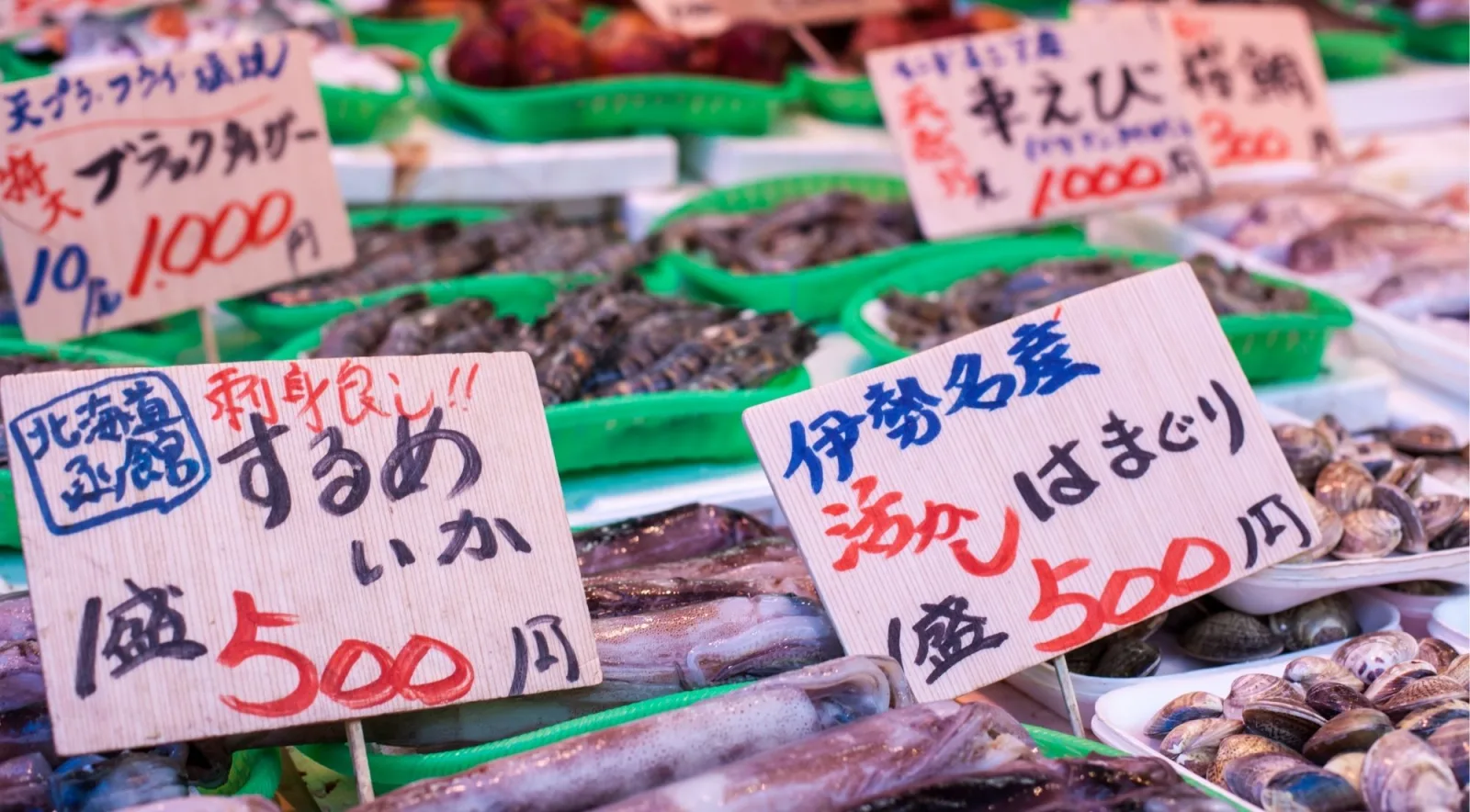
Tsukiji Outer Market is very much open, thriving, and arguably busier than ever — only the licensed wholesale “inner” market and its famous tuna auction moved to Toyosu on 11 October 2018, while the open-air retail food district that most travellers actually want stayed exactly where it always was.
- Tsukiji is NOT closed. The outer market (Tsukiji Jogai Shijo) — more than 400 shops of street food, sushi, knives and pantry goods — never moved. Only the wholesale auction floor relocated to Toyosu in 2018. Go hungry, bring cash, arrive on a weekday morning (ideally 8:00–11:00am), and avoid Sundays and most Wednesdays.
- This is a food-first destination. Eat tamagoyaki on a stick, grilled scallops piled with uni, fresh oysters, tuna in every cut, and standing-bar sushi; then shop for a lifetime kitchen knife (checked luggage only) and travel-friendly dried goods like katsuobushi and nori.
- Do Tsukiji and Toyosu in one morning if you’re ambitious: Toyosu peaks at dawn (auction viewing), Tsukiji peaks mid-morning; they’re about 2–2.5 km apart, roughly 15–20 minutes by train or a short taxi.
What the Tsukiji Outer Market Is Today (2026)
For decades “Tsukiji” meant two things side by side: an inner wholesale market (professionals only, home to the pre-dawn tuna auction) and an outer market (Jogai Shijo — retail shops, stalls and restaurants open to everyone). When the headlines in 2018 announced “Tsukiji closes,” they meant only the inner market. On 11 October 2018 the wholesale operation and the tuna auction moved about 2.3 km southeast to the purpose-built Toyosu Market. The Outer Market never closed.
If anything, the split made the Outer Market more visitor-friendly. Freed from the 5am forklift chaos and the professionals-only rhythm of the auction, the district settled into its role as an open-air food town. Nippon.com quotes a Plat Tsukiji information-center staff member on the rebound: “Compared to the height of the pandemic, when just a handful of people would drop in each day, we now see three or four hundred people daily, which keeps us on our toes.” Foot traffic has, by their account, more than recovered — the streets teem with Japanese and international visitors alike, drawn by social-media buzz. By 2024, visitor numbers to the district exceeded 30 million annually (Tokyo Trip Guide), while roughly 60% of transactions still involve trade customers — restaurant owners, caterers and Tokyo residents who have shopped the same stalls for decades. That blend of genuine commerce and culinary tourism is what keeps standards high.
How big is it? The Outer Market is a dense grid occupying roughly eight blocks between Harumi-dori avenue and the Sumida River, in Chuo ward. Shop counts vary by source: Time Out says “over 300,” japan-guide and many local guides say “roughly 400,” and GO TOKYO says “approximately 460.” Cite “more than 400 shops and restaurants” as the safe figure and note the range — shops open and close constantly, so any count is approximate.
The old inner-market site: Immediately next door, the 19-hectare (≈190,000 m²) former inner-market plot has been cleared and is being redeveloped by an 11-company consortium led by Mitsui Fudosan (with Toyota Fudosan and the Yomiuri Shimbun Group), under the concept “ONE PARK × ONE TOWN.” Plans centre on a multipurpose stadium of roughly 50,000 seats, plus hotels, offices, MICE facilities, a life-science hub, a water-transport terminal, and a food hall linked to the Outer Market. The total cost is around ¥900 billion (about $5.8 billion); per The Japan Times (22 April 2024), the redevelopment “aims to make the site a new transportation hub.” In 2026 there is nothing for visitors to see or tour there — it is vacant/early-construction land behind hoardings. Per The Japan Times, “part of the new complex is scheduled to open in advance by March 2030, but the full opening will take place some time after fiscal 2032.” (Other sources put full completion anywhere from 2032 to the late 2030s — treat the timeline as fluid.)
Layout and How to Navigate
The Outer Market is a warren of narrow lanes, and getting slightly lost is part of the fun. A few orientation anchors help:
- Shin-Ohashi-dori is the main avenue on the market’s western/northern edge; the Tsukiji 4-chome intersection (where Shin-Ohashi meets Harumi-dori) is the principal gateway.
- Monzeki-dori runs parallel to Shin-Ohashi-dori and is the busiest food lane — this is where you’ll find many of the famous names (tamagoyaki maker Yamacho, donburi shop Kitsuneya, ramen shop Wakaba).
- Namiyoke-dori runs from Namiyoke Inari Shrine to Shin-Ohashi-dori and marks the southern edge; the Plat Tsukiji information center sits on this street.
- Tsukiji Uogashi is the modern indoor complex — two connected buildings (the Odawarabashi Building on Harumi-dori and the Kaikobashi Building in front of Namiyoke Shrine) housing about 60 intermediate-wholesaler retail shops on the ground floors, plus the Uogashi Shokudo food court on the 3rd floor of the Odawarabashi Building. Ground-floor access is prioritised for professional buyers until 9:00am; general public welcome after. You may catch a tuna-carving demonstration here.
Food stalls cluster densest along Monzeki-dori and the small connecting alleys; knife and kitchenware shops are scattered but several cluster near the Shin-Ohashi-dori side. A full, unhurried circuit — grazing, browsing, a shrine visit — takes about 2–3 hours; a quick loop can be done in 60–90 minutes. Start at Plat Tsukiji (the official information center) to grab a free English map; English-speaking staff, a Seven Bank ATM, currency exchange, coin lockers and a tax-refund counter are there.
What to Eat — The Core of the Market
Strategy first: eat small things from many stalls rather than one big meal, and work from light to rich. Start with cheap classics (tamagoyaki, a tuna skewer) while you’re hungry, then move to the heavy hitters (seared scallops with uni, wagyu, oysters), and finish sweet. Most items are best eaten standing at or directly in front of the stall — walking-and-eating (tabearuki) is discouraged in the narrow lanes.
Tamagoyaki (rolled omelette on a stick). The signature Tsukiji snack — fluffy, layered sweet-savoury egg, cooked fresh, served hot on a skewer, and famously inexpensive. There are roughly four specialist tamagoyaki shops, and three are famous:
- Yamacho (Tsukiji Yamacho) — on Monzeki-dori, known for long-but-fast-moving queues; its version is denser and more intensely flavoured, on the sweeter/dessert-like side with a slightly caramelised edge. Made to order in front of you. (Official listing: open daily.)
- Marutake — another long-established rival, similarly sweet Edo-style. (Closes Sundays in Jan/Aug, national holidays, some Wednesdays.)
- Shouro (Tsukiji Shoro) — around the corner from Yamacho; more savoury with a prominent dashi flavour that suits those who find the sweet version too much. A third-generation shop also known for egg pudding, custards and cream puffs.
The sweet Edo-mae style is deliberately dessert-like — a legacy of the post-war years when tamagoyaki became a cheap, satisfying alternative to fish. Ordering tip: these sell out by mid-morning; join the line if you see fresh ones being made.
Grilled seafood skewers. Hokkaido jumbo scallops grilled in the shell with butter and soy; king crab legs; garlic-butter shrimp; and wagyu skewers (a luxurious splurge). Eat hot, at the stall.
Uni (sea urchin). Creamy, briny and polarising — try it once. Served fresh in a cup, on scallop skewers, or straight from the wooden box. Sushikuni is a well-known uni-don specialist.
Oysters, raw and grilled. Shucked to order and finished with ponzu/citrus (raw) or butter-soy (grilled/steamed). Kakigoya operates a streetside stand selling raw and steamed oysters alongside grilled giant scallops.
Kaisendon (seafood rice bowls). A Tsukiji staple — assorted sashimi over rice. Tsukiji Koromo Sushi (uogashidon of the day) and many Uogashi/Monzeki-dori shops do excellent versions; you can often choose from many combinations.
Sushi — standing bars vs sit-down counters.
- Sushizanmai (flagship main store near the market, open 24 hours) — the famous chain founded by Kiyoshi Kimura, the media-savvy “Tuna King.” Kimura’s Kiyomura Corp. paid a record ¥510.3 million (~$3.2 million) for a 243kg bluefin at the 5 January 2026 Toyosu New Year auction, beating his own 2019 record of ¥333.6 million. The flagship is reasonably priced, reliable and beginner-friendly, with an outdoor tuna-sampler stall.
- Tsukiji Sushidai Honkan — casual, chef-in-front-of-you nigiri, popular with visitors.
- Okame — a tiny four-seat standing sushi bar at the market entrance; blue-collar, well-priced, quick.
- Tachigui Sushi Akira — a standing-style spinoff of the prestigious Sushi Ryusho, reopened in the Akilab building in February 2024 with a ground-floor standing counter and a seated second floor; premium bluefin from top wholesaler Yamayuki at a reasonable price.
- Tsukiji Sushisay Honten — established outer-market sit-down option.
(Note: the legendary Sushi Dai and Daiwa Sushi now trade at Toyosu, not Tsukiji — a common point of confusion. See our guide to the best sushi at Toyosu.)
Maguro (tuna) in its cuts. The market’s headline. Learn the cuts: akami (lean, clean red), chutoro (medium-fatty, the sweet spot), otoro (fatty belly, melts on contact). Maguroya Kurogin lets you watch cuts sliced in line and offers tuna flights of lean/medium/fatty; expect a wait and seating inside. Adventurous eaters can find grilled tuna cheek and jaw skewers.
Newer / viral street foods. Torched scallop half-shells loaded with uni and crab; A5 wagyu skewers; tamago sando (egg-salad sandwiches) and egg puddings; Matcha Stand Maruni (hand-crafted matcha lattes). Trends shift fast — expect a rotating cast of Instagram-driven stalls.
Sweets and fruit. Ichigo daifuku (whole strawberry + red-bean paste in mochi) is the star sweet, best in strawberry season (winter–spring); Soratsuki specialises in it, with custard and white-strawberry-on-a-stick versions. Maguroyaki is Tsukiji’s tuna-shaped twist on taiyaki (fish-shaped pastry) — try it at Sanokiya. Also warabi mochi, soft-serve, and artfully arranged fruit skewers.
Other prepared foods. Marutoyo (onigiri/rice balls on Namiyoke-dori), Kitsuneya (famous horumon/gyudon donburi on Monzeki-dori), Nisshin Tasuke (grilled unagi skewers), plus tempura, menchi-katsu, shumai and ramen.
Round Out Your Tsukiji Morning
Most first-time visitors pair a self-guided grazing walk with a guided Tsukiji food tour, a Toyosu tuna-auction morning, or a combination tour covering both markets — worth a look if you’d rather have someone handle the ordering, translation and stall-picking for you:
Shopping — Knives, Pantry Goods and Kitchenware
Japanese kitchen knives. This is the market’s signature take-home purchase. Named specialist shops (all requiring verification — hours and existence change):
- Tsukiji Aritsugu — the Tsukiji outpost carrying the Aritsugu name, one of Japan’s oldest knifemakers (the original Kyoto house traces to 1560); prestigious, historic.
- Tsukiji Masamoto — famed for a huge range across price tiers; owner traditionally engraves your name on the blade by hand; cash-only per traveller reports.
- Sugimoto Hamono (Sugimoto) — respected professional cutlery, favoured by chefs.
- Nenohi Cutlery (Azuma Minamotono Masahisa) — long-established maker.
- Tojiro Knife Gallery Tsukiji Store — the accessible, well-known Tojiro brand across a wide lineup.
Knife types you’ll see: gyuto (chef’s knife), santoku (all-purpose), deba (heavy fish-butchering), yanagiba (long single-bevel sashimi slicer), nakiri (vegetable). Many shops offer engraving and sharpening services; several are tax-free (passport required). Quality runs from accessible stainless entry pieces to high-carbon (e.g. White Paper Steel) single-bevel blades that demand hand-washing, drying and whetstone care. Prices vary widely — treat knives as anything from a modest gift to a serious splurge, and verify before buying.
Carrying knives home — critical: Kitchen knives must go in checked luggage only, never carry-on — security will confiscate a blade in hand luggage. Keep the knife in its sealed original packaging until you leave Japan, retain the receipt, and declare it at home-country customs as merchandise. (Note the tax-free scheme is changing: Japan is moving to a refund-at-airport method from 1 November 2026 — verify the current procedure at the time of travel.)
Dried goods and pantry items. The travel-friendly souvenirs that actually matter — lightweight and long-lasting:
- Katsuobushi (dried bonito flakes, shaved to order) — the base of dashi.
- Kombu (dried kelp), nori (seaweed sheets), dried shiitake, dried shrimp.
- Matcha and green tea, sesame, miso, seasonings, homemade furikake, tsukudani (preserved side dishes) and tsukemono (pickles — most shops offer free samples).
Specialist example: Kombusho Suita Shoten for kelp. Dried-goods shops cluster throughout the lanes and inside Tsukiji Uogashi.
Kitchenware. Copper tamagoyaki pans (makiyakinabe), ceramics, lacquerware, bamboo steamers, chopsticks, graters and other tools — traditional and modern. For a deeper kitchen-gear haul, the wholesale restaurant-supply street Kappabashi (“Kitchen Town”) is a short hop away and pairs well with a Tsukiji morning.
Landmarks and Sights In and Around the Market
Namiyoke Inari Shrine. At the market’s southeastern edge (on Namiyoke-dori). Founded in 1659 (Manji 2) on newly reclaimed land — as English Wikipedia notes, it was “built on the water’s edge when this part of Tokyo (then Edo) was created from landfill after the Great Fire of Meireki in 1657.” Legend says a glowing sacred image of Inari was found floating on the water during the difficult land-reclamation, and after it was enshrined the destructive waves calmed, hence the name “Namiyoke” = “protection from waves.” The present shrine structure dates to 1937. It became the unofficial guardian shrine of the fish market; its courtyard holds memorial monuments to seafood and market ingredients — sushi-zuka (sushi), ebi-zuka (shrimp), tamago-zuka (eggs), kombu-zuka (kelp), hamaguri-ishi (clams) and more, reflecting gratitude for food. Two giant shishi (lion) heads stand at the entrance: the ~1-tonne Tenjo Ojishi and the ~700kg vermillion Benzaiten Ohaguro Shishi, paraded in the Tsukiji Shishi Matsuri (lion festival) around June. Free to visit.
Tsukiji Hongwanji Temple. A short walk from the market (directly connected to Tsukiji Station Exit 1). A Jodo Shinshu Hongwanji-ha temple whose head temple is Nishi Hongwanji in Kyoto. Originally founded 1617; the current, striking main hall was completed in 1934 to a design by architect/architectural historian Chuta Ito, who drew on ancient Indian and Asian Buddhist architecture — stone construction, domes, a lotus motif, stained glass, a pipe organ, and carved animals (lions, elephants, horses, peacocks). Designated an Important Cultural Property in 2014. Visitors can enter the main hall free (roughly 6:00–16:00); a monthly pipe-organ concert is held on the last Friday. The on-site Café Tsumugi is known for its “18-dish breakfast.” A serene, architecturally unusual counterpoint to the market bustle.
The old inner-market site. Visible only as fenced, cleared land under redevelopment — no auction, no touring.
Opening Hours and Closed Days
- Typical shop hours: Many stalls open very early (5:00–6:00am) and wind down by early afternoon; most food stalls and tamagoyaki shops finish around 1:00–2:00pm, and by 3:00pm the market is effectively done. A handful of sit-down restaurants stay open later.
- Best visiting window: A weekday morning, roughly 8:00–11:00am — stalls freshly stocked, famous items not yet sold out, and ahead of the worst crowds.
- Closed-day pattern: The Outer Market broadly follows the Tokyo Central Wholesale Market calendar — closed Sundays, most national holidays, select (not all) Wednesdays, and the New Year period (~30 December–4 January). Crucially, individual shops set their own hours: some (like tamagoyaki maker Yamacho, listed as open 365 days) trade on Sundays and Wednesdays, while larger fishmongers are the most likely to close Wednesdays. A Wednesday visit is fine for street food but thinner for serious shopping.
- Where to check: The official calendar at tsukiji.or.jp/english/calendar/ (with a downloadable 2026 PDF) colour-codes closing days, temporary opening days and events. Note that some Wednesdays in 2026 are closures for the produce side only (the seafood side stays open) — a nuance the official calendar reflects. Confirm your exact date before committing, especially for a Wednesday. See our full opening hours and closed-day guide for the complete 2026 calendar for both markets.
- Seasonal notes: Late December (roughly 28–30 Dec) is the single busiest stretch as locals stock up on New Year ingredients — atmospheric but crushingly crowded (the market authority has asked visitors to consider other days). Winter–spring is strawberry-daifuku and fatty-tuna season; autumn brings chestnut sweets; summer is peak season for some uni varieties.
Crowds and Timing Strategy
The Outer Market now gets genuinely busy, with the crowd peak from about 9:00am to noon. Weekdays are calmer than weekends and holidays. To beat the crush, arrive by 8:00am (some say before 8) — stalls are opening, lines are short, and the lanes are navigable. Sundays and public holidays are the most crowded when open; a subset of shops also close then.
Honest take: yes, it is touristy, and mid-morning on a weekend the narrow lanes can feel like a slow-moving river of people. But this remains a working retail district — roughly 60% of transactions still involve trade customers — and vendors keep professional standards because chefs still shop here. Come early, and the atmosphere is authentic and rewarding rather than a tourist trap.
Three benchmarks worth planning around: if your only free day is a Sunday or a closed Wednesday, either shift days or accept a thinner (but still open) subset of shops; if you arrive after ~11:00am, prioritise sit-down restaurants over stalls, since many of the best will be selling out; and if mobility is a concern, go right at opening for the most space to manoeuvre.
Getting There
- Tsukiji Station (Tokyo Metro Hibiya Line), Exit 1 or 2 — a flat 1–3 minute walk to the market entrance; the easiest option.
- Tsukijishijo Station (Toei Oedo Line), Exit A1 — about 1 minute on foot, slightly closer to the former inner-market site; useful from Shinjuku/Roppongi.
- From Ginza / Higashi-Ginza: a pleasant flat walk of roughly 10–15 minutes along Harumi-dori, past the Kabukiza Theatre.
- To/from Toyosu Market (~2–2.5 km): the market is nearest Shijomae Station on the driverless Yurikamome line (covered walkway right into the buildings). The quickest transit route between the two: Yurikamome from Shijomae, transfer to the Yurakucho subway line, alight at Shintomicho (~8-minute walk to the Outer Market); total ~15–20 minutes. A taxi takes only a few minutes; a Toei bus runs from near Tsukiji to the Toyosu area; or you can walk it in ~30 minutes over three bridges with bay views. (Verify fares/timings before travel — prices change.) Our guide to getting to Toyosu covers the connection in both directions.
- Accessibility: The lanes are narrow, crowded and uneven, with delivery carts and boxes — challenging for wheelchair users and strollers, especially mid-morning. The official advice is to leave large bags in coin lockers, and strollers can be checked at Plat Tsukiji for temporary safekeeping (a small per-stroller fee). Go early for more room to manoeuvre.
Etiquette and Practical Rules
The official rules (from tsukiji.or.jp) that matter:
- Professional buyers have priority until 9:00am — don’t get in their way; the Uogashi wholesale area especially prioritises trade before 9:00.
- Don’t eat while walking. Eat inside the eatery or in front of the stall you bought from; use designated bench/table spaces. Eating is not allowed in the Uogashi wholesale area.
- Don’t touch the produce — poking raw food lowers its commercial value; ask staff if you need to check something.
- Don’t block lanes for photos, move in small groups, and hold children’s hands.
- Ask before photographing vendors or shops; some display no-photography signs.
- No bargaining — prices are set.
- Cash is king. Many small stalls are cash-only; some accept cards or IC cards (Suica/PASMO) but not all. Carry a few thousand yen in small denominations (100-yen coins and 1,000-yen notes) to keep queues moving. There’s a Seven Bank ATM and currency exchange at Plat Tsukiji.
- Smoking is only permitted in designated areas; street smoking is prohibited in Chuo City. Don’t smoke while walking or litter butts.
- Rubbish bins are scarce — many stalls provide a bin only for their own packaging (e.g. tamagoyaki skewers); carry a small bag and dispose thoughtfully.
Doing Tsukiji and Toyosu in One Morning
It’s very doable if you start early (our complete Toyosu visitor guide covers the Toyosu half in detail):
- ~4:30–5:00am: Arrive at Toyosu (taxi or nearby hotel — the earliest possible train, 05:17, misses the very first auction). Watch the tuna auction from the free walkway or the lottery observation deck (deck requires advance lottery application).
- ~6:30–8:00am: Breakfast sushi at Toyosu, browse the intermediate wholesale shops and the Senkyaku Banrai food village.
- ~8:30–9:00am: Transfer to Tsukiji — Yurikamome + Yurakucho line via Shintomicho (~15–20 min) or a quick taxi.
- ~9:00–11:30am: Graze the Outer Market at its mid-morning peak, shop for knives and pantry goods, visit Namiyoke Shrine and Tsukiji Hongwanji.
Toyosu peaks at dawn; Tsukiji peaks mid-morning — the sequence works naturally. Both follow the same closed-day calendar, so pick a day both are open. For the exact tuna-auction mechanics, see our Toyosu tuna auction viewing, lottery & timings guide.
Tours
A guided food/walking tour is a strong option for first-timers. What a good guide adds: ordering and translation, explaining unfamiliar foods, steering you to the best stalls and away from tourist traps, securing tastings, and providing historical and culinary context. Typical structures:
- Duration: commonly 2–3.5 hours.
- Timing: morning starts (often 7:00–10:00am) to catch the market fresh and beat crowds; some “less crowded” tours deliberately run 7:00–9:00am.
- Format: small groups, several tastings across stalls, often a meeting point at Tsukiji Hongwanji or a nearby landmark, sometimes finishing with a sit-down sushi course; many include the Uogashi area and a temple stop; some add sake tastings.
- Combination tours: morning Toyosu tuna-auction + Tsukiji Outer Market walks are widely available.
On GetYourGuide you’ll find Tsukiji outer-market food-and-drink walking tours, breakfast-tasting walks, temple-plus-market culture tours, and combined Toyosu+Tsukiji adventures. Prices vary and availability changes — check current options and reviews, and verify before booking.
Book it: Browse Tsukiji Outer Market food and walking tours and reserve a morning slot with free cancellation. Prices change — always verify before booking. See our Toyosu tours round-up.
Common Mistakes to Avoid
- Arriving too late. Come at 2pm and you’ll find shutters down and the best items gone. Treat it as a breakfast/late-morning destination.
- Expecting the tuna auction here. It moved to Toyosu in 2018 — you cannot see it at Tsukiji.
- Going on a closed Wednesday (or Sunday) without checking the official calendar.
- Eating while walking in restricted areas — eat at the stall.
- Not bringing cash — many stalls are cash-only.
- Underestimating the crowds — mid-morning weekends are packed; go early.
- Buying a knife without understanding the carry-on rule — it must go in checked luggage, sealed, or it’ll be confiscated at airport security.
FAQ
Is Tsukiji Market still open in 2026? Yes. The Outer Market (Tsukiji Jogai Shijo) is fully open and thriving. Only the wholesale inner market and tuna auction moved to Toyosu in October 2018. See Tsukiji vs Toyosu for which to visit.
Can I see the tuna auction at Tsukiji? No — the auction is at Toyosu now, viewable from a free walkway or a lottery-only observation deck. See our Toyosu tuna auction viewing, lottery & timings guide.
What time should I go? A weekday morning, roughly 8:00–11:00am. Arrive by 8:00 to beat the 9:00am–noon crowd peak.
What days is it closed? Generally Sundays, most national holidays, select Wednesdays, and ~30 Dec–4 Jan — but individual shops vary, and some open on Sundays/Wednesdays. Check tsukiji.or.jp/english/calendar/.
Do I need cash? Yes. Many stalls are cash-only; some take cards or IC cards (Suica/PASMO), but don’t rely on it.
What should I eat? Tamagoyaki on a stick, grilled scallops with uni, fresh oysters, a tuna flight (akami/chutoro/otoro), standing-bar sushi, and ichigo daifuku for dessert. See our Tsukiji Outer Market street food guide for the full stall-by-stall run-through.
Where’s the best sushi? For casual, reliable and beginner-friendly: Sushizanmai flagship. For standing bars: Okame or Tachigui Sushi Akira. Note Sushi Dai and Daiwa Sushi are now at Toyosu.
Can I buy a Japanese knife and fly home with it? Yes — in checked luggage only, sealed in original packaging, with your receipt. Never in carry-on.
How long should I spend? 1.5–3 hours depending on whether you shop and add shrine/temple visits.
Is it worth visiting if I’m also going to Toyosu? Yes — they’re different experiences. Toyosu is the auction spectacle; Tsukiji is the eating and shopping. You can do both in one morning. See our Tsukiji vs Toyosu comparison, and our honest take on whether Toyosu is worth visiting if you’re only doing one.
Is it stroller/wheelchair friendly? Not especially — lanes are narrow and crowded. Go early; check strollers at Plat Tsukiji.
Not sure which fish is which? Learning akami, chutoro and otoro before you go (see the tuna-cuts section above) makes ordering at any counter far less intimidating, and our Japanese fish and seafood guide covers everything else on the ice.
Book Your Toyosu Tuna Auction Tour
Join 415+ guests who rated this experience 4.9/5. Tuna auction viewing, Tsukiji outer market walk, and fresh sushi breakfast — all with a licensed local guide. Free cancellation.
Check Availability & Book