Tsukiji Outer Market Street Food: A Stall-by-Stall Eating Guide
A stall-by-stall guide to eating your way through Tsukiji Outer Market — tamagoyaki, grilled scallops, uni, oysters, tuna, sushi and sweets, with an eating-order plan, etiquette and closed-day tips.
The short answer: Tsukiji Outer Market is Tokyo’s best breakfast crawl — a dense grid of more than 400 stalls where you eat standing at the counter, not from a walking cone, and where the good stuff sells out by early afternoon.
- Eat light to rich, in this order: tamagoyaki → a tuna or seafood skewer → grilled scallop with uni → a raw or grilled oyster → a tuna flight or kaisendon → dessert (ichigo daifuku). Arrive by 8:00am on a weekday for the full line-up before the best items sell out.
- The signature snack is tamagoyaki on a stick — a sweet, dense, layered egg omelette made fresh at stalls like Yamacho and Marutake. It’s the cheapest, most photogenic, most quintessentially Tsukiji bite in the market.
- Eat at or right in front of the stall you bought from — walking and eating through the narrow lanes (tabearuki) is discouraged. Bring cash; card acceptance is patchy.
This is a companion piece to our complete Tsukiji Outer Market guide — that article covers history, layout and shopping in full; this one is purely the eating plan, stall by stall, in the order you should actually eat. Individual stalls open, close and change hands constantly, and a guided food walk is the one way to be sure you’re eating at the ones still worth queueing for:
The Eating-Order Strategy
Work from light to rich so nothing you eat first dulls what comes after:
- Start light and cheap — tamagoyaki, a rice ball, a small tuna skewer — while you’re genuinely hungry and clear-palated.
- Move to the heavy hitters — grilled scallops loaded with uni, wagyu skewers, fresh oysters — once you’ve warmed up.
- Add a sit-down or bowl item if you want a proper meal — a tuna flight, kaisendon, or standing sushi.
- Finish sweet — ichigo daifuku, soft-serve, or a matcha latte.
Where You’re Allowed to Eat
Eat standing at or directly in front of the stall you bought from — walking-and-eating (tabearuki) is discouraged in the narrow lanes, and most stalls provide a small standing shelf or a few stools for exactly this. It is the most commonly broken rule in the market, and stallholders notice.
Other Experiences You Might Enjoy
Tsukiji rewards a guide more than almost any market in Tokyo — the best stalls have no English menu, the queues that matter look identical to the queues that don’t, and the Toyosu tuna auction an hour earlier is what supplies half of what you’re about to eat. Guided mornings string together the auction, the walk to Tsukiji Outer Market, and a seat at a Sushi Dai or Bentomi counter, with someone to tell you which tamagoyaki stall is the sweet one:
Stall-by-Stall Guide
Tamagoyaki (rolled omelette on a stick) — start here
The signature Tsukiji snack: fluffy, layered sweet-savoury egg cooked fresh and served hot on a skewer, and famously inexpensive. There are roughly four specialist tamagoyaki shops in the market, and three are genuinely famous.
- Yamacho (Tsukiji Yamacho) — on Monzeki-dori, the busiest food lane. Known for long-but-fast-moving queues. Its version is denser and more intensely flavoured than its rivals, on the sweeter, dessert-like side with a slightly caramelised edge. Made to order in front of you.
- Marutake — the other long-established rival, similarly sweet Edo-style. Closes Sundays in January/August, national holidays, and some Wednesdays — check before you go.
- Shouro (Tsukiji Shoro) — just around the corner from Yamacho. More savoury with a prominent dashi flavour, better suited to anyone who finds Yamacho’s version too sweet. A third-generation shop also known for egg pudding, custards and cream puffs.
The sweet Edo-mae style is deliberately dessert-like — a legacy of the post-war years when tamagoyaki became a cheap, satisfying alternative to fish. Ordering tip: these sell out by mid-morning, so join the line as soon as you see fresh ones being made.
Grilled seafood skewers
Hokkaido jumbo scallops grilled in the shell with butter and soy; king crab legs; garlic-butter shrimp; and wagyu skewers for a luxurious splurge. Look for stalls along Monzeki-dori and the connecting alleys grilling scallops loaded with sea urchin — the smell alone will pull you in. Eat hot, right at the stall.
Uni (sea urchin)
Creamy, briny and polarising — worth trying once even if you’re unsure. Served fresh in a cup, piled onto scallop skewers, or straight from the wooden box. Sushikuni is a well-known uni-don specialist if you want it as a proper bowl rather than a bite. Our Japanese fish and seafood field guide explains how uni is graded, and why bafun costs more than murasaki.
Oysters, raw and grilled
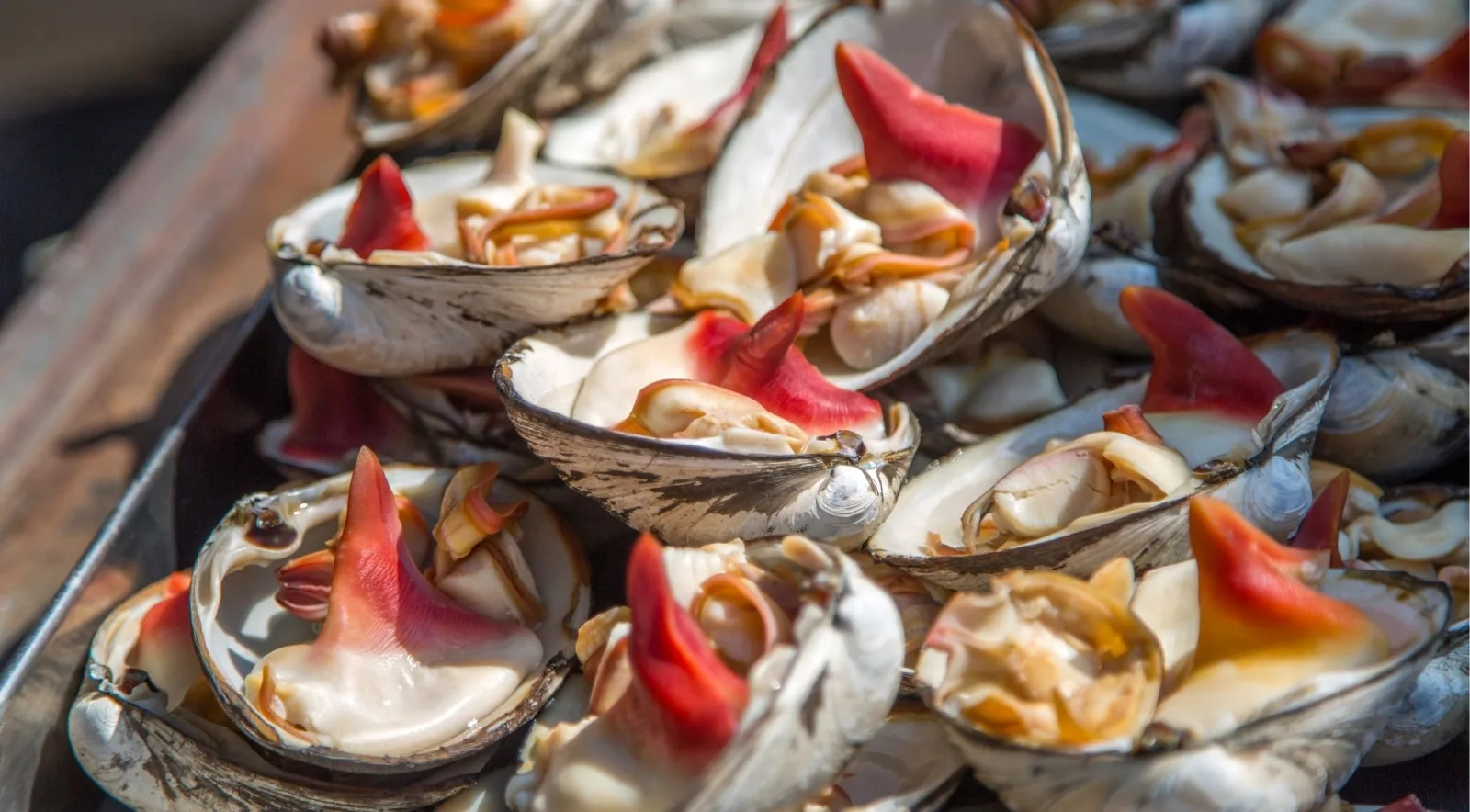
Shucked to order and finished with ponzu/citrus (raw) or butter-soy (grilled/steamed). Kakigoya runs a streetside stand selling both raw and steamed oysters alongside grilled giant scallops — a good one-stop shellfish counter.
Kaisendon (seafood rice bowls)
A Tsukiji staple — assorted sashimi piled over rice, the closest thing to a proper sit-down meal in the market. Tsukiji Koromo Sushi does an uogashidon of the day, and many stalls along Uogashi and Monzeki-dori offer their own combinations — you can often choose exactly what goes in the bowl.
Sushi — standing bars vs sit-down counters
- Sushizanmai (flagship, near the market, open 24 hours) — the famous chain founded by Kiyoshi Kimura, the media-savvy “Tuna King” who paid a record ¥510.3 million (about US$3.2 million) for a 243 kg bluefin at the January 2026 Toyosu New Year auction. The flagship is reasonably priced, reliable and beginner-friendly, with an outdoor tuna-sampler stall out front. The full story of that bid is in our bluefin tuna auction record prices guide.
- Tsukiji Sushidai Honkan — casual, chef-in-front-of-you nigiri, popular with visitors.
- Okame — a tiny four-seat standing sushi bar right at the market entrance; blue-collar, well-priced, quick.
- Tachigui Sushi Akira — a standing-style spinoff of the prestigious Sushi Ryusho, reopened in the Akilab building in February 2024, with a ground-floor standing counter and a seated second floor; premium bluefin from top wholesaler Yamayuki at a reasonable price.
- Tsukiji Sushisay Honten — an established sit-down option if you’d rather sit than stand.
Note: the legendary Sushi Dai and Daiwa Sushi now trade at Toyosu, not Tsukiji — the single most common point of confusion for visitors chasing “the famous Tsukiji sushi place.” See our best sushi at Toyosu guide if that’s what you’re after — or book the counter directly with Toyosu Tuna Auction + Breakfast at Sushi Dai or Bentomi (4.63 stars, 153 reviews, from $114), which reserves a seat at one of them and pairs it with the auction.
Maguro (tuna) in its cuts
The market’s headline ingredient. Learn the cuts before you order: akami (lean, clean red), chutoro (medium-fatty, the sweet spot), otoro (fatty belly, melts on contact) — our tuna cuts and grading guide covers where each sits on the fish and why the price climbs. Maguroya Kurogin lets you watch cuts sliced in line and offers tuna flights of lean/medium/fatty — expect a short wait and seating inside. Adventurous eaters can find grilled tuna cheek and jaw skewers at some stalls, a rougher-cut, deeply savoury alternative to nigiri.
Newer and viral street foods
A rotating cast of Instagram-driven stalls has grown up alongside the classics: torched scallop half-shells loaded with uni and crab; A5 wagyu skewers; tamago sando (egg-salad sandwiches) and egg puddings; Matcha Stand Maruni for hand-crafted matcha lattes. Expect this list to keep shifting — treat it as a bonus layer on top of the reliable classics above.
Sweets and fruit — finish here
Ichigo daifuku (a whole strawberry and red-bean paste wrapped in mochi) is the market’s star sweet, best in strawberry season (roughly winter through spring). Soratsuki specialises in it, with custard and white-strawberry-on-a-stick versions. Maguroyaki is Tsukiji’s tuna-shaped twist on taiyaki (fish-shaped pastry) — try it at Sanokiya, a fun way to end on a pun. Also look for warabi mochi, soft-serve, and beautifully arranged fruit skewers.
Other prepared foods worth knowing
Marutoyo (onigiri/rice balls on Namiyoke-dori) for a quick, cheap bite; Kitsuneya (famous horumon/gyudon donburi on Monzeki-dori) for something heartier and non-seafood; Nisshin Tasuke for grilled unagi skewers. Plus tempura, menchi-katsu, shumai and ramen scattered throughout, for anyone who wants a break from seafood.
Practical Eating Notes
- Bring cash. Many small stalls are cash-only; some accept cards or IC cards (Suica/PASMO) but not all — don’t count on it. Carry small notes and coins to keep queues moving.
- Eat at the stall. Walking and eating through the lanes is discouraged; use the small standing shelves or stools most stalls provide.
- Best window: a weekday morning, roughly 8:00–11:00am, gives you the full selection before the best items sell out and before the 9:00am–noon crowd peak.
- Closed days: the market broadly follows the Tokyo Central Wholesale Market calendar (closed Sundays, most national holidays, select Wednesdays, and the New Year period), but individual food stalls set their own hours — several tamagoyaki shops close on different days from each other, so check before a special trip. Our opening hours and closed days guide has the full calendar.
Pairing It With Toyosu
If you’re doing the full market crawl, the natural sequence is auction and market sushi at Toyosu at dawn, then a transfer to Tsukiji for this street-food crawl around 8–9am — Toyosu peaks early, Tsukiji peaks mid-morning, and the two rhythms dovetail. See Tsukiji vs Toyosu for the full comparison and transport details.
Most guided market mornings are built around exactly that sequence. Toyosu Tuna Auction & Tsukiji Market Gourmet Adventure (4.90 stars, 415 reviews, from $115) is the closest match to this article — auction first, then a tasting walk through the outer market — and Private Toyosu & Tsukiji Market Adventure with Tuna Auction (4.83 stars, 273 reviews, from $150) covers the same ground at your own pace. Compare every format in our Tokyo fish market tours comparison.
Frequently Asked Questions
What’s the single best thing to eat at Tsukiji Outer Market? Tamagoyaki on a stick from Yamacho, Marutake or Shouro — it’s the cheapest, most iconic, most purely “Tsukiji” bite in the market.
Can I get the famous Sushi Dai here? No — Sushi Dai and Daiwa Sushi both relocated to Toyosu in 2018. Tsukiji has its own excellent sushi (Sushizanmai, Okame, Tachigui Sushi Akira) but not those two names.
Do I need cash? Yes, plan on it. Many stalls are cash-only; card acceptance is inconsistent.
What time should I arrive to eat well? 8:00–11:00am on a weekday, before the best items sell out and before the crowd peak.
Is it OK to eat while walking around? Not really — eat at or in front of the stall you bought from. The lanes are narrow and walking-and-eating is discouraged.
What should I eat first? Start light — tamagoyaki or a small skewer — then move to richer items like grilled scallop with uni, then finish with dessert.
Book Your Toyosu Tuna Auction Tour
Join 415+ guests who rated this experience 4.9/5. Tuna auction viewing, Tsukiji outer market walk, and fresh sushi breakfast — all with a licensed local guide. Free cancellation.
Check Availability & Book